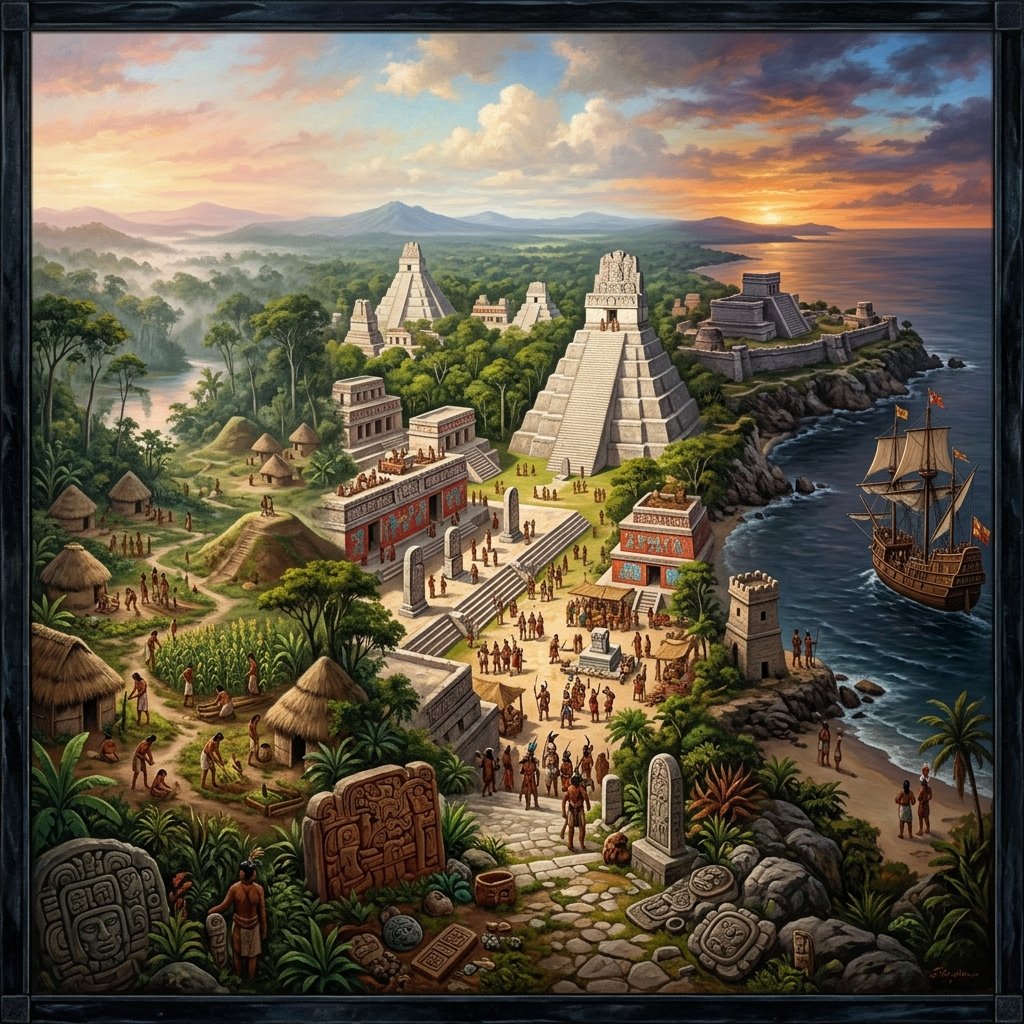
Maya Civilization Timeline at a Glance
This timeline covers 30 key events across 4,000+ years of Maya history — from the first agricultural settlements to the 6 million living Maya people of today. Major turning-point events are highlighted with golden markers.
The Full Arc of History
First Agriculture in Mesoamerica
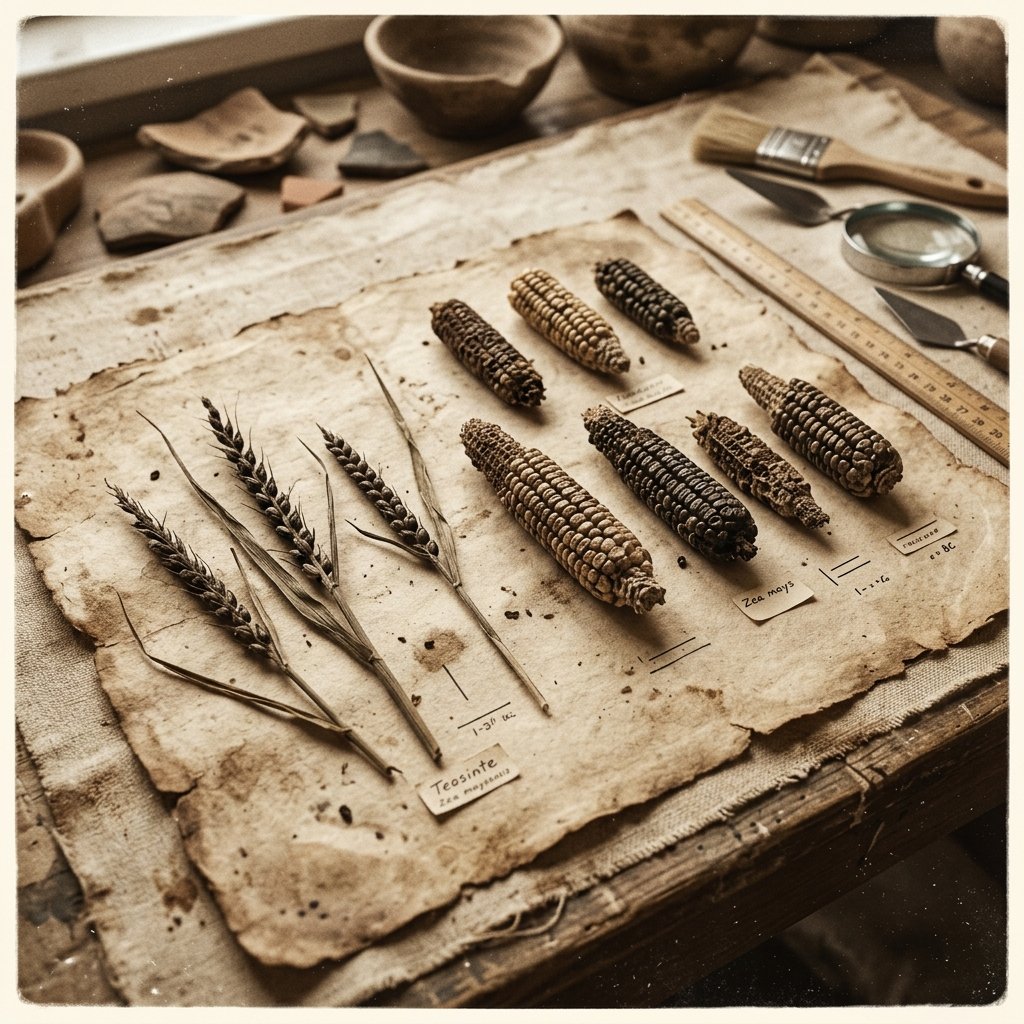
The earliest evidence of maize cultivation appears in the Balsas River Valley of Mexico. Over millennia, the wild grass teosinte is selectively bred into the maize plant — the single most transformative agricultural achievement in the Americas. This domesticated crop will become the foundation of all Mesoamerican civilizations, including the Maya.
First Maya Settlements
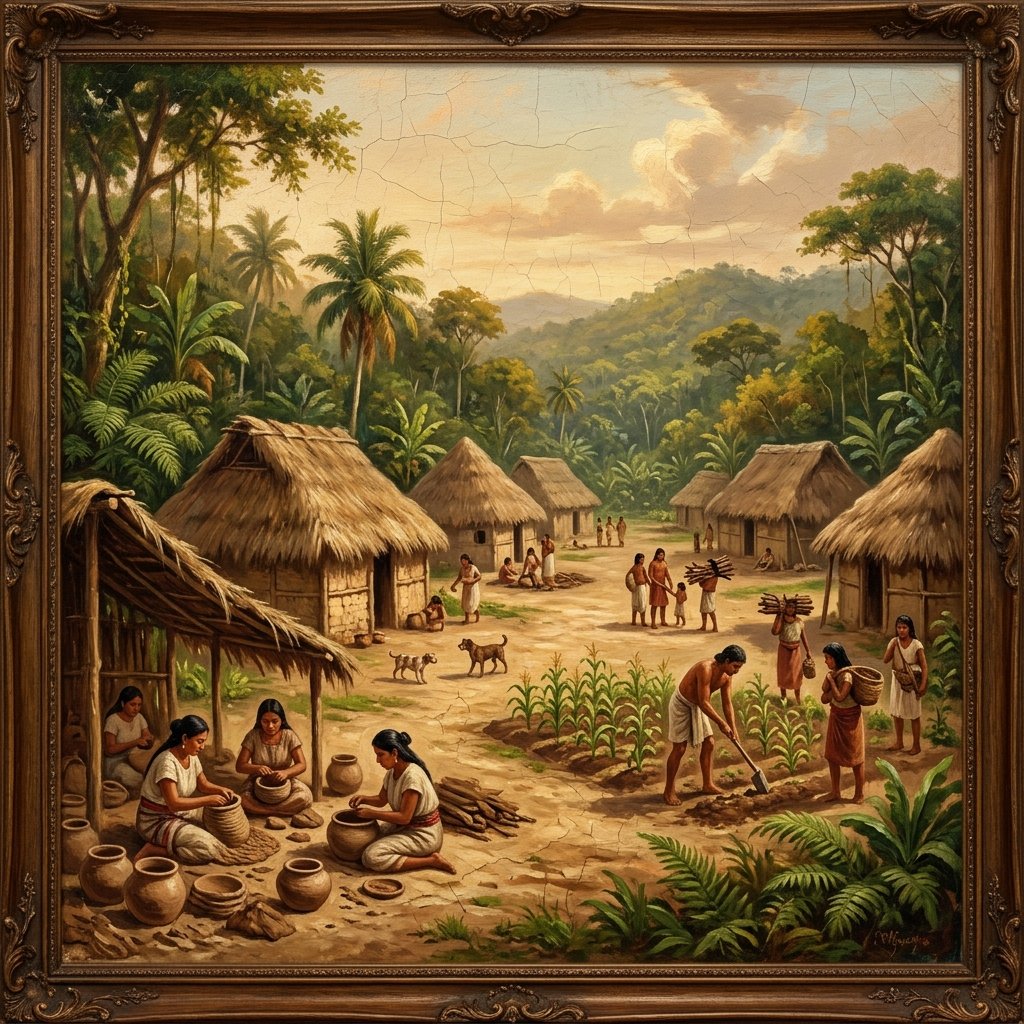
Permanent agricultural communities form in the highlands of Guatemala, the Pacific coast of Chiapas, and the lowlands of Belize and the Petén. The earliest known ceramics in the Maya region appear at Cuello (Belize). These villages practice slash-and-burn agriculture, growing maize, beans, squash, and chili peppers — the foundational crops of Maya civilization.
Rise of the First Cities
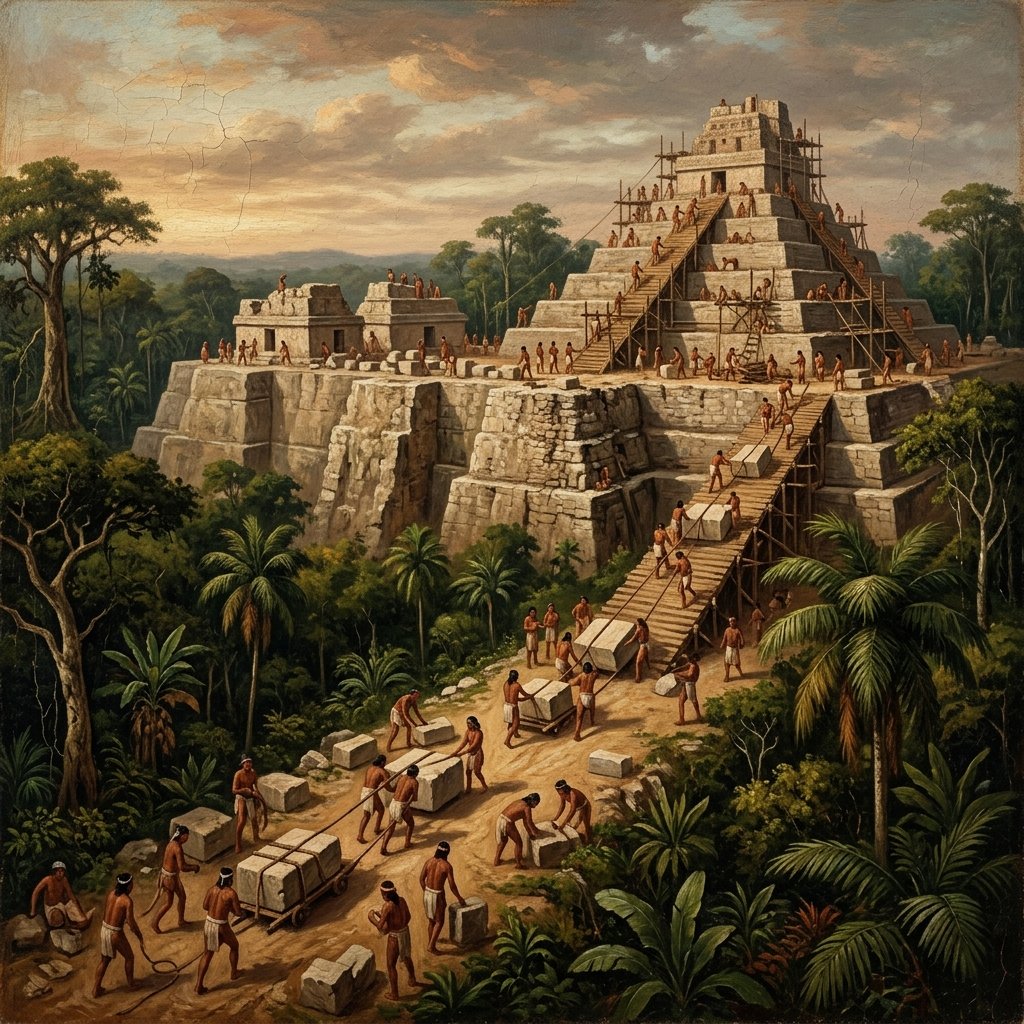
Monumental architecture appears at Nakbé in the Petén jungle of Guatemala — massive limestone platforms, pyramids, and causeways that require organized labor forces and centralized authority. This marks the transition from village society to urban civilization. Hierarchical social structures emerge, with kings, priests, scribes, and artisan classes becoming distinct.
El Mirador — The First Maya Superpower
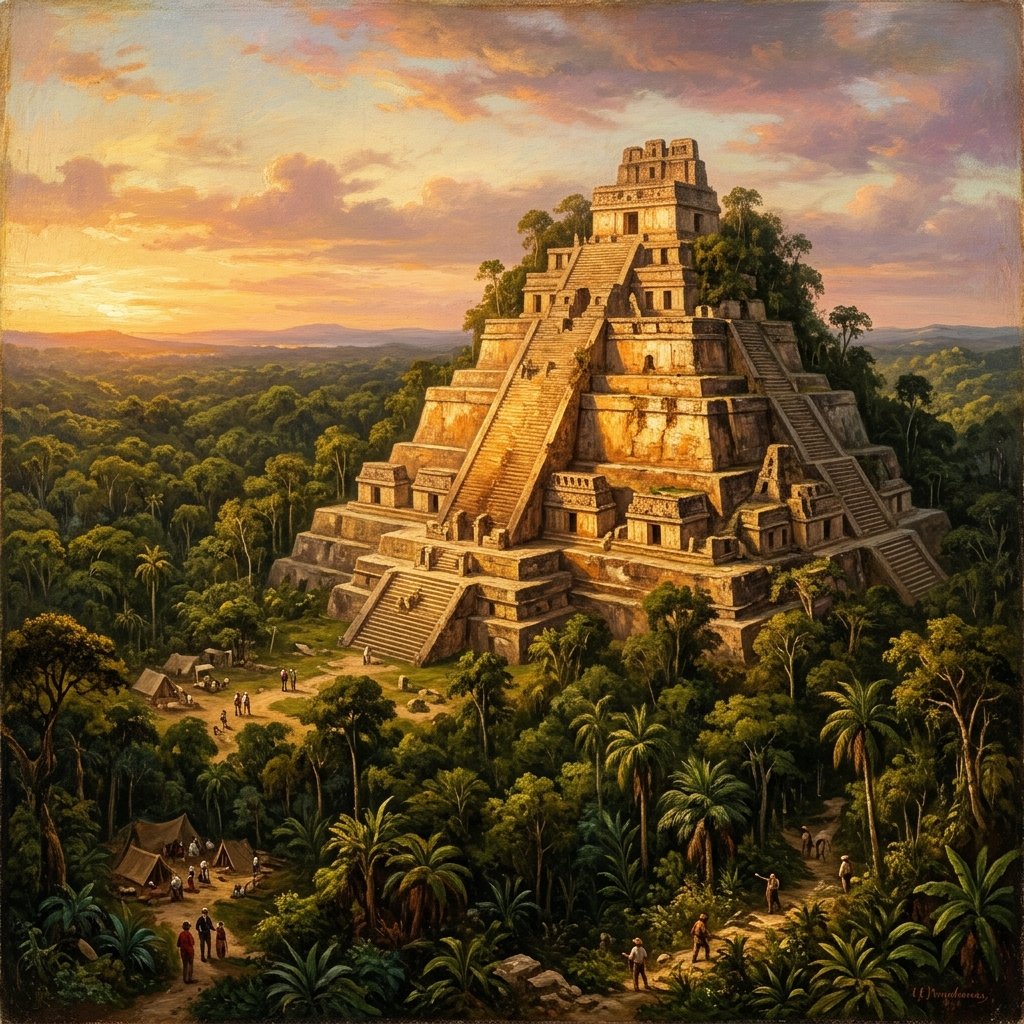
El Mirador rises as the largest city in the Maya world, with a population estimated at 100,000+. The La Danta pyramid complex — measuring 72 meters in height and 2.8 million cubic meters in volume — is one of the largest structures ever built in the ancient Americas. The site demonstrates that Maya civilization achieved monumental scale centuries before the Classic Period. A network of causeways connects El Mirador to satellite cities.
Earliest Known Maya Writing
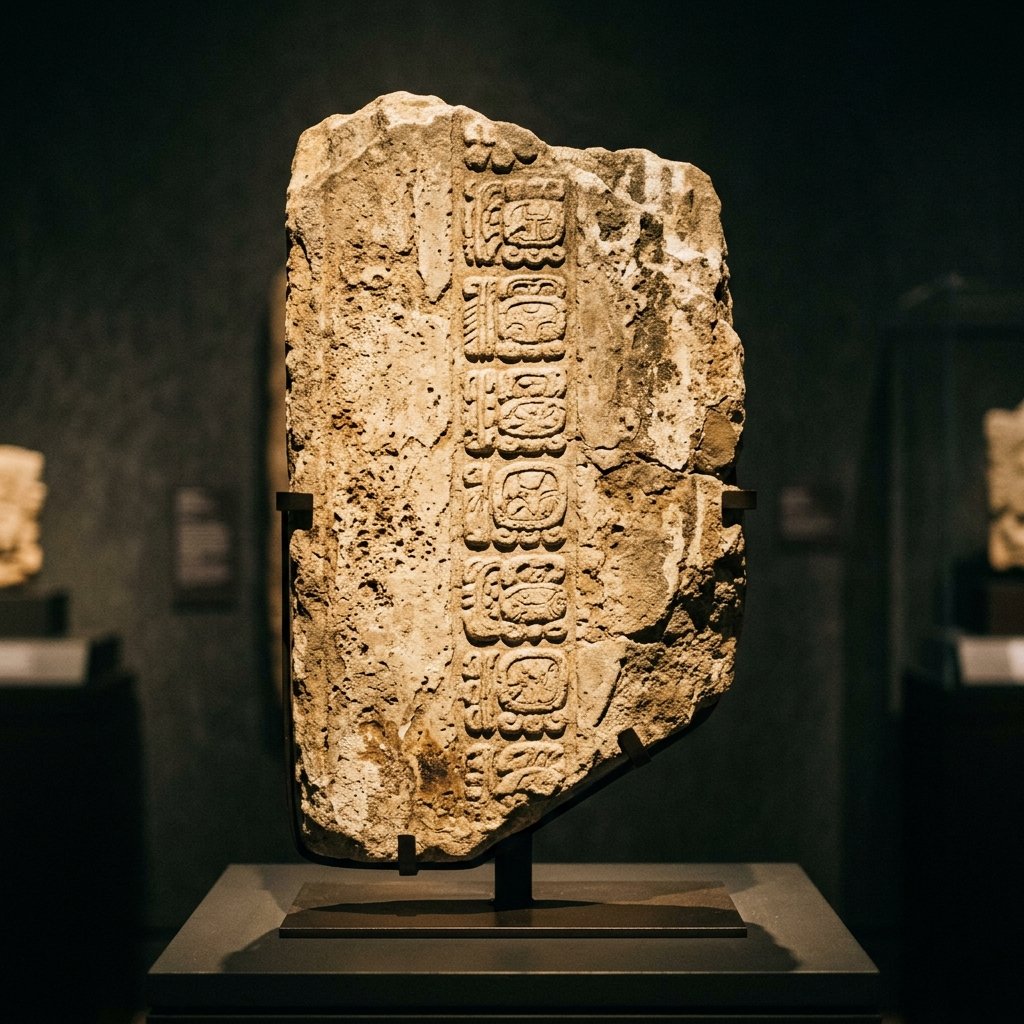
The earliest examples of Maya hieroglyphic writing appear on stelae and monumental inscriptions at sites like San Bartolo (where spectacular murals were discovered in 2001) and Kaminaljuyú in the Guatemala highlands. The logo-syllabic script — which will eventually comprise 800+ glyphs — is already fully formed, suggesting a long prior developmental history that remains archaeologically invisible.
The Earliest Long Count Date
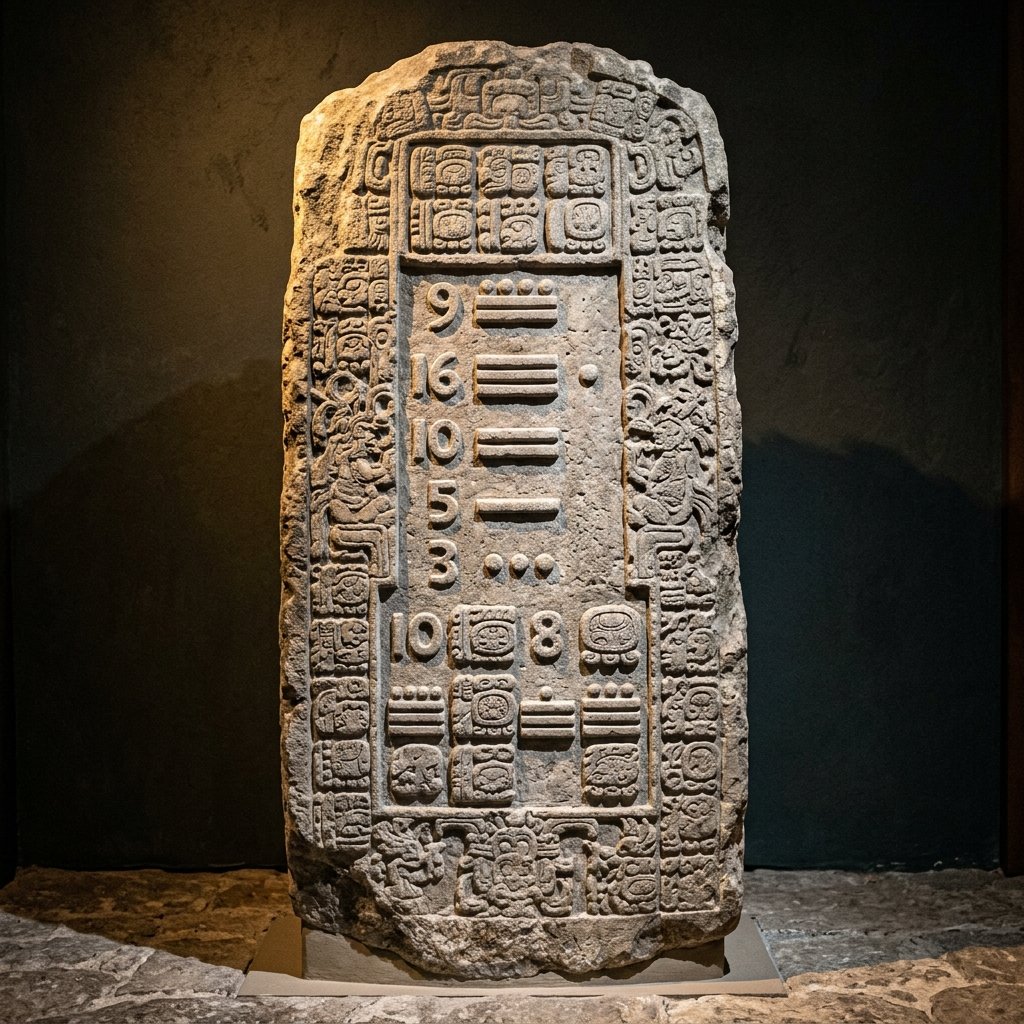
Stela 2 from Chiapa de Corzo bears the earliest known Long Count date: 7.16.3.2.13 (December 36 BC). The Long Count calendar — which counts the number of days elapsed since the Maya creation date of August 11, 3114 BC — will become the primary historical recording system of Classic Maya civilization, enabling scholars to place Maya events in absolute chronological order.
Late Preclassic Transition
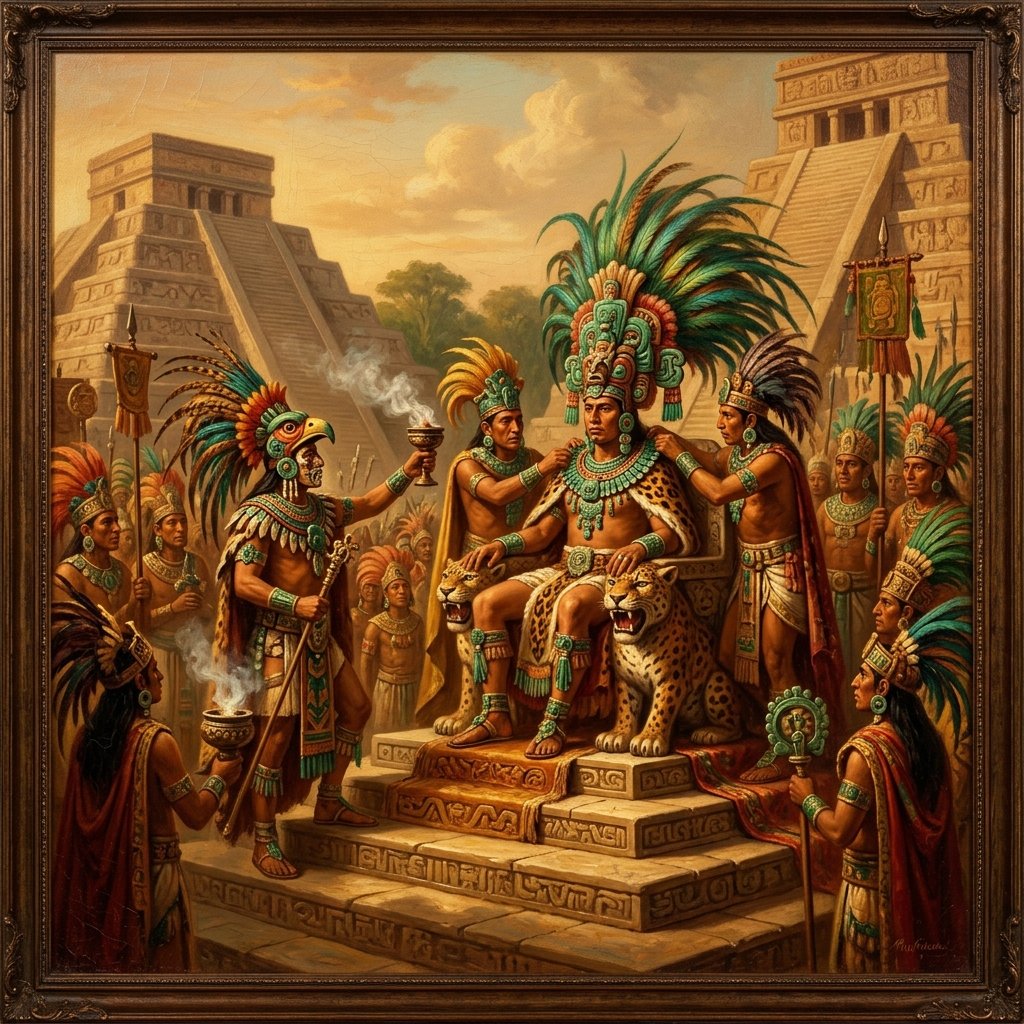
El Mirador and other great Preclassic cities decline — possibly due to drought, deforestation, or political upheaval. Power shifts eastward and southward. Tikal, Uaxactún, and Calakmul begin their rise. The stela cult — erecting carved stone monuments to record royal history — becomes the defining Maya political practice. The institution of divine kingship (k'uhul ajaw) crystallizes.
The Classic Period Begins
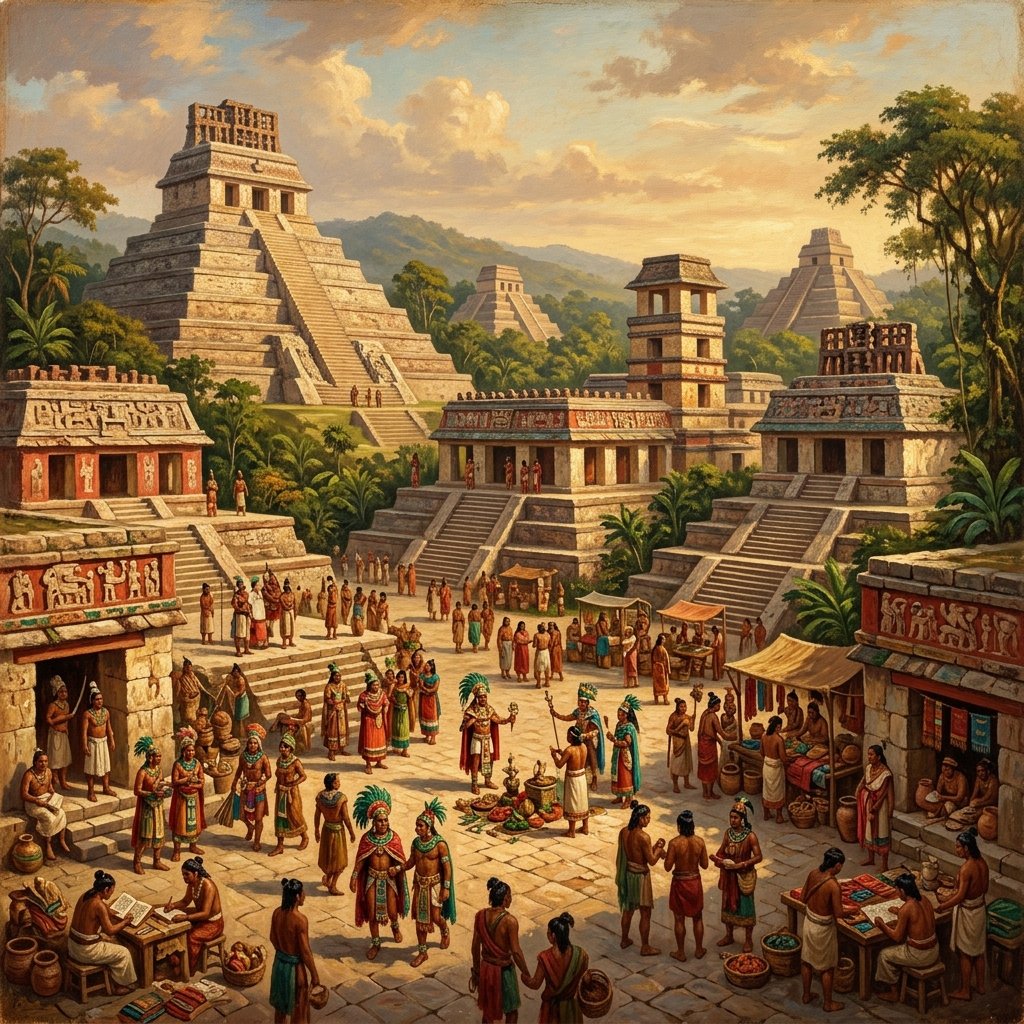
Scholars mark the beginning of the Classic Period at approximately 250 AD, defined by the proliferation of Long Count dates on stelae, the fully developed hieroglyphic writing system, and the establishment of powerful royal dynasties. The Maya world enters its golden age — a 650-year period of extraordinary artistic, intellectual, and architectural achievement across dozens of independent city-states.
The Teotihuacan "Arrival" at Tikal
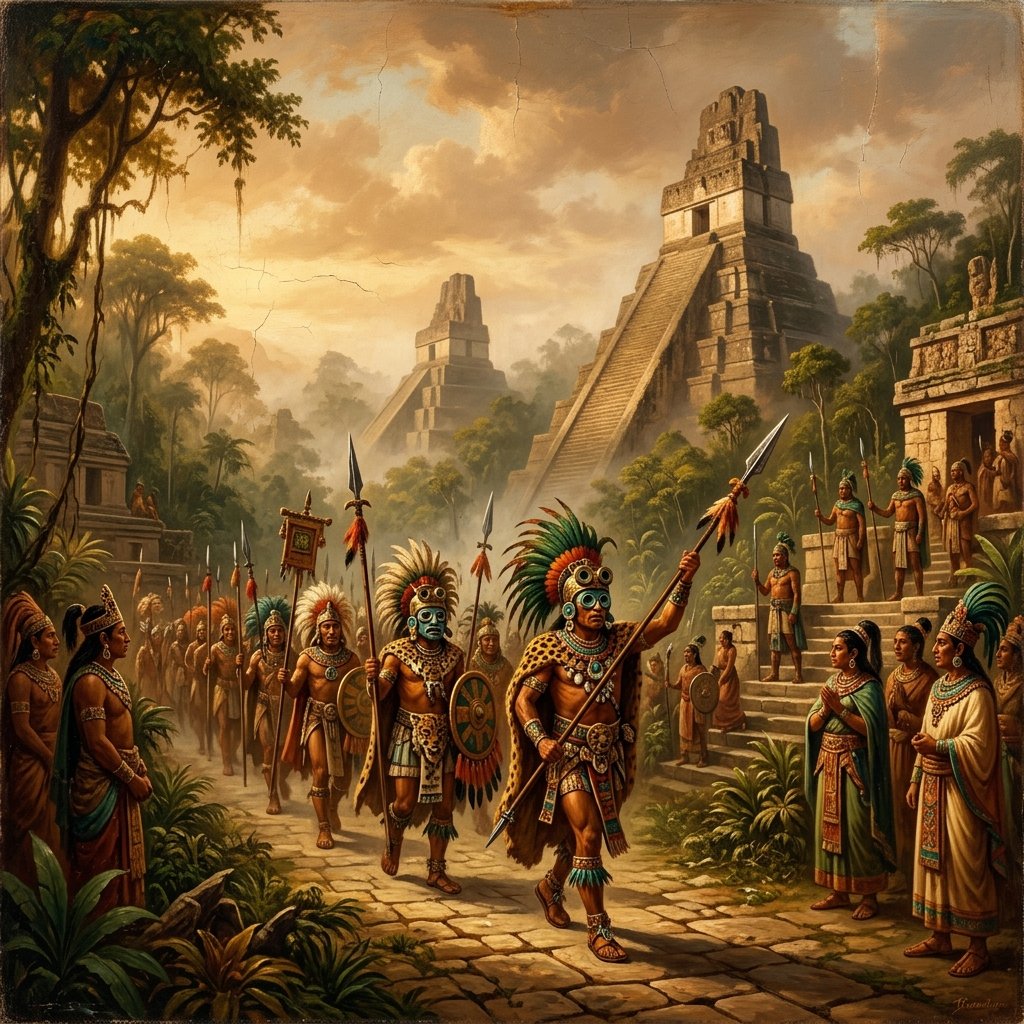
On January 16, 378 AD (recorded as 11.0.10.0.0 8 Ahau 13 Yax in the Maya Long Count), a foreign warlord called Siyaj K'ahk' ("Fire is Born") arrives at Tikal, apparently from the great central Mexican city of Teotihuacan. The reigning Tikal king dies on the same day. A new dynasty is installed, initiating a period of Teotihuacan influence across the Maya lowlands that transforms political organization, artistic style, and warfare practices.
Early Classic Fluorescence
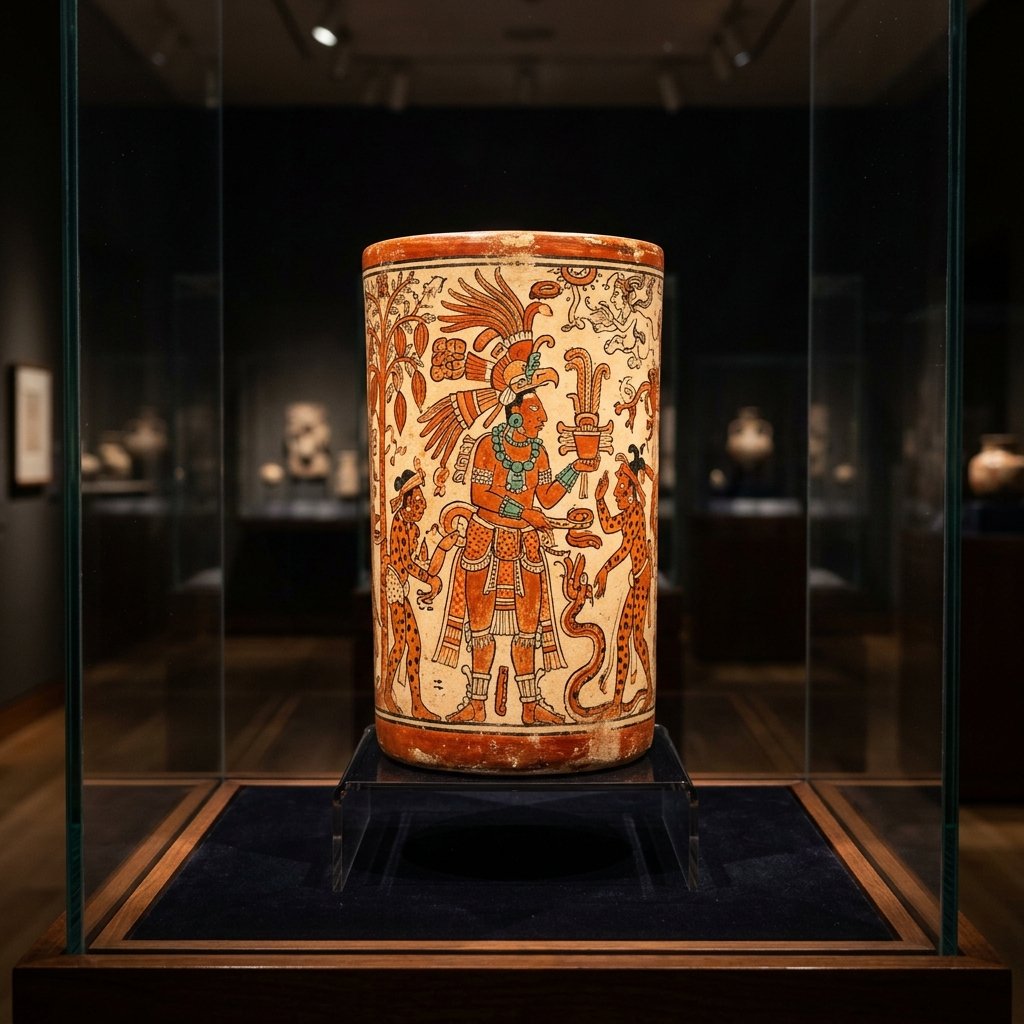
Tikal emerges as the dominant power in the central lowlands. Palenque begins its rise in the western Maya region. Copán establishes itself as the intellectual and artistic center of the southeastern frontier. The corbel vault, polychrome ceramic painting, and elaborate royal tomb burials reach new heights of sophistication. The population of the Maya lowlands grows rapidly, supported by intensive agricultural systems.
The Star War — Calakmul Defeats Tikal
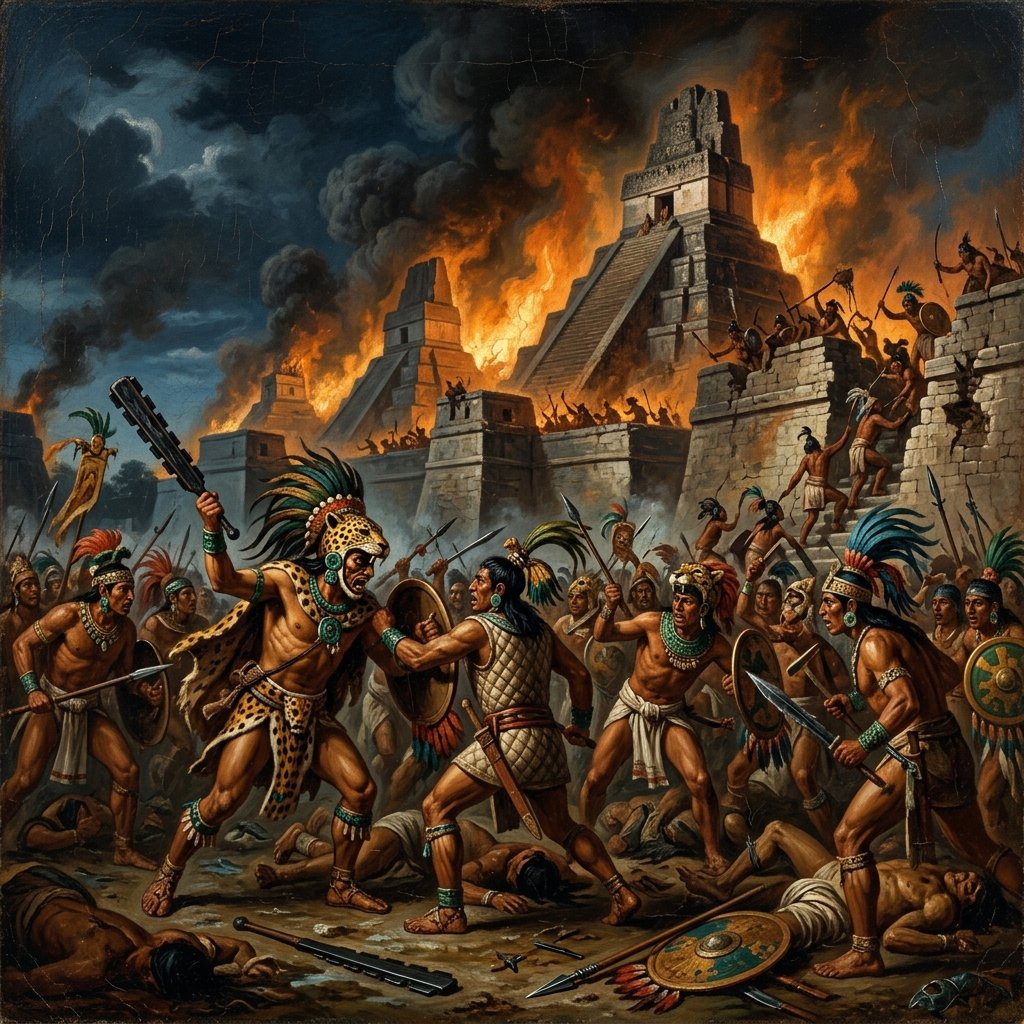
In a devastating military defeat recorded as a "star war" (a specific type of Maya warfare associated with Venus events), the snake-dynasty kingdom of Calakmul defeats Tikal. The Tikal royal family is humiliated, the stelae are smashed, and a 130-year "hiatus" begins during which no new monuments are erected at the once-mighty city. Calakmul emerges as the supreme power in the Maya world, establishing a vast alliance network across the lowlands.
K'inich Janaab Pakal I — King of Palenque
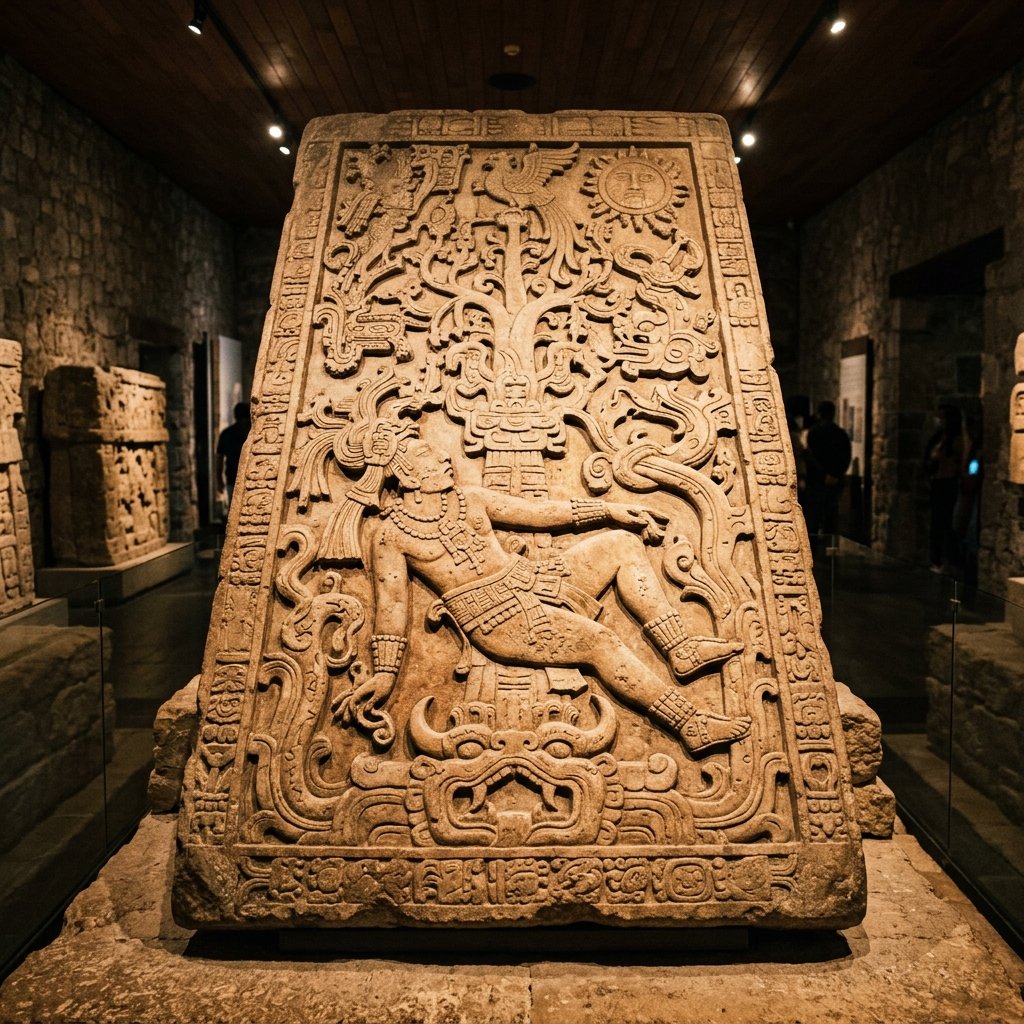
The most famous Maya king ascends the throne of Palenque at age 12 and rules for 68 years. Under Pakal, Palenque becomes the artistic and architectural jewel of the Maya world. His funerary temple — the Temple of the Inscriptions — contains one of the most spectacular royal tombs ever discovered in the Americas. The carved sarcophagus lid, depicting Pakal descending into the jaws of the underworld, is among the most iconic images in Maya art.
Tikal's Revenge — Jasaw Chan K'awiil I
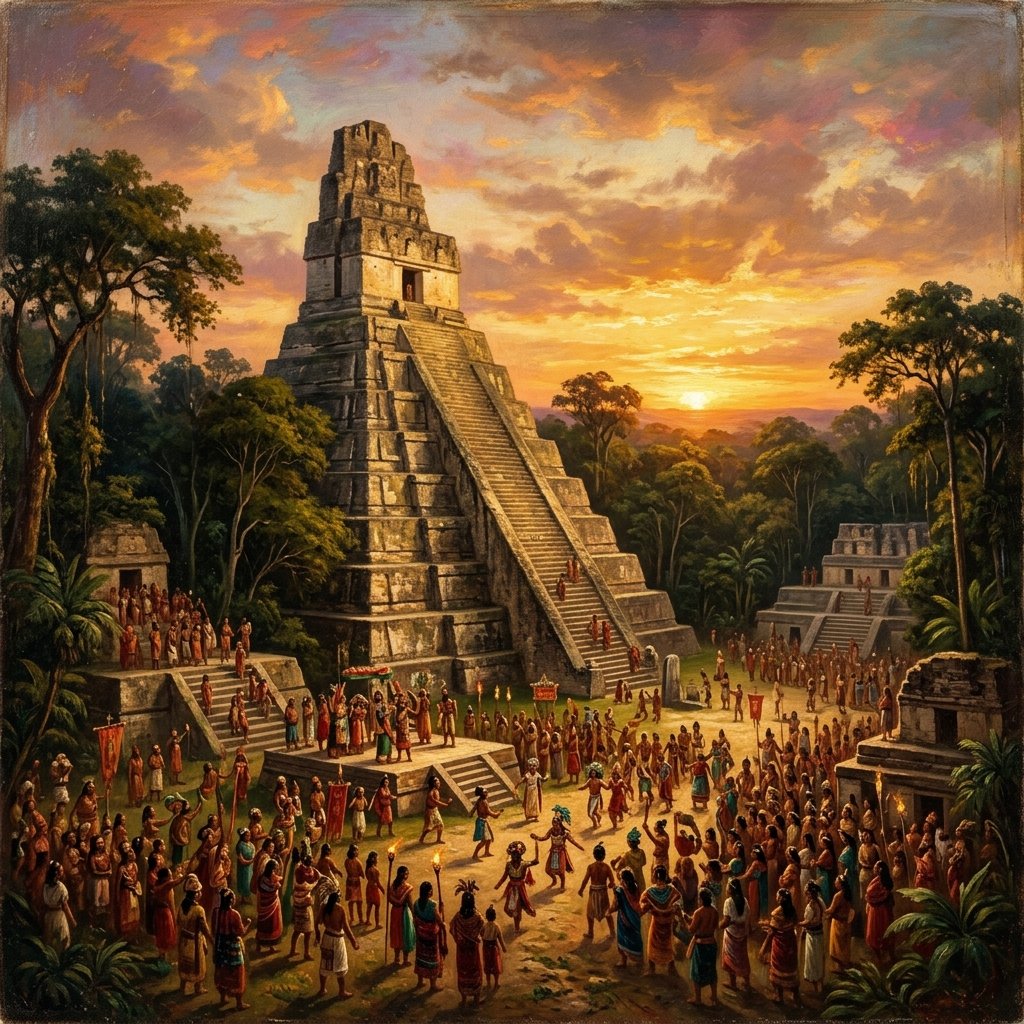
After more than a century of subjugation, Tikal rises again under King Jasaw Chan K'awiil I. In a decisive military campaign, Tikal defeats Calakmul and captures its king. This victory restores Tikal to preeminence and initiates a massive building program. Temples I and II — the iconic twin pyramids that define Tikal's skyline today — are constructed during this period of triumphant renewal.
Waxaklajuun Ub'aah K'awiil — Copán's Great King
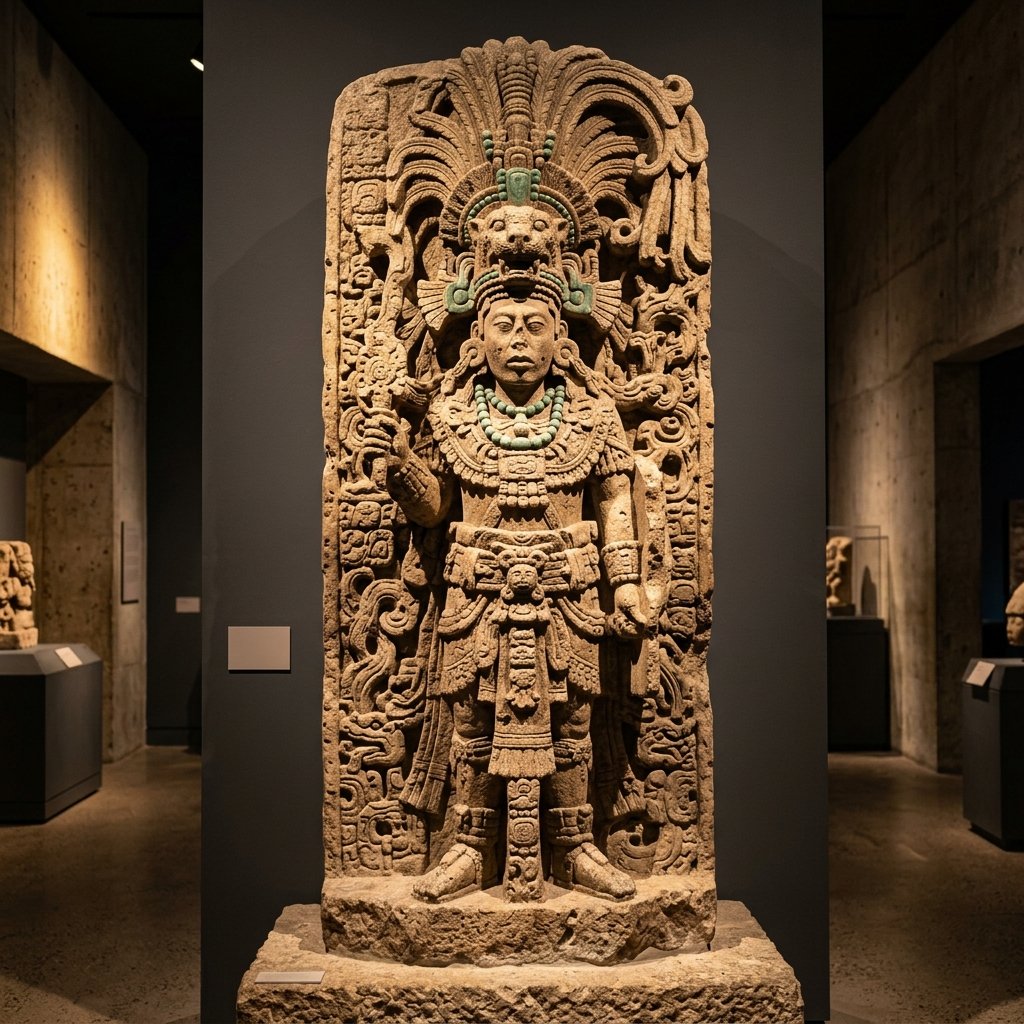
The thirteenth ruler of Copán, known as "18 Rabbit," presides over the creation of some of the most beautiful sculptural works in Maya art. The Great Plaza at Copán is adorned with three-dimensional portrait stelae of unprecedented artistry. His unexpected capture and decapitation by the ruler of nearby Quiriguá in 738 AD will shock the Maya world and permanently diminish Copán's power.
The Bonampak Murals — War and Ceremony
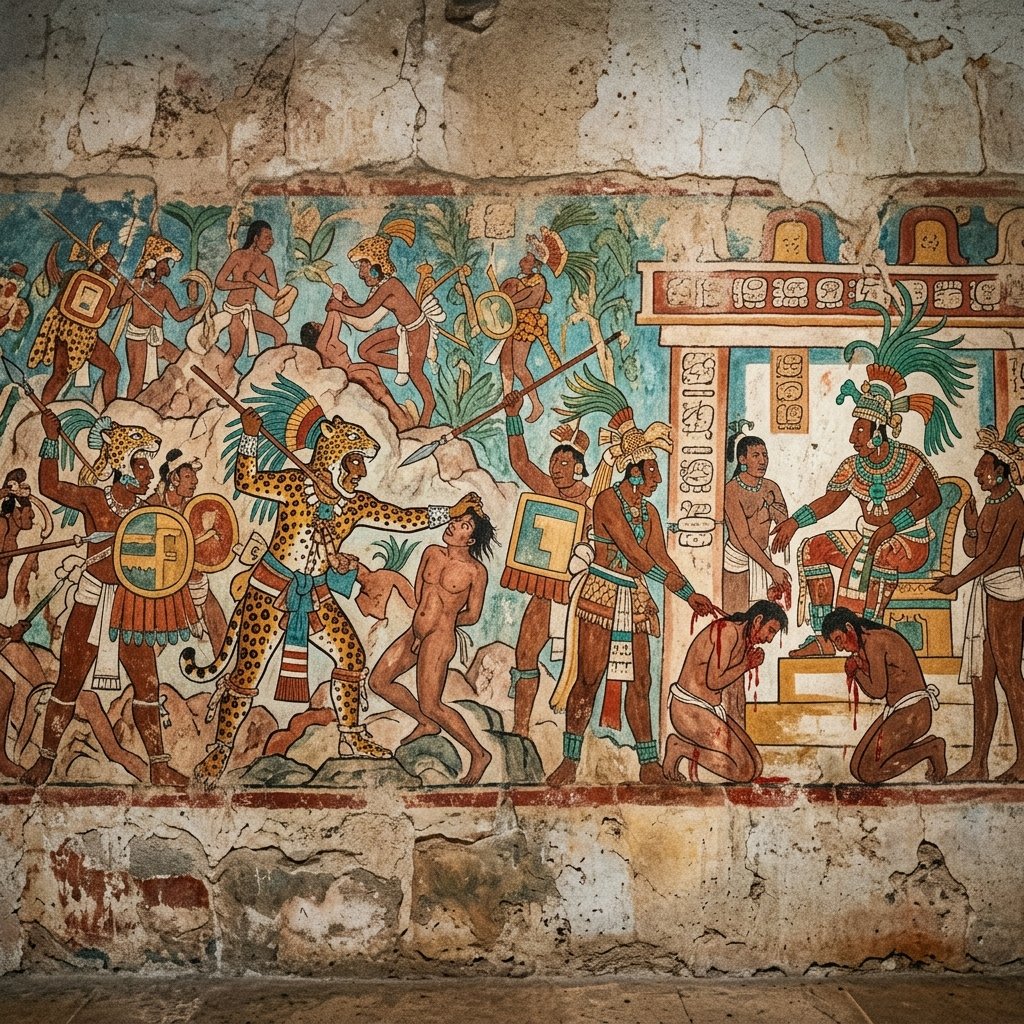
At the small site of Bonampak in Chiapas, Mexico, a series of rooms are painted with the most extensive and best-preserved murals of the ancient Maya world. Discovered in 1946, these vivid frescoes depict a battle, the judgment and torture of captives, and a grand celebration with musicians and dancers. They provide an unmatched window into Late Classic Maya court life, warfare, music, costume, and social hierarchy.
The Classic Period Collapse
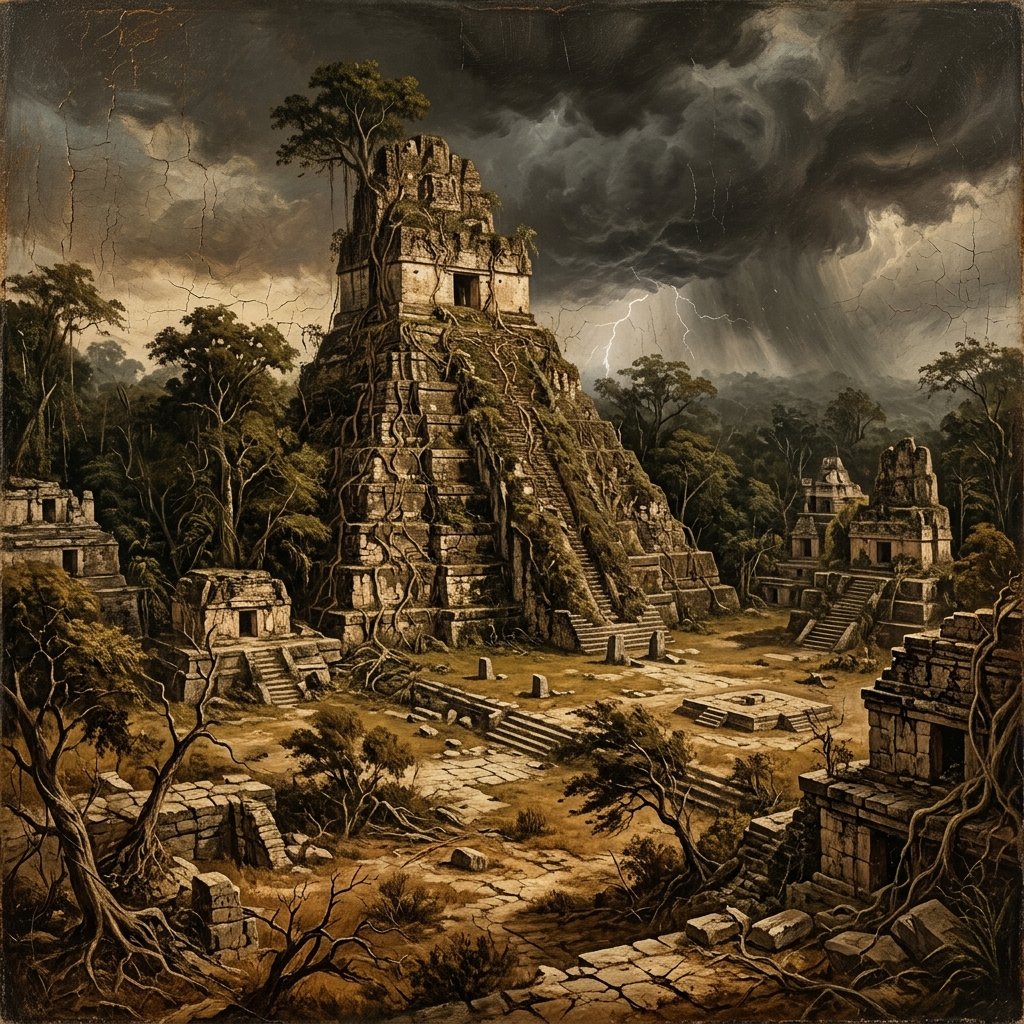
Over two centuries, dozens of lowland Maya cities are abandoned. The causes remain debated but likely include severe drought (confirmed by paleoclimate data from lake sediments and cave stalagmites), intensified warfare, environmental degradation from deforestation, political fragmentation, and the breakdown of trade networks. By 1000 AD, the great cities of Tikal, Palenque, Copán, and Calakmul stand empty — consumed by the forest. This remains one of the most studied civilizational collapses in human history.
Rise of Chichén Itzá
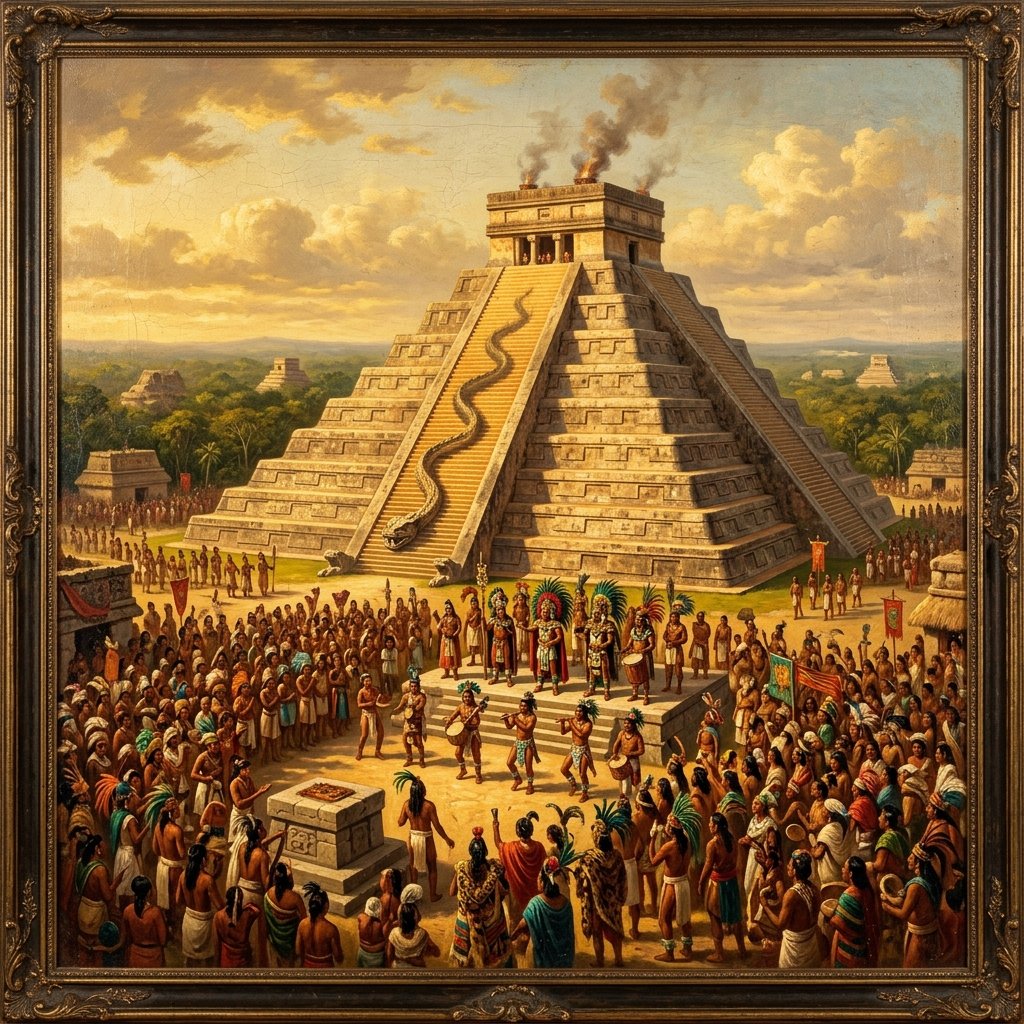
As the southern lowland cities collapse, power shifts north to the Yucatán Peninsula. Chichén Itzá emerges as the dominant center, blending Maya and central Mexican (Toltec-influenced) architectural and artistic styles. The Temple of Kukulkán (El Castillo), the Great Ballcourt, and the Sacred Cenote become the most famous monuments of the Postclassic Maya world. The city may have been ruled by a council rather than a single king.
Mayapan and the League of Cities
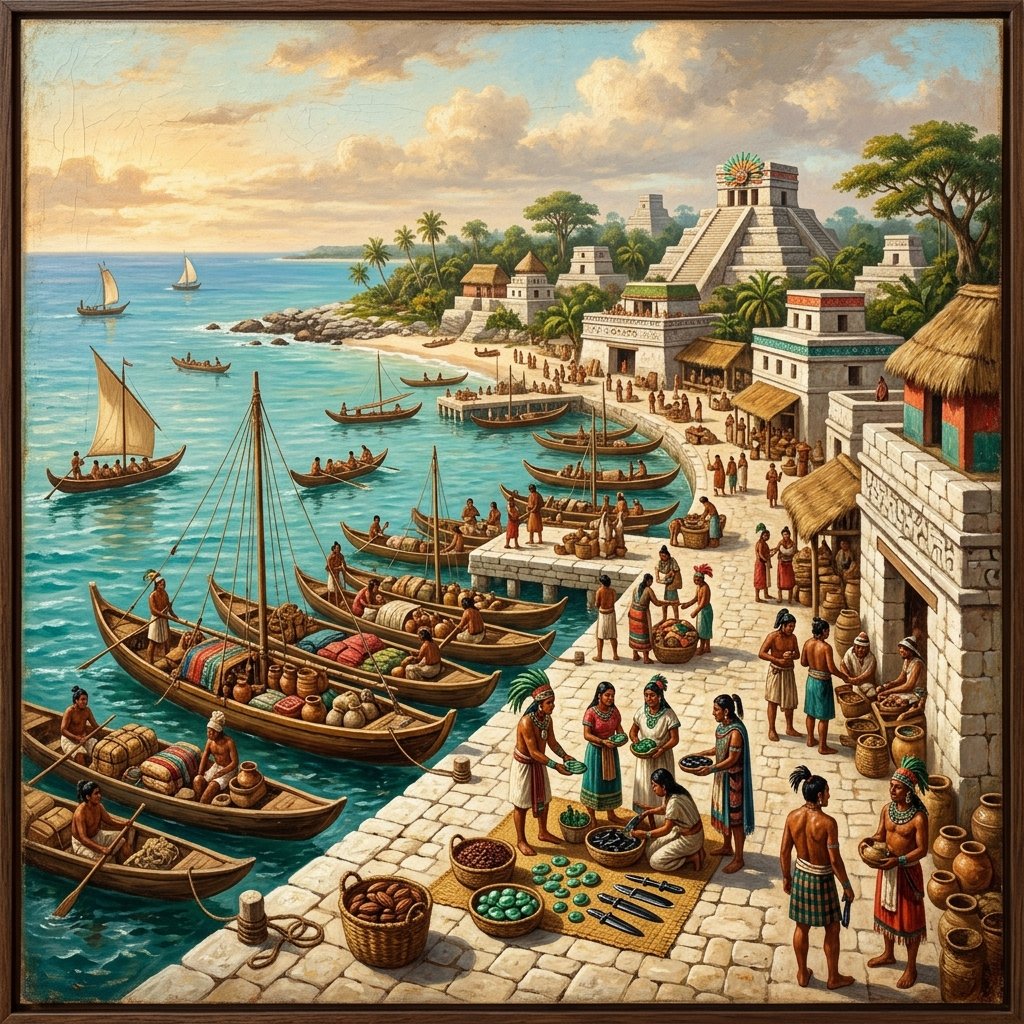
After Chichén Itzá's decline, the walled city of Mayapan becomes the political capital of the northern Yucatán, governing through a confederation of ruling families. Maritime trade flourishes along the Caribbean coast, with Port cities like Tulum and Xcaret serving as hubs connecting Maya merchants with exchange networks reaching as far as central Mexico and the Caribbean islands.
First European Contact
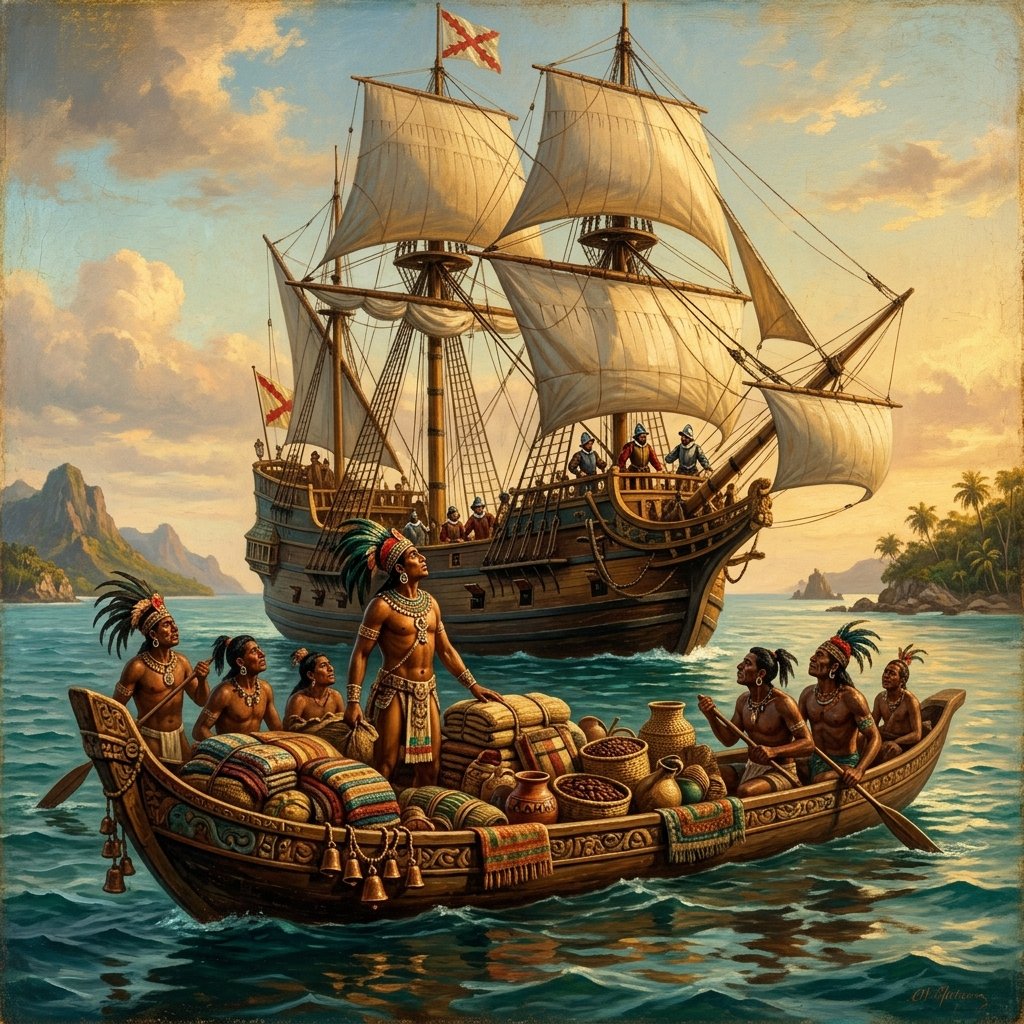
On his fourth voyage, Christopher Columbus encounters a large Maya trading canoe off the Bay Islands of Honduras — the first documented European contact with Maya civilization. The canoe carried cacao, copper bells, obsidian tools, cotton textiles, and pottery — testifying to the scope of Maya maritime commerce. Columbus is reportedly impressed by the sophistication of the traders but does not pursue further contact.
Hernán Cortés and the Onset of Conquest
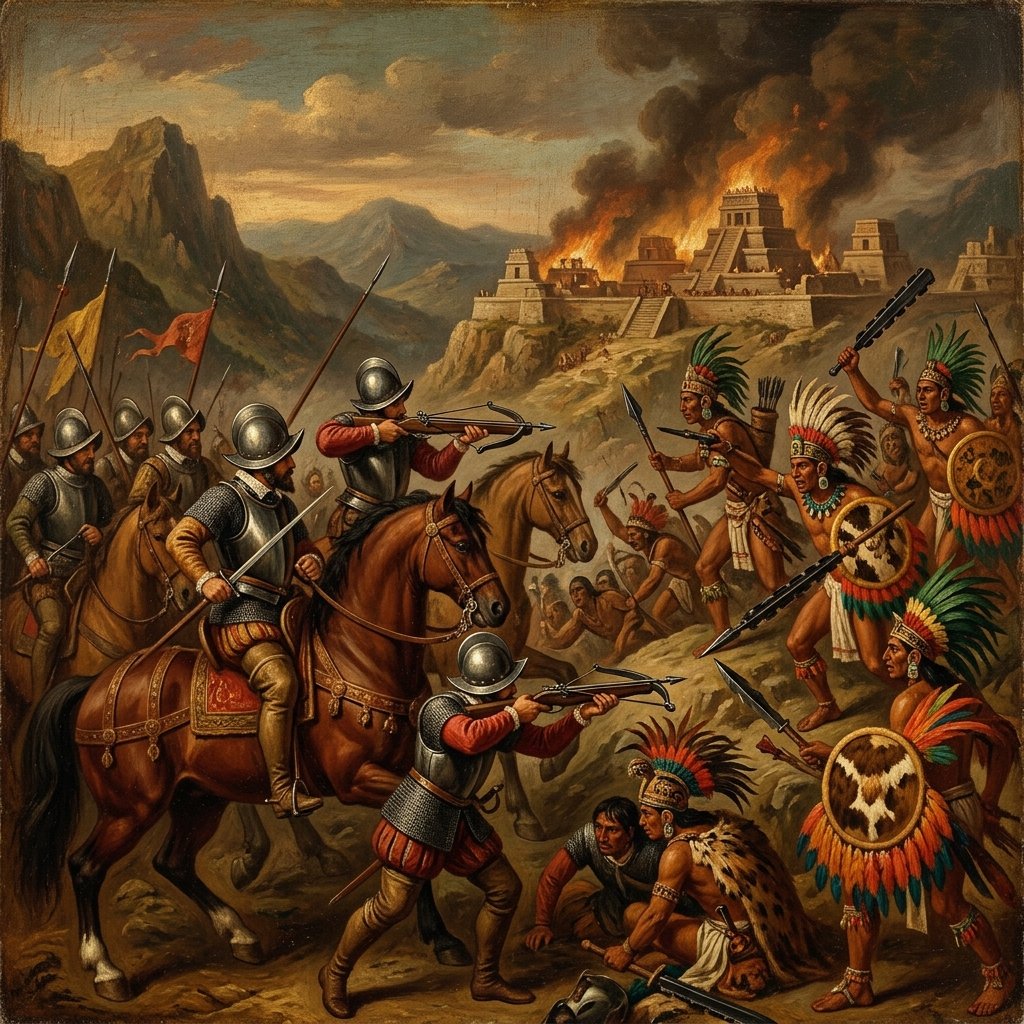
Hernán Cortés passes through Maya territory on his way to the Aztec capital of Tenochtitlan. In 1524, Pedro de Alvarado — Cortés's lieutenant — invades the Maya highlands of Guatemala with Spanish soldiers and thousands of indigenous allies. He burns the K'iche' capital of Q'umarkaj (Utatlán), defeats the Kaqchikel, and establishes Spanish colonial authority. Maya resistance is fierce and sustained.
Diego de Landa and the Book Burning
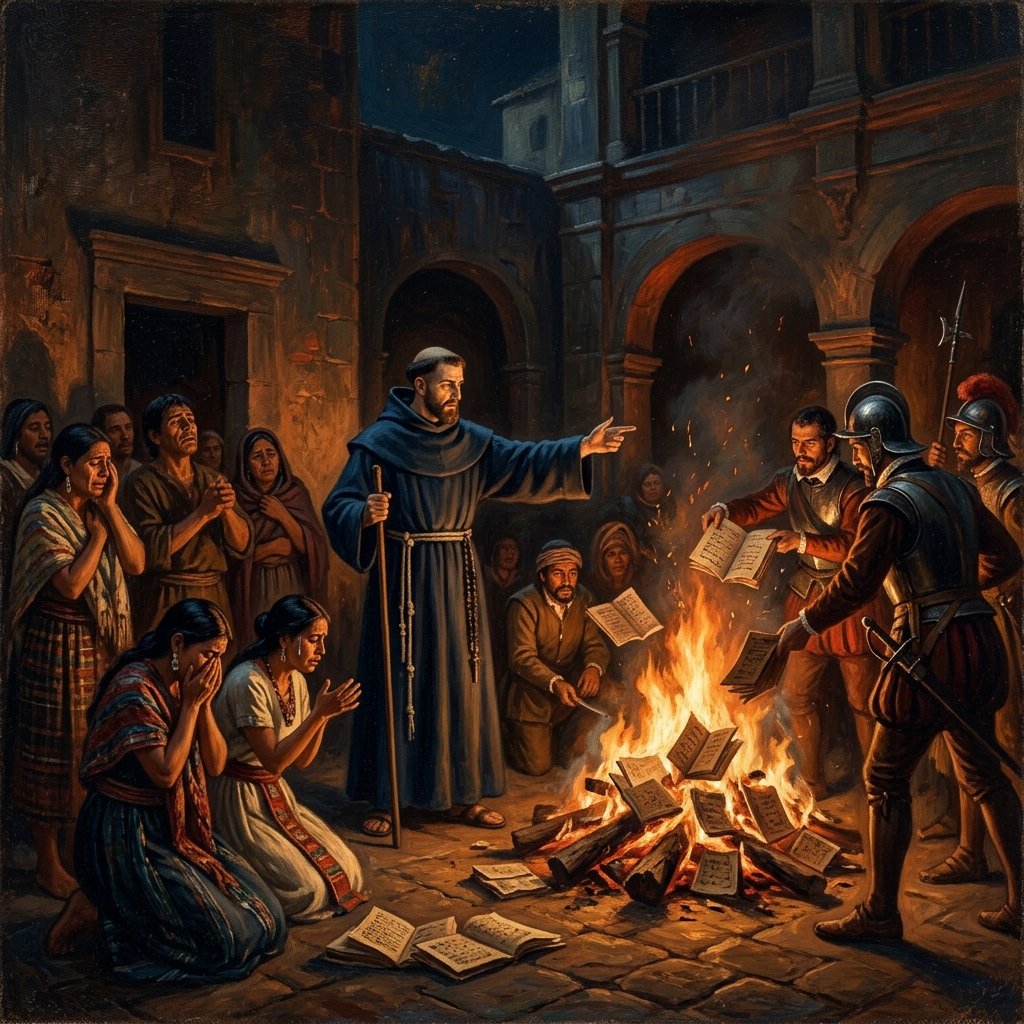
Franciscan friar Diego de Landa, suspecting continued "idolatry" among the converted Maya, orders the destruction of thousands of Maya artworks, sculptures, and — most devastatingly — codices (folding-bark books containing centuries of accumulated knowledge about astronomy, medicine, history, and ritual). Only four Maya codices survive this destruction. Ironically, Landa also wrote Relación de las Cosas de Yucatán, which becomes one of the most important sources for understanding pre-conquest Maya culture.
Fall of the Last Independent Maya Kingdom
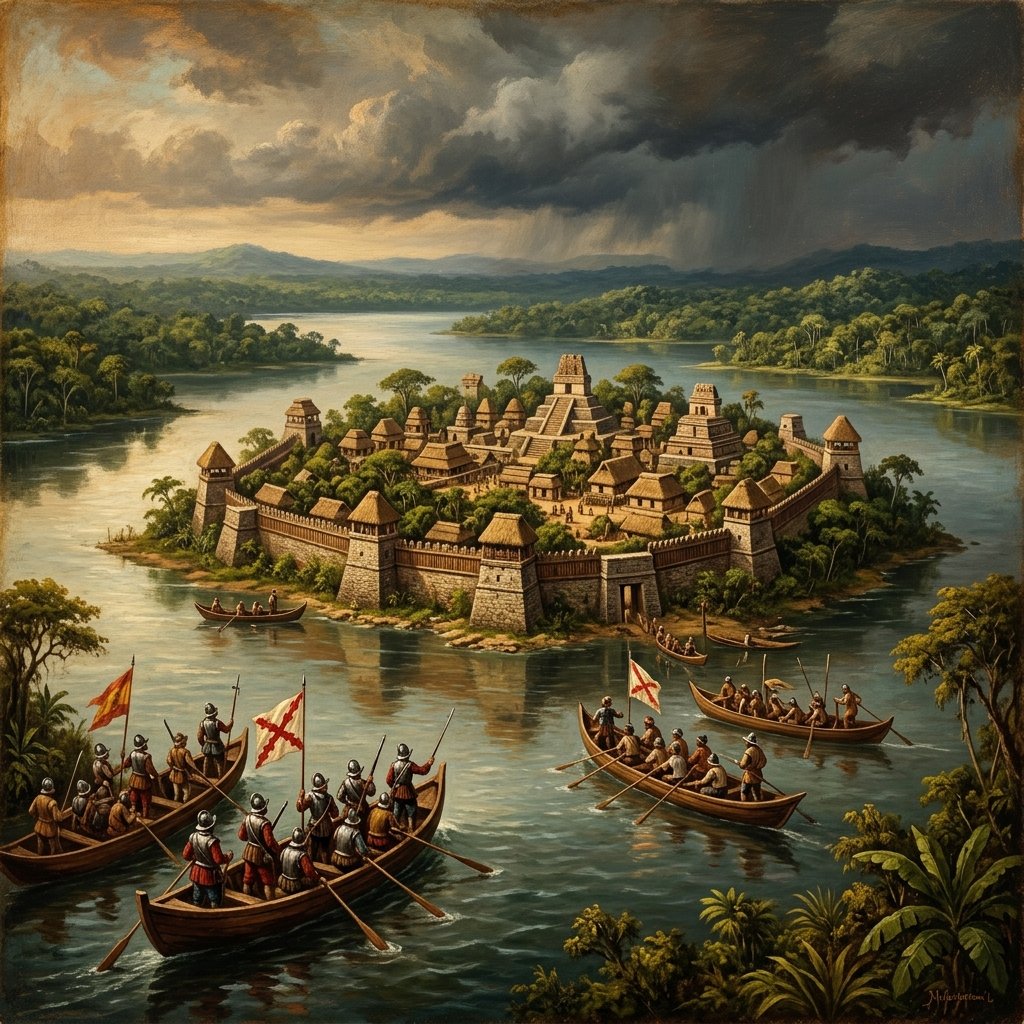
The Itza Maya kingdom at Noj Petén (modern Flores, Guatemala) — an island city in Lake Petén Itzá — is conquered by Spanish forces under Martín de Ursúa. This is the last independent Maya political entity, falling 173 years after the initial Spanish invasion. The extraordinary duration of Maya resistance makes it one of the longest in the history of European colonization of the Americas.
Stephens and Catherwood Rediscover the Maya
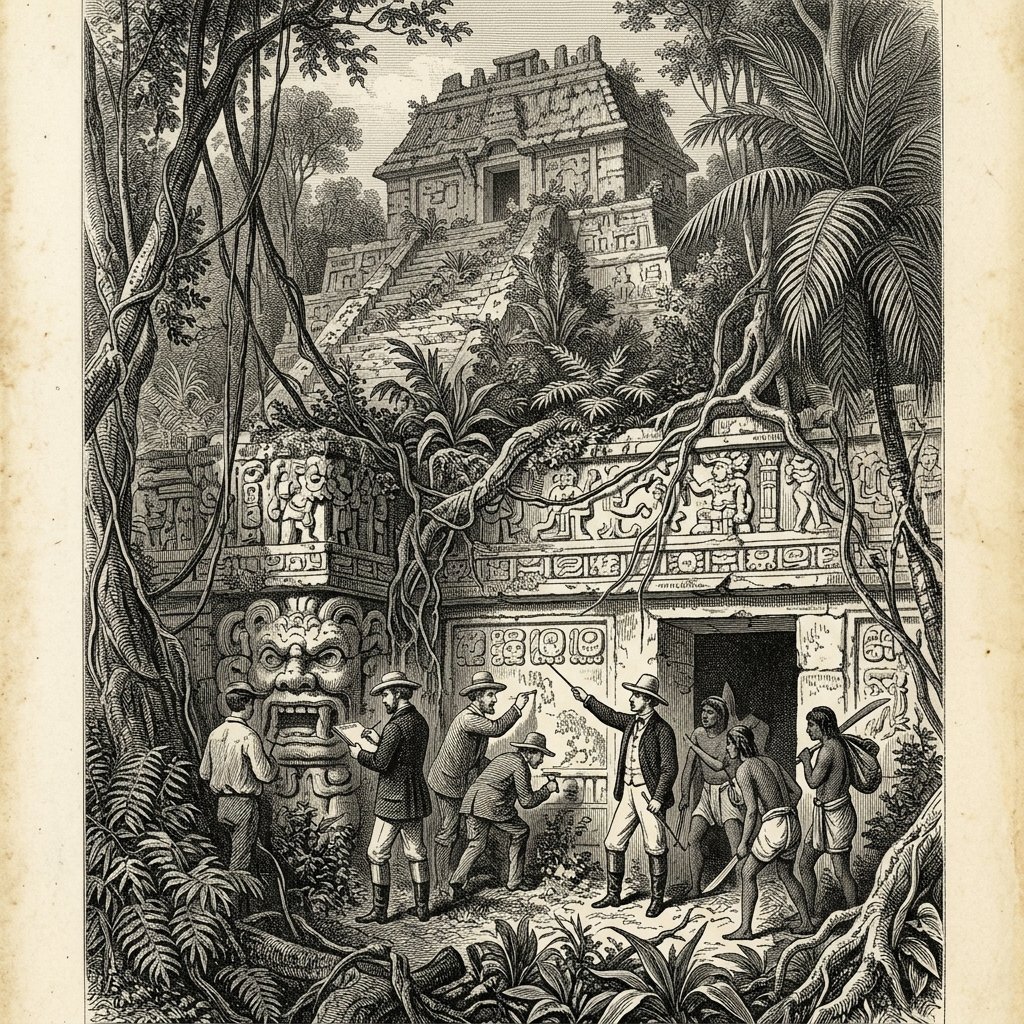
American explorer John Lloyd Stephens and British artist Frederick Catherwood publish Incidents of Travel in Central America, Chiapas, and Yucatan — stunning illustrated accounts of their journeys to Copán, Palenque, Uxmal, and dozens of other Maya sites. Catherwood's meticulous engravings introduce the Maya to the Western world and ignite scholarly and public fascination that continues to this day.
The Caste War of Yucatán
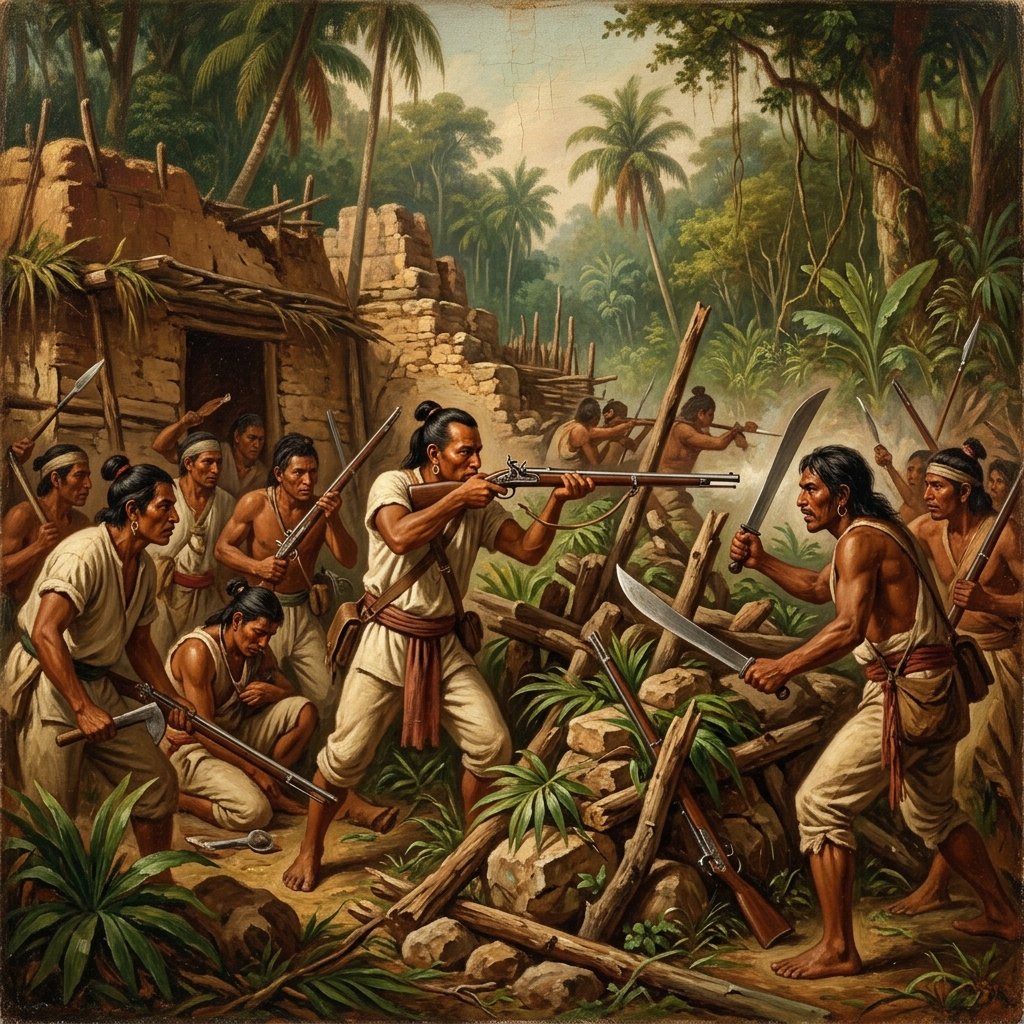
Indigenous Maya rebels in the Yucatán Peninsula launch one of the most significant indigenous uprisings in the Americas. The revolt, known as the Caste War, nearly succeeds in driving non-Maya settlers from the peninsula entirely. The independent Maya state of Chan Santa Cruz maintains sovereignty for over 50 years, finally falling to Mexican federal forces in 1901. This conflict demonstrates that Maya political agency and military capacity endured well into the modern era.
Discovery of Pakal's Tomb
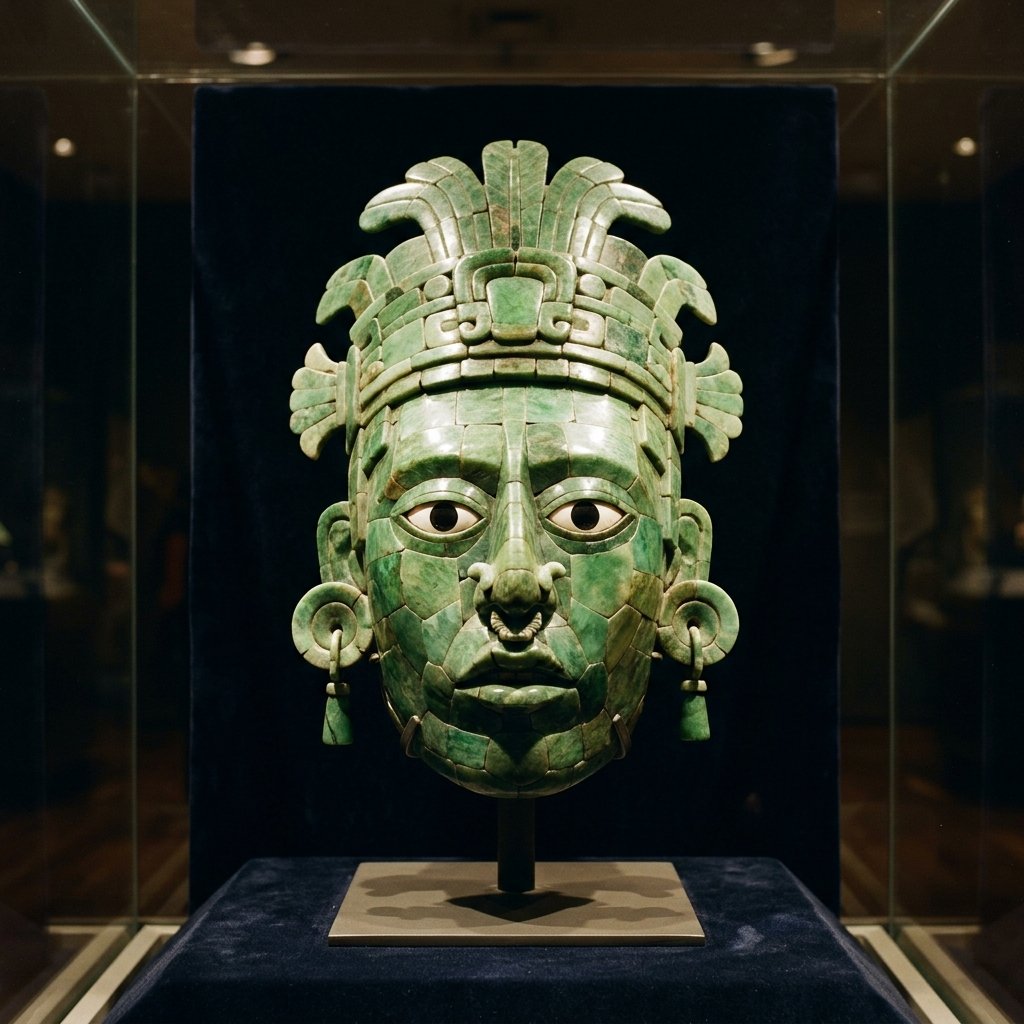
Mexican archaeologist Alberto Ruz Lhuillier discovers the tomb of K'inich Janaab Pakal beneath the Temple of the Inscriptions at Palenque. The intact royal burial — featuring a carved sarcophagus, jade mosaic funerary mask, and lavish offerings — is one of the most spectacular archaeological discoveries of the 20th century, rivaling Howard Carter's opening of Tutankhamun's tomb in Egypt.
The Great Decipherment

Building on the work of Yuri Knorosov (who in 1952 proved that Maya glyphs were at least partially phonetic), a generation of epigraphers — including Linda Schele, David Stuart, and Nikolai Grube — achieve the near-complete decipherment of Maya hieroglyphic writing. For the first time, scholars can read the words of ancient Maya kings, priests, and scribes. This revolution transforms Maya studies from archaeology into history.
Rigoberta Menchú Wins the Nobel Peace Prize
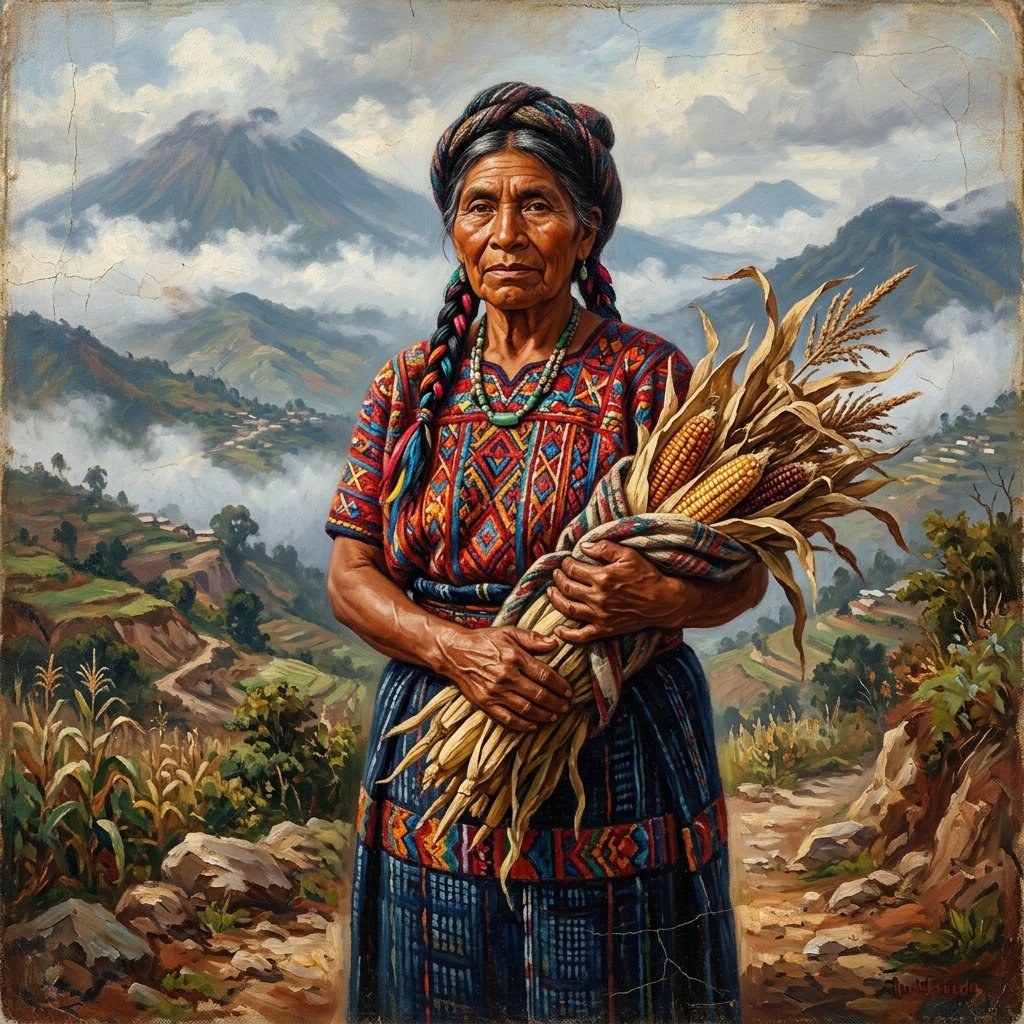
K'iche' Maya activist Rigoberta Menchú Tum receives the Nobel Peace Prize for her work advocating for indigenous rights in Guatemala during and after the Guatemalan Civil War (1960–1996), which resulted in the deaths and displacement of tens of thousands of Maya civilians. Her recognition brings global attention to the ongoing struggles and resilience of living Maya communities.
The "End" of the 13th Bak'tun
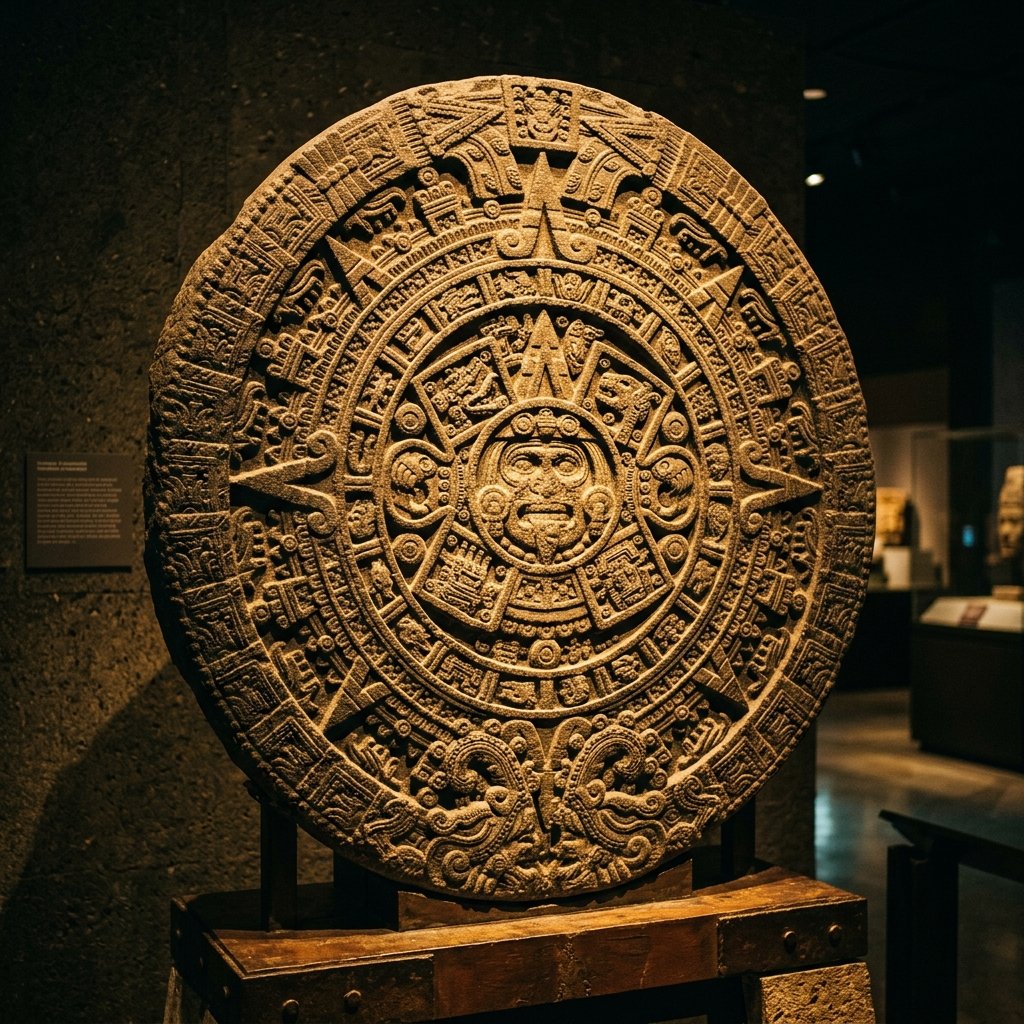
On December 21, 2012, the Maya Long Count calendar completes its 13th Bak'tun cycle (13.0.0.0.0 4 Ahau 3 Kankin). Despite widespread popular speculation about a "Maya apocalypse," scholars and living Maya spiritual leaders consistently explain that the date marks not the end of the world but the completion of a great calendrical cycle — analogous to an odometer rolling over. The date passes without incident but generates unprecedented global interest in Maya culture.
The Living Maya — 6 Million Strong
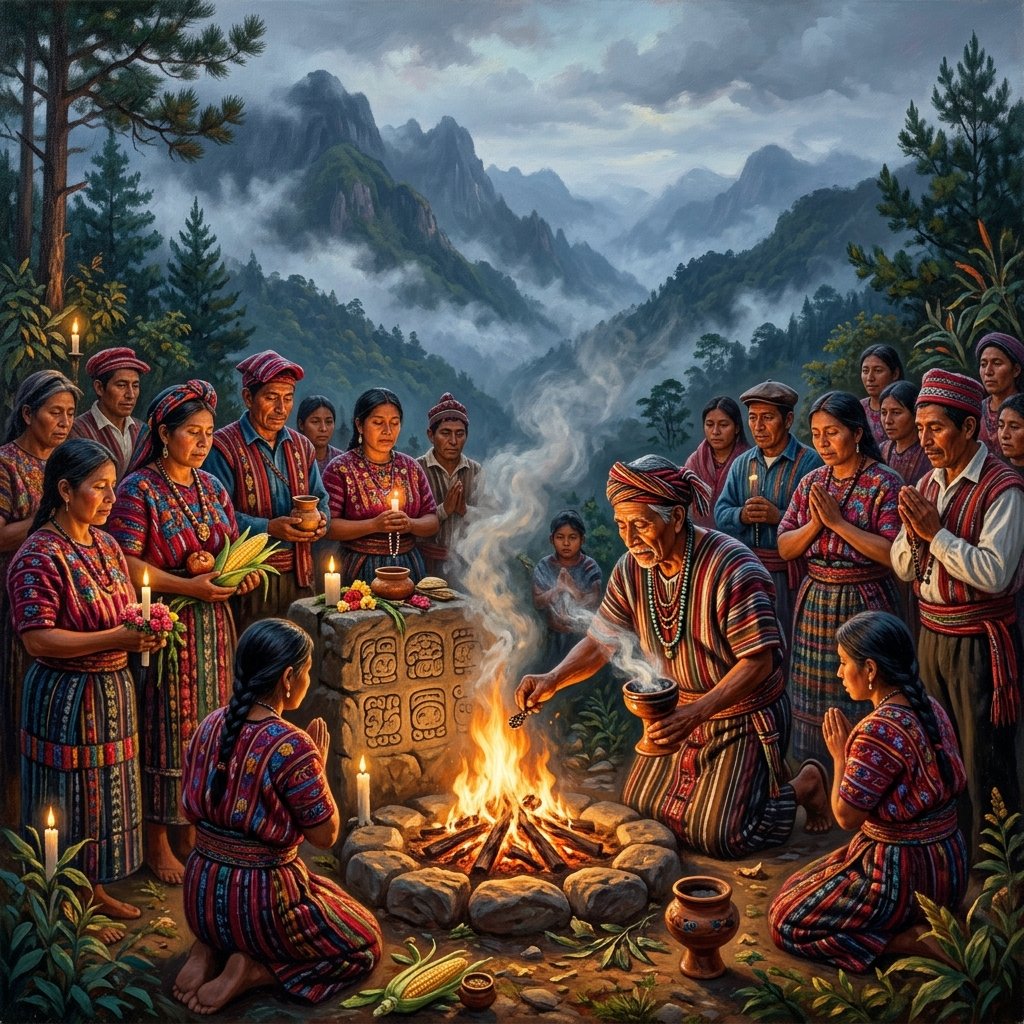
Over 6 million Maya people live in Mexico, Guatemala, Belize, Honduras, and El Salvador. They speak more than 30 living Maya languages — including K'iche', Yucatec, Kaqchikel, Mam, Q'eqchi', and Tzotzil. Maya communities maintain ceremonial calendars, traditional medicine, textile arts, and agricultural practices that connect directly to their ancient heritage. Maya writers, artists, activists, and scholars are producing new work that honors tradition while engaging with the modern world. The Maya civilization is not a ruin — it is a living, evolving cultural force.
The Eras of Maya Civilization
Preclassic Period
c. 2000 BC – 250 ADThe formative era when Maya culture takes shape. From the first farming villages to the massive Preclassic cities of El Mirador and Nakbé, this period sees the development of writing, the calendar, divine kingship, and monumental architecture. By the end of this era, Maya civilization is one of the most sophisticated in the Americas.
Classic Period
250 – 900 ADThe golden age. Dozens of independent city-states — Tikal, Palenque, Copán, Calakmul — flourish as centers of art, science, and political power. Population reaches 10–15 million. Writing, astronomy, and mathematics reach their zenith. The "superpower" rivalry between Tikal and Calakmul defines the political landscape. This era produces the vast majority of Maya monumental inscriptions.
Postclassic Period
900 – 1524 ADAfter the southern lowland collapse, civilization continues and transforms in the northern Yucatán. Chichén Itzá and Mayapan become dominant centers. Maritime trade networks flourish. New architectural and artistic styles emerge, blending Maya traditions with central Mexican influences. The K'iche' and Kaqchikel Maya build powerful highland kingdoms.
Colonial & Modern
1524 AD – PresentSpanish conquest, colonial resistance, independence struggles, and the remarkable persistence of Maya culture through five centuries of external domination. Over 6 million Maya people maintain living traditions today. The decipherment of Maya writing in the late 20th century transforms archaeology into history, allowing modern scholars to read the voices of ancient kings.
Frequently Asked Questions
When did the Maya civilization begin?
The Maya civilization began around 2000 BC with the establishment of permanent agricultural communities in the highlands of Guatemala and along the Pacific coast. However, the roots of Maya culture may extend even further back, with the earliest evidence of settled village life dating to approximately 1800 BC at sites like Cuello in Belize.
When was the peak of Maya civilization?
The Classic Period (250–900 AD) is generally considered the peak of Maya civilization. During this era, dozens of independent city-states flourished across modern-day Guatemala, Mexico, Belize, and Honduras. Population reached an estimated 10–15 million people, and achievements in writing, astronomy, mathematics, art, and architecture reached their zenith.
Did the Maya civilization collapse?
The southern lowland Maya cities experienced a dramatic decline between 800–1000 AD, often called the "Classic Maya Collapse." However, this was not the end of Maya civilization. Northern Yucatan cities like Chichén Itzá and Uxmal flourished during the Postclassic period, and Maya resistance to Spanish conquest continued until 1697. Over 6 million Maya people are alive today, making them one of the largest indigenous populations in the Americas.
Are the Maya still alive today?
Absolutely. Over 6 million Maya people live in Mexico, Guatemala, Belize, Honduras, and El Salvador today. They speak more than 30 living Maya languages and maintain rich cultural, spiritual, and artistic traditions. Maya daykeepers still use the traditional 260-day Tzolk'in calendar for ceremonies, and Maya communities continue agricultural, textile, and spiritual practices that stretch back millennia.
Scholarly References
- Coe, M.D. The Maya. Thames & Hudson, 8th ed., 2011.
- Sharer, R. & Traxler, L. The Ancient Maya. Stanford University Press, 6th ed., 2006.
- Martin, S. & Grube, N. Chronicle of the Maya Kings and Queens. Thames & Hudson, 2nd ed., 2008.
- Stuart, D. The Order of Days: Unlocking the Secrets of the Ancient Maya. Harmony Books, 2011.
- Schele, L. & Freidel, D. A Forest of Kings: The Untold Story of the Ancient Maya. William Morrow, 1990.
- Demarest, A.A. Ancient Maya: The Rise and Fall of a Rainforest Civilization. Cambridge University Press, 2004.
- Houston, S. & Stuart, D. "The Ancient Maya Self: Personhood and Portraiture in the Classic Period." RES: Anthropology and Aesthetics, no. 33, 1998, pp. 73-101.
- Tedlock, D. Popol Vuh: The Definitive Edition. Simon & Schuster, 1996.