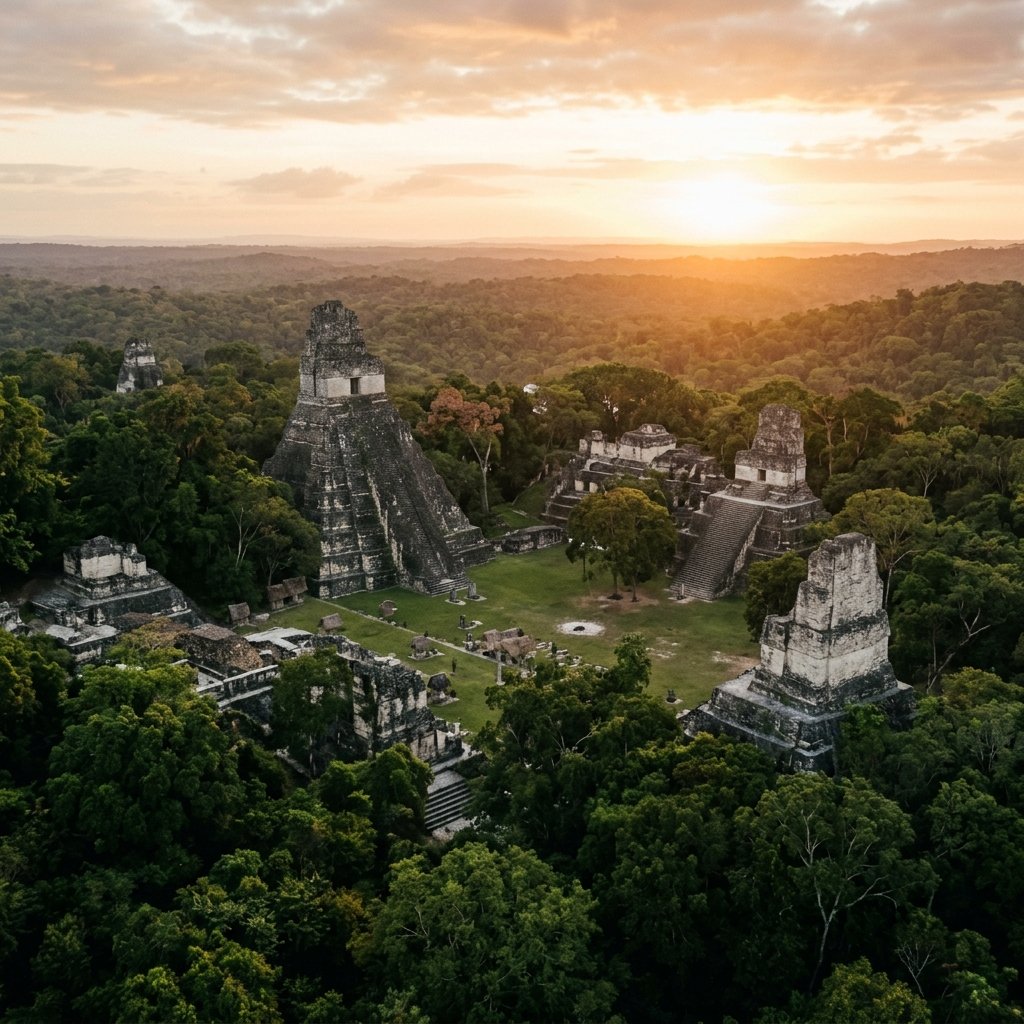
Maya Civilization at a Glance
"The Maya did not vanish. They built one of the most intellectually sophisticated civilizations on Earth — then survived conquest, colonization, and centuries of marginalization. Over six million Maya people are alive today, speaking their languages, practicing their ceremonies, and maintaining traditions that stretch back millennia. The civilization is not a ruin. It is a living legacy."
Timeline of Maya History
Preclassic Origins
Early Maya communities form in the highlands of Guatemala and the Pacific coast. Agriculture — particularly the cultivation of maize — pottery, and the first permanent settlements emerge, laying the foundation for a civilization that will endure for millennia.
First Cities and Monumental Architecture
Monumental architecture appears at sites like Nakbé and El Mirador in the Petén jungle — the latter featuring a pyramid complex larger in volume than any structure built in the Classic period. Maya society becomes increasingly hierarchical, with kings, priests, and scribes emerging as distinct social roles.
Late Classic — Wars and Peak Population
Rival city-states wage devastating wars. The Tikal-Calakmul rivalry — the "superpower conflict" of the Maya world — reshapes the political landscape across the lowlands. Population peaks at an estimated 10–15 million people, supported by intensive agriculture and sophisticated water management.
The Classic Period Collapse
Dozens of lowland cities are abandoned over two centuries. Drought, warfare, ecological degradation, and political fragmentation combine to end the Classic Maya social order. This remains one of history's most studied collapses — a cautionary tale about the limits of environmental exploitation.
Postclassic Renaissance
Power shifts north to the Yucatan Peninsula. Chichén Itzá and Mayapan become dominant centers. Maritime trade networks flourish along the Caribbean coast, connecting Maya ports to Central Mexican and Caribbean exchange systems.
Spanish Conquest
Pedro de Alvarado invades the Maya highlands, burning the K'iche' capital of Q'umarkaj. Resistance is fierce and sustained — the last independent Maya kingdom (Noj Petén, on an island in Lake Petén Itzá) does not fall until 1697, more than 170 years after first contact.
The Living Maya
Over 6 million Maya people speak 30+ Maya languages today across Mexico, Guatemala, Belize, Honduras, and El Salvador. They maintain ceremonies, agricultural practices, textile traditions, and spiritual observances that connect directly to their ancient heritage. The Maya civilization is not a ruin — it is a living, evolving cultural tradition.
The Six Great Achievements
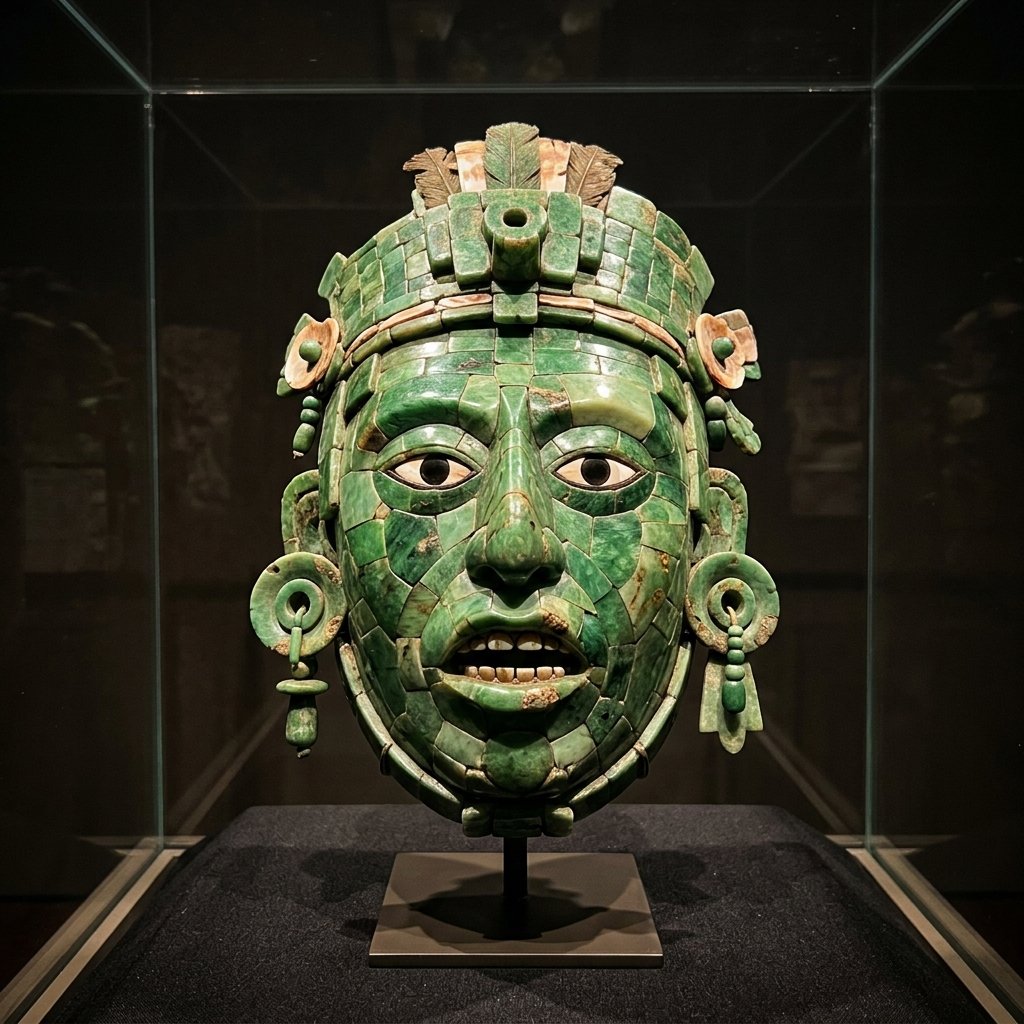
A Maya jade funerary mask — one of the supreme achievements of Maya artistic craftsmanship. These masks were placed over the faces of deceased rulers, with each piece of jade individually shaped and fitted. Jade was the most precious material in the Maya world — more valued than gold — because it represented water, breath, and the life force itself. The technical precision required to create such masks testifies to Maya mastery of lapidary arts.
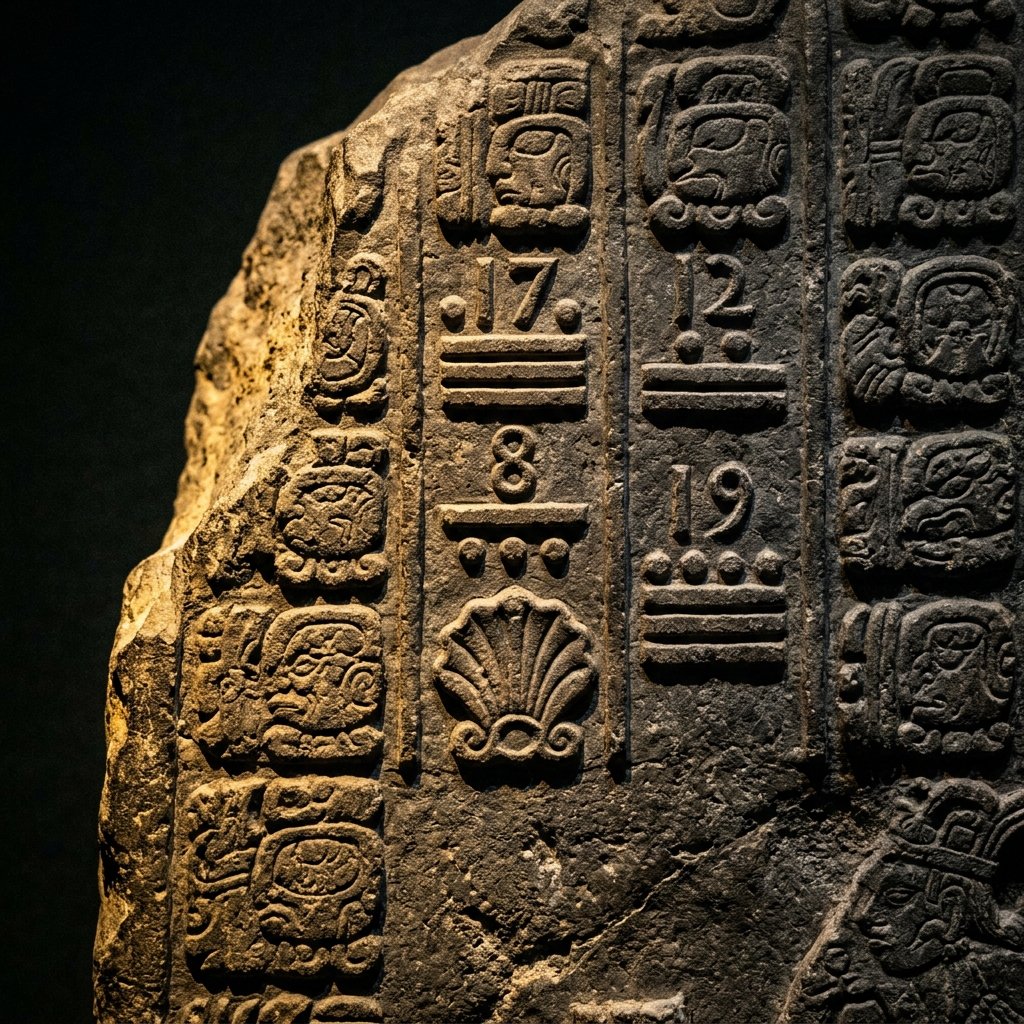
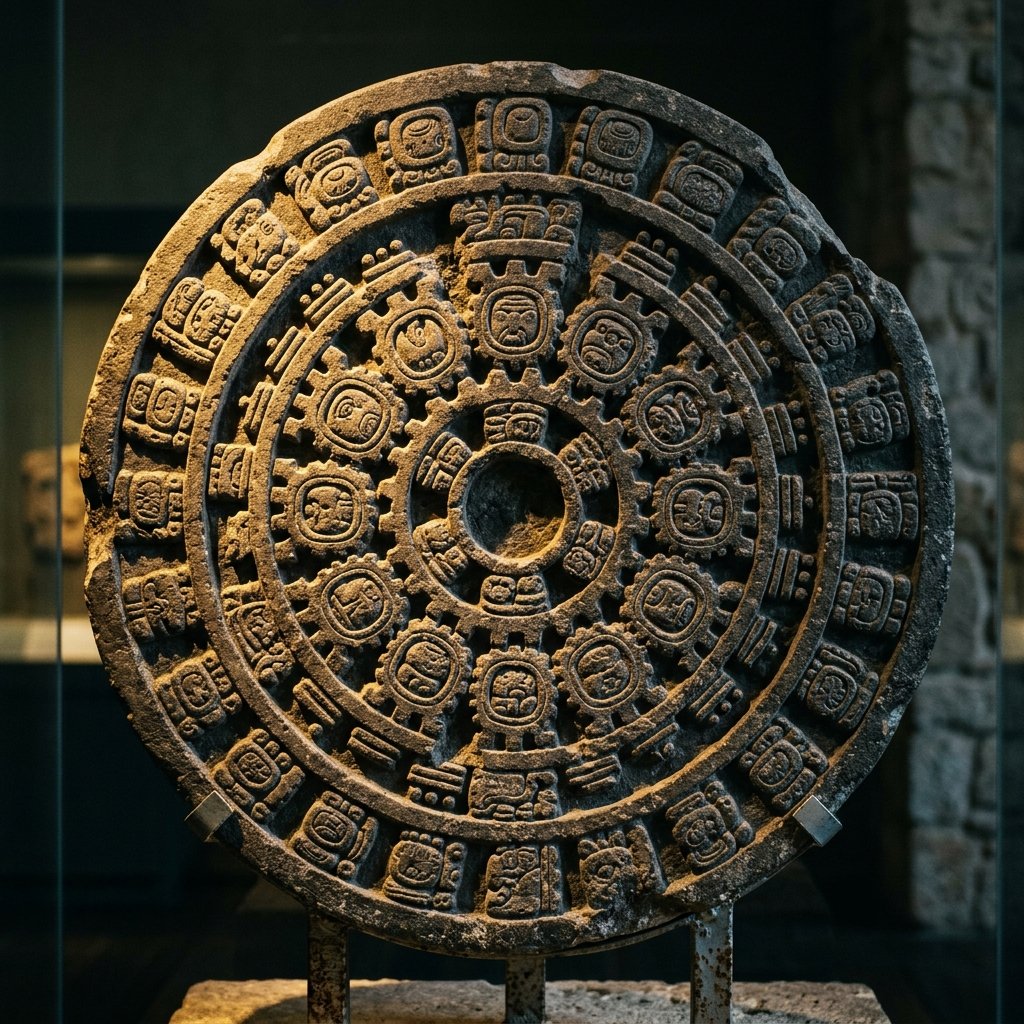
Mathematics
Independently invented the concept of zero — centuries before Europe learned it from India via the Arab world. Used a base-20 (vigesimal) number system of elegant simplicity: just three symbols (dot, bar, shell) to express any number.
Explore Maya mathematics →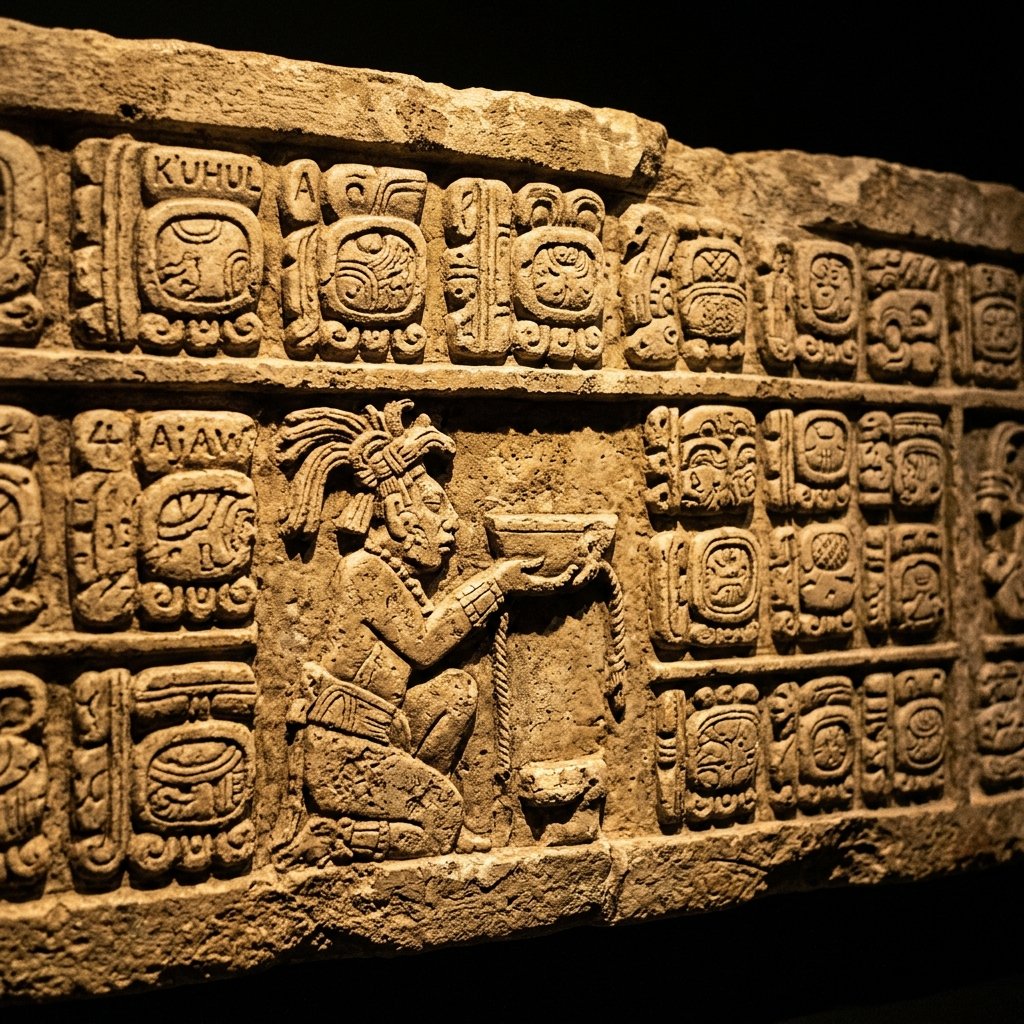
Writing
Created the only fully developed writing system in the pre-Columbian Americas — a logo-syllabic script with 800+ glyphs capable of recording any spoken word in any Mayan language.
Explore Maya writing →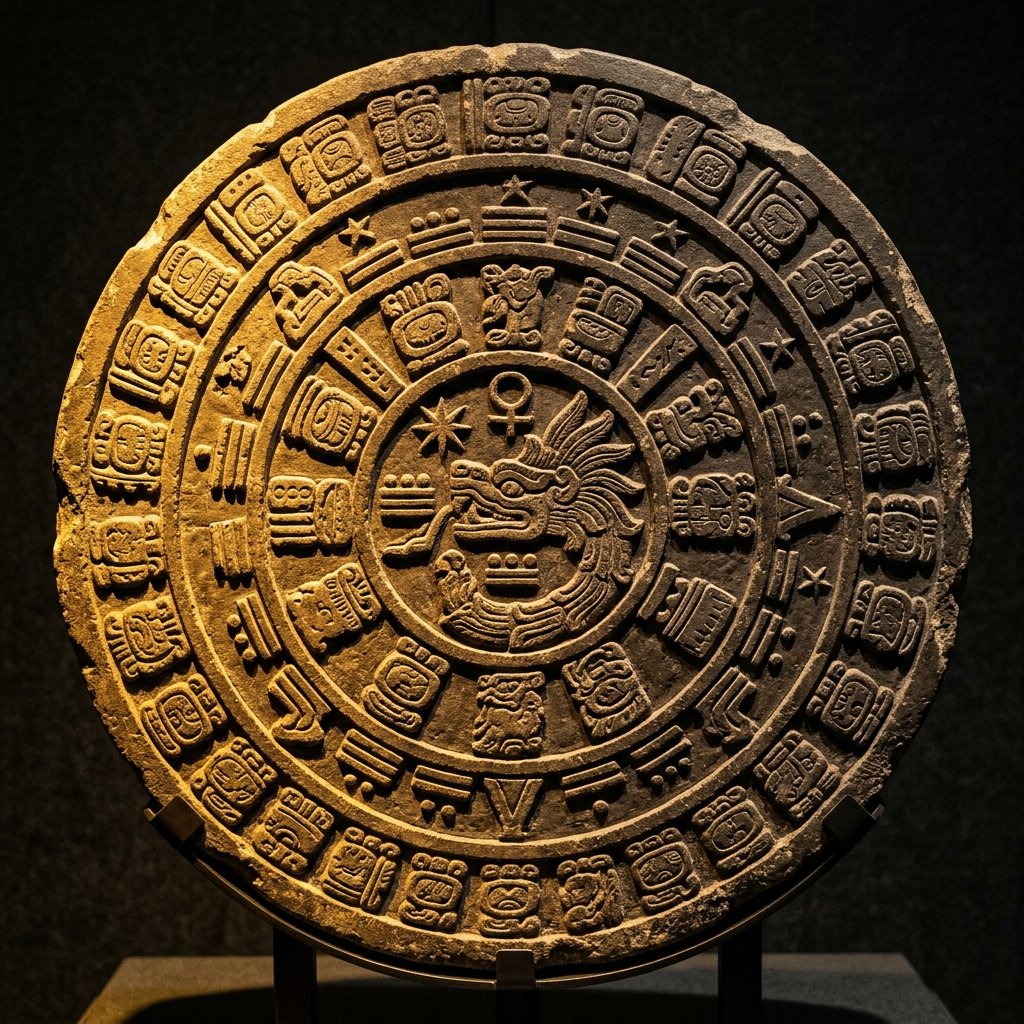
Astronomy
Calculated the solar year to 365.2420 days (more accurate than the Gregorian calendar's 365.2425). Tracked Venus, Mars, and lunar eclipses with extraordinary precision using the naked eye alone.
Explore Maya astronomy →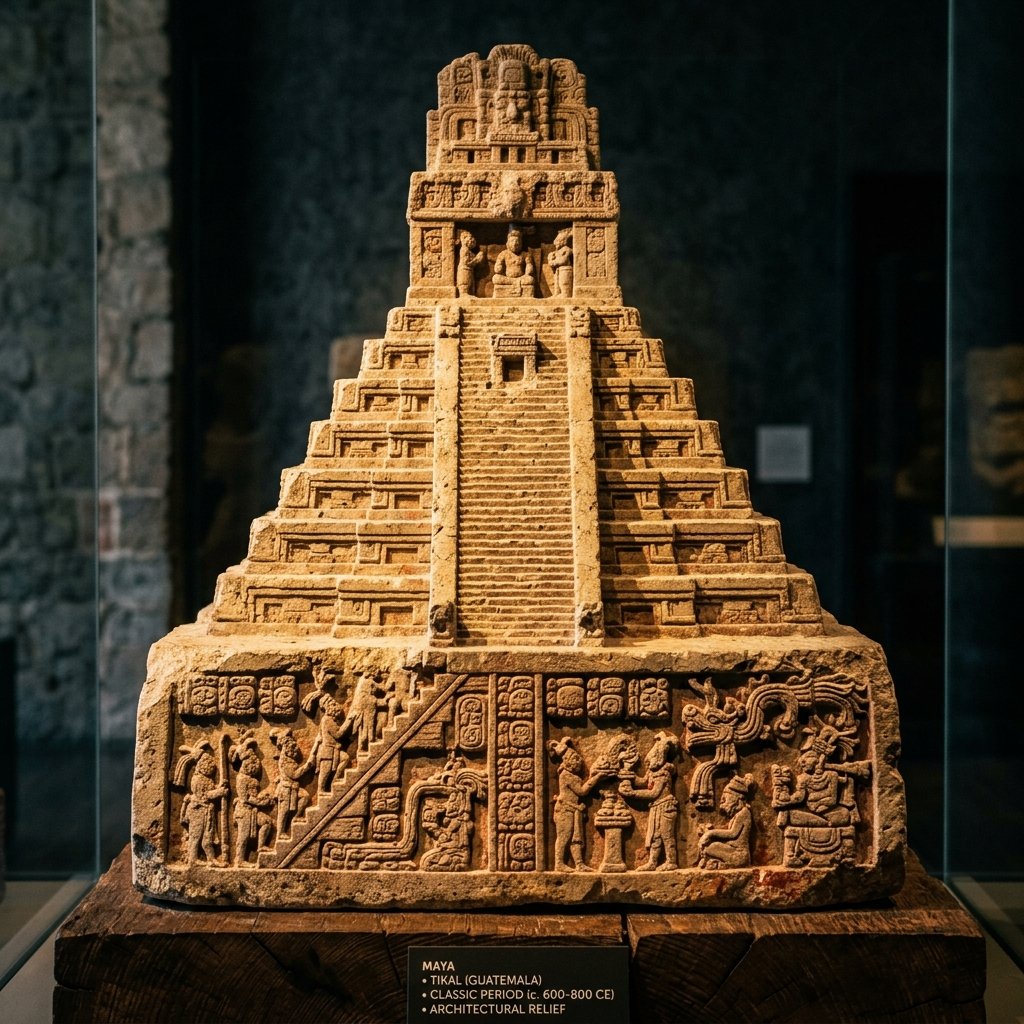
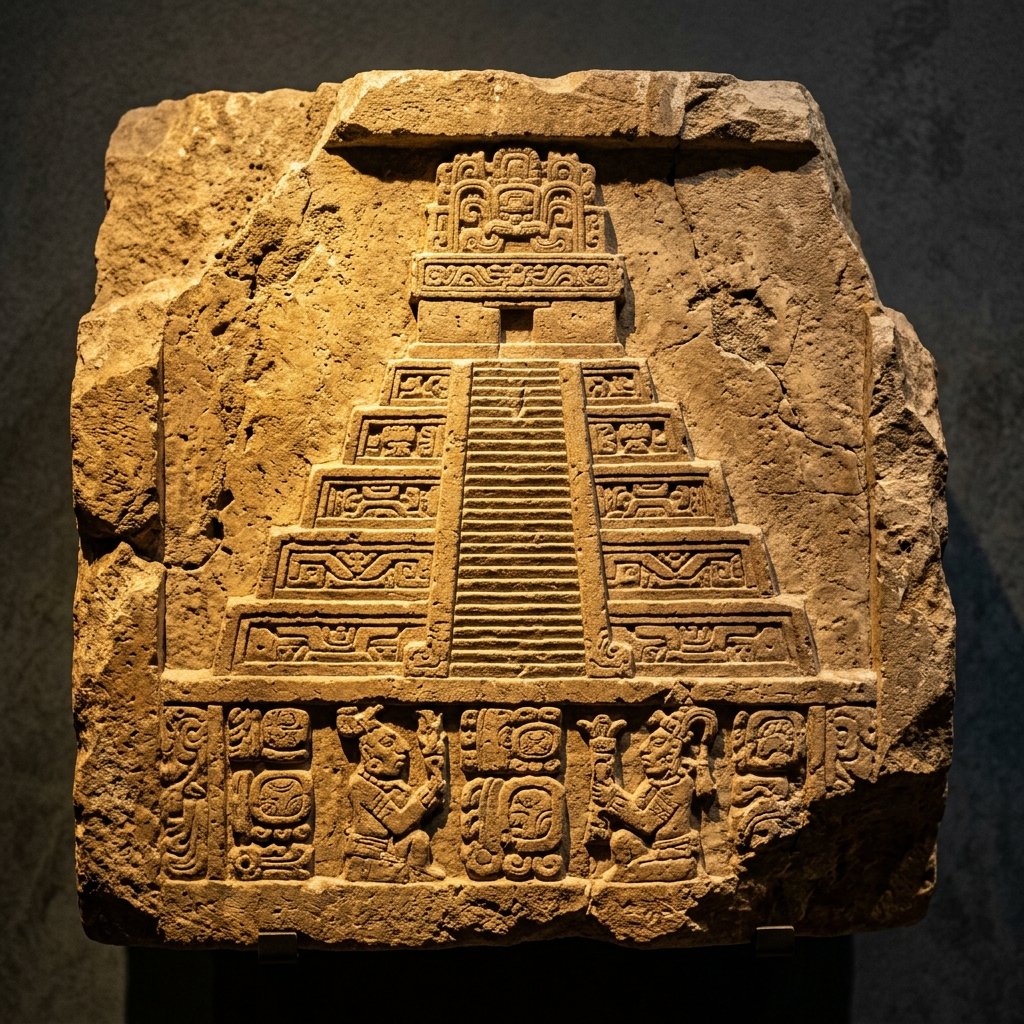
Architecture
Built pyramid-temples up to 70m tall, astronomically aligned buildings, sophisticated water management systems, and raised limestone roadways (sacbeob) connecting cities across the jungle.
Explore Maya ruins →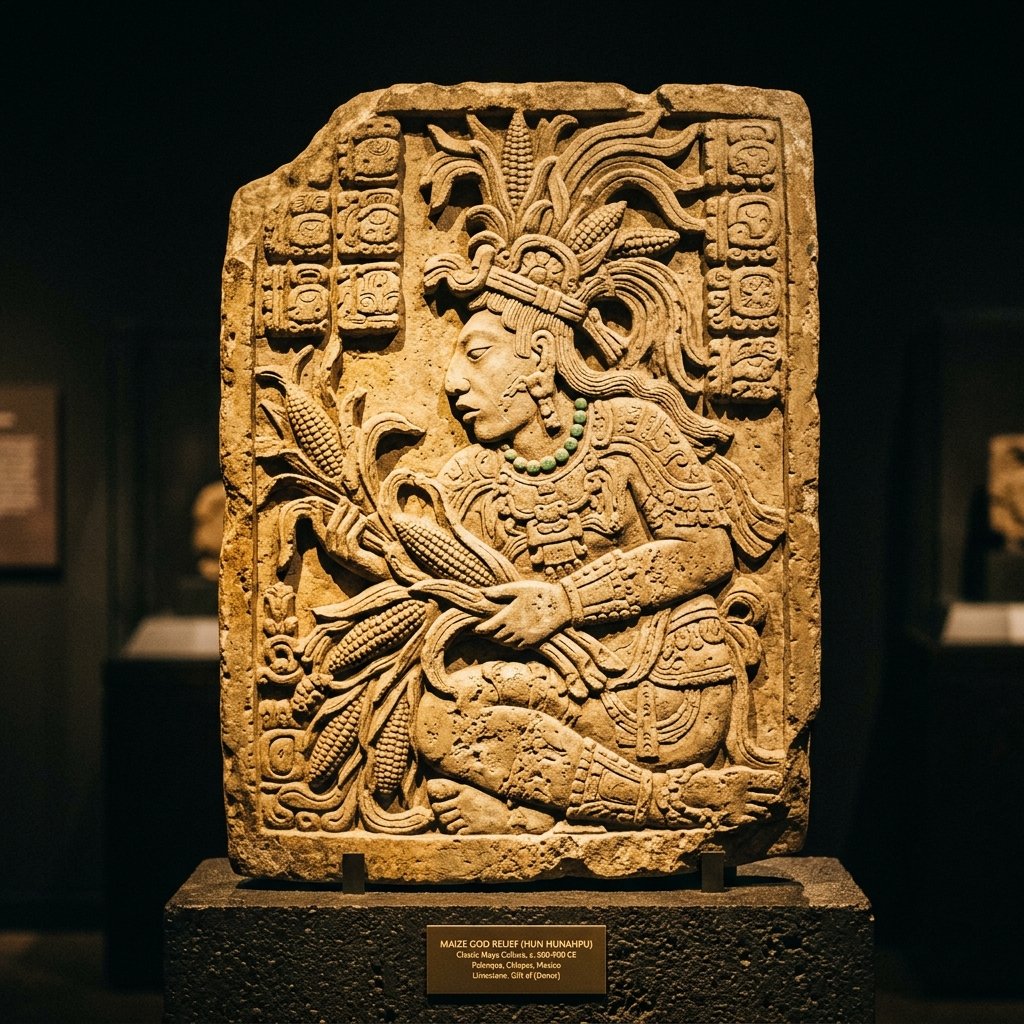
Agriculture
Developed raised-field agriculture, terrace farming, forest gardening, and a cuisine centered on maize, beans, squash, and cacao that sustained millions in challenging tropical environments.
Explore Maya food →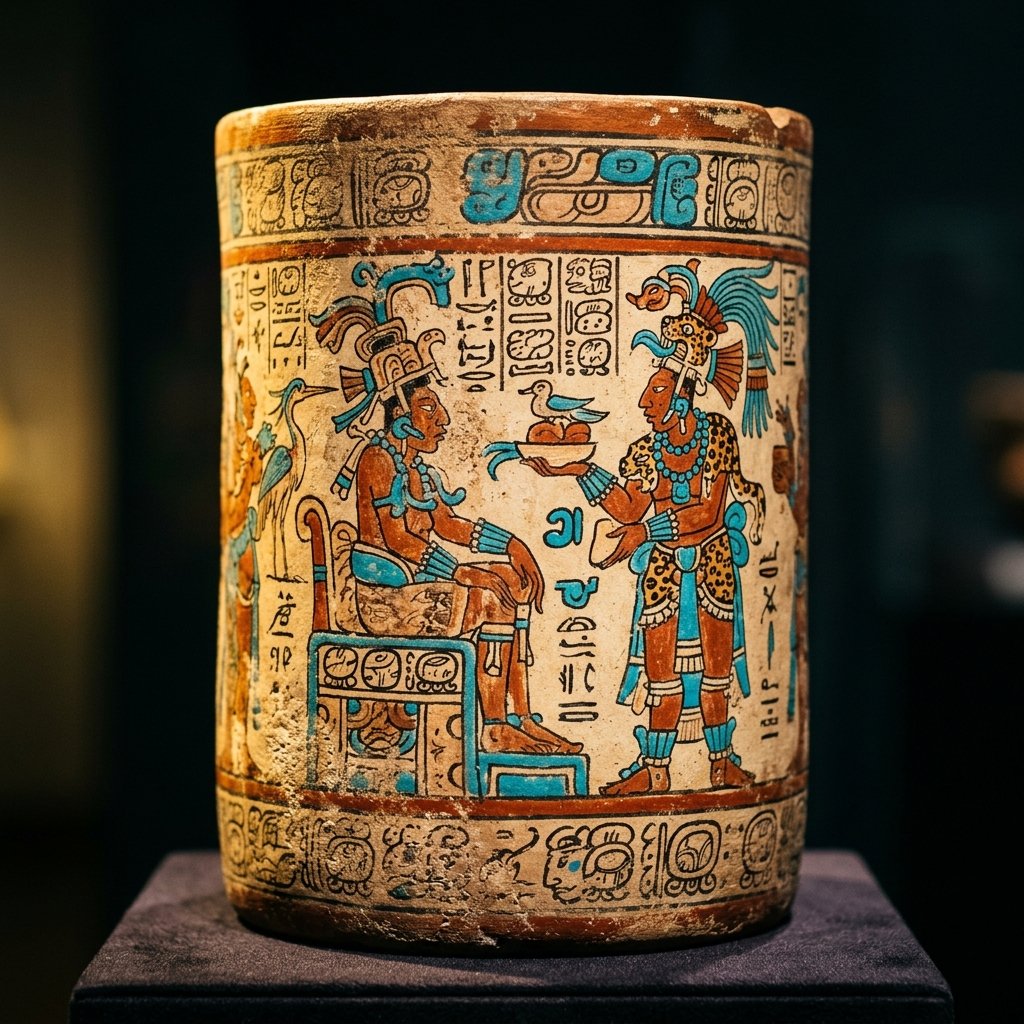
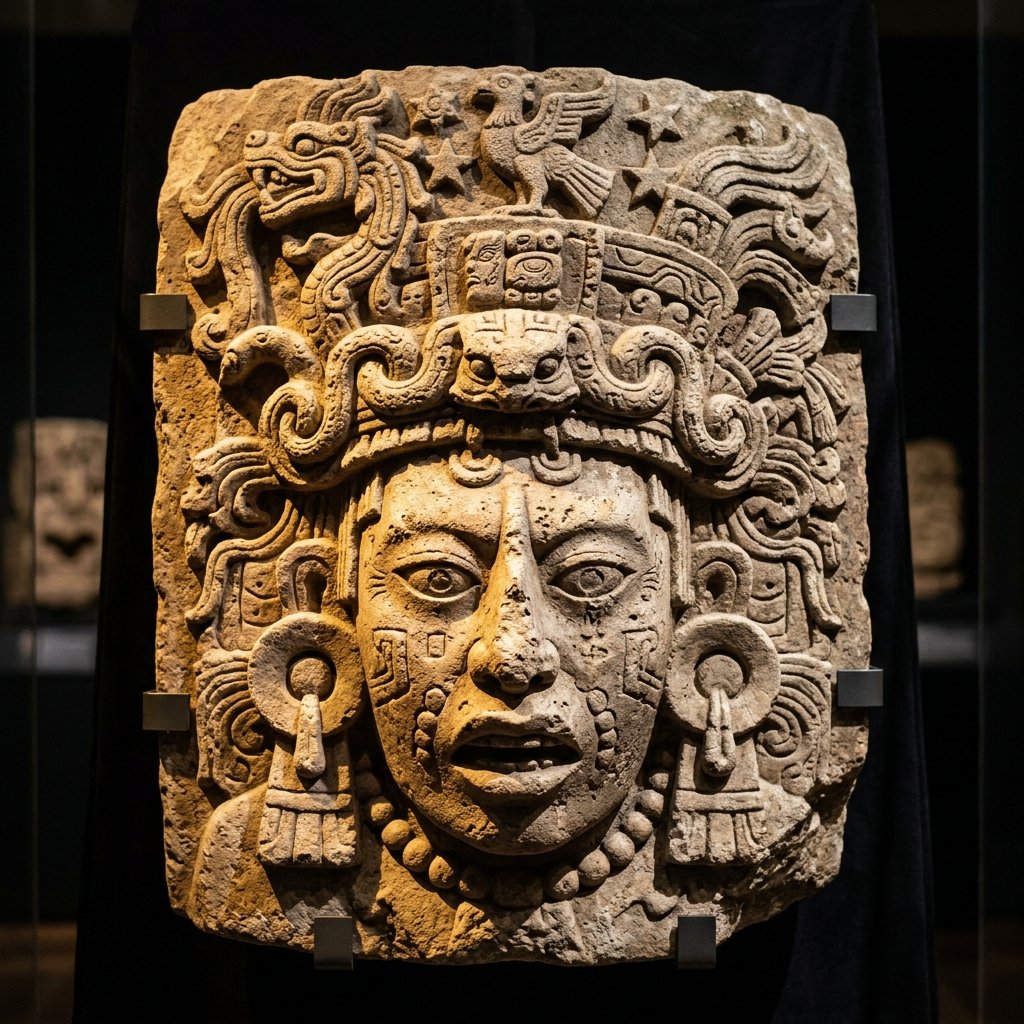
Art
Produced some of the finest art in the ancient world — polychrome pottery, jade carving, stone sculpture, mural painting, and the invention of Maya Blue, an indestructible pigment that still baffles chemists.
Explore Maya jade →Explore the Pillars of Maya Civilization
Frequently Asked Questions
Are the Maya still alive today?
Absolutely. Over 6 million Maya people live in Mexico, Guatemala, Belize, Honduras, and El Salvador today. They speak more than 30 living Maya languages — including K'iche', Yucatec, Kaqchikel, Mam, and Tzotzil — and maintain rich cultural, spiritual, and artistic traditions that stretch back millennia. The Maya civilization is not a historical curiosity; it is a living, evolving cultural tradition with contemporary political, linguistic, and spiritual dimensions.
What is the difference between Maya and Mayan?
In academic usage, "Maya" is the preferred adjective for the people, culture, and civilization (e.g., "Maya art," "Maya cities," "Maya kings"). "Mayan" is primarily used for the language family (e.g., "Mayan languages," "the Mayan linguistic group"). In popular usage, both forms are widely accepted, and "Mayan" as a general adjective is not considered incorrect outside academic contexts.
Were the Maya and Aztecs the same?
No. The Maya and Aztec were completely separate civilizations with different languages, territories, writing systems, and histories. The Maya civilization began around 2000 BC in southeastern Mexico and Central America. The Aztec Empire arose much later (1300s AD) in central Mexico, thousands of kilometers to the northwest. They existed simultaneously for about 200 years before the Spanish conquest. For a detailed comparison, see our Maya vs. Aztec guide.