Ah Muzen Cab at a Glance
A God of Living Practice
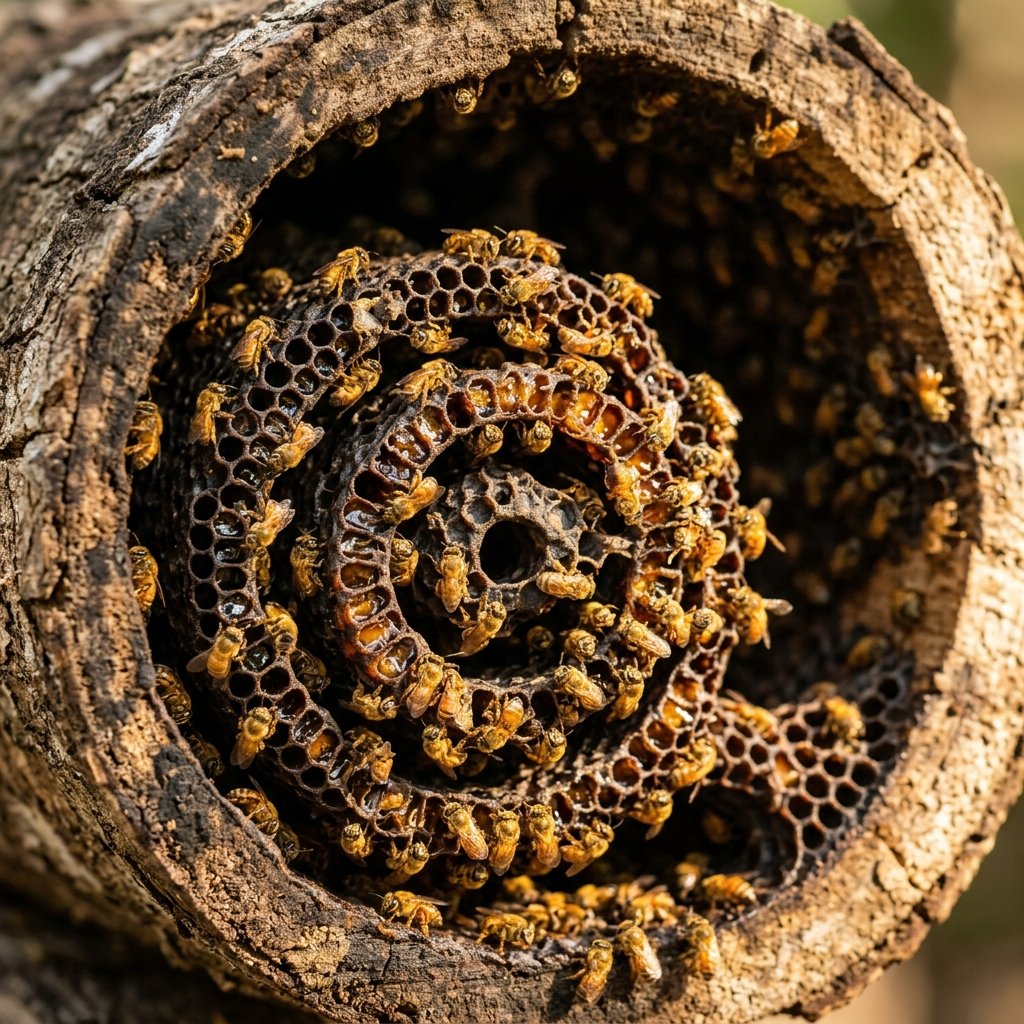
Most Maya gods are known to us only through ancient inscriptions, codices, and scholarly reconstruction. Ah Muzen Cab is different: the practice he presides over — stingless beekeeping (meliponiculture) — is still alive in the Yucatán today. Modern Yucatec Maya beekeepers continue to maintain Melipona beecheii colonies in traditional log hives called jobones, using techniques documented in pre-Columbian sources.
This makes Ah Muzen Cab one of the rare Maya deities whose cult has an unbroken connection to a living economic and cultural practice spanning more than a millennium.
The Royal Lady Bee: Melipona beecheii
The bee of Maya beekeeping is not the European honeybee (Apis mellifera), which was introduced to the Americas by Spanish colonists. The Maya kept Melipona beecheii — a small, stingless bee native to the Yucatán Peninsula known in Yucatec Maya as Xunan Kab ("Royal Lady Bee" or "Lady of the Honey").
Melipona bees are fundamentally different from European honeybees:
- Stingless: They cannot sting, making them safe to keep near homes and children.
- Smaller honey yield: A Melipona colony produces about 1-3 liters of honey per year (vs. 20-60 liters for Apis).
- Spiral comb: They build distinctive spiral-shaped brood combs inside their nests.
- Medicinal honey: Melipona honey has documented antimicrobial and anti-inflammatory properties and has been used in Maya medicine for treating eye infections, wounds, and respiratory ailments for centuries (Vit, P., et al., "Medicinal Uses of Stingless Bee Honey in the Americas," Apidologie, 2013).
The Madrid Codex Beekeeping Almanacs
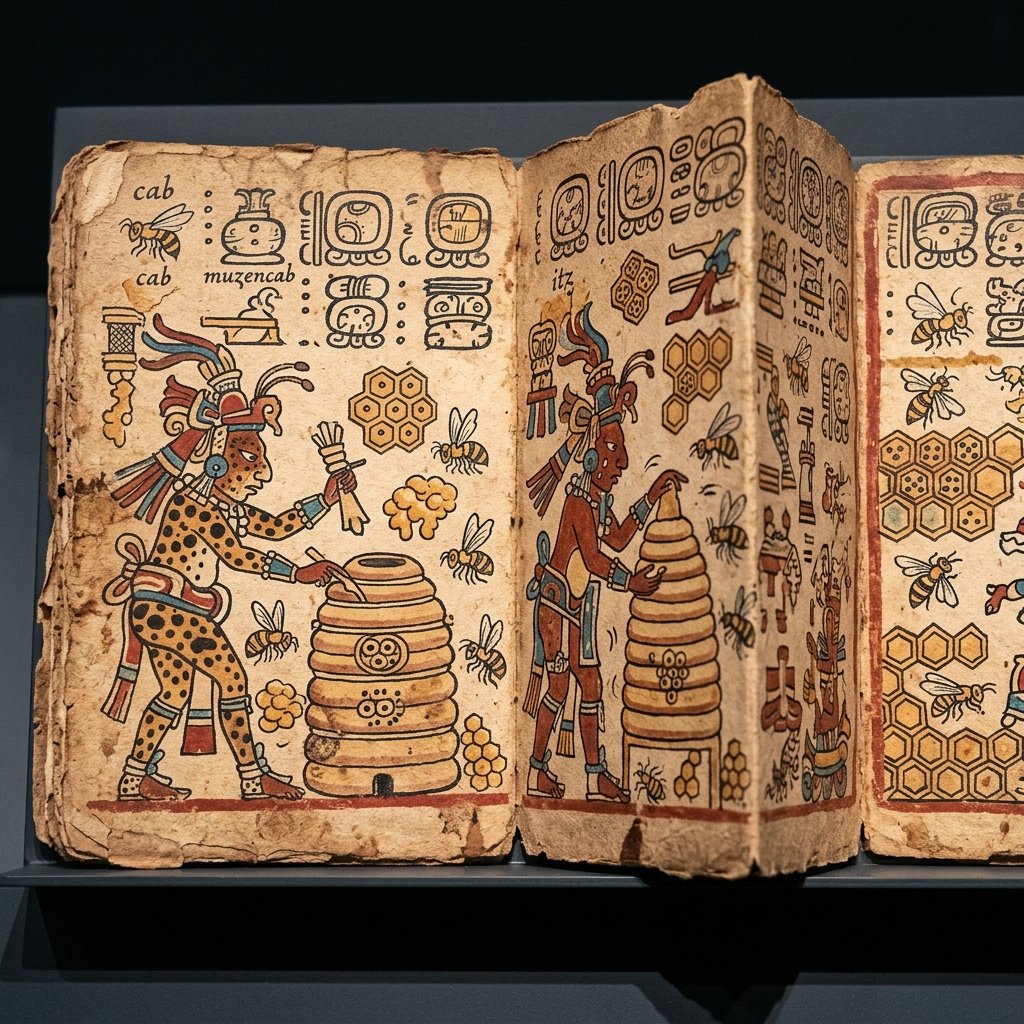
The Madrid Codex (also called the Tro-Cortesianus Codex, now in the Museo de América in Madrid) devotes an extraordinary amount of space to beekeeping. Pages 103–112 of the codex contain detailed beekeeping almanacs that include:
- Images of Ah Muzen Cab and other deities tending to bee hives
- Calendar computations indicating favorable and unfavorable days for harvesting honey
- Depictions of log hives with bees entering and exiting
- Ritual offerings made to the bee god to ensure productive colonies
This level of documentation is remarkable. No other pre-Columbian American manuscript provides anything comparable for any form of animal husbandry. The Madrid Codex beekeeping pages represent the earliest detailed record of managed apiculture in the Western Hemisphere (Coe & Coe, The True History of Chocolate, 2013, pp. 42–45).
Honey in Maya Economy and Ritual
Honey was not just food — it was a strategic economic resource and a sacred ritual substance:
- Currency: Honey functioned as a form of currency and tribute payment. Colonial-era tribute records show entire communities assessed in units of honey.
- Balché: Honey was fermented with the bark of the balché tree (Lonchocarpus violaceus) to produce balché — a mildly psychoactive ritual beverage consumed during religious ceremonies. Balché was considered a sacred drink of the gods.
- Medicine: Melipona honey was a primary ingredient in Maya pharmacology, applied to wounds, used for eye infections, and consumed for respiratory ailments.
- Offerings: Honey was a standard offering to the gods — placed in caves, cenotes, and temple shrines as a gift to supernatural beings.
The Modern Crisis
Today, Melipona beecheii populations are in serious decline. The species faces multiple threats: habitat loss from deforestation, competition from introduced European honeybees (which produce more honey and have displaced Melipona from many areas), and the declining number of traditional Maya beekeepers who know how to manage stingless bee colonies.
Conservation efforts are underway, supported by organizations working with Maya communities to preserve meliponiculture as both a cultural heritage practice and a biodiversity conservation strategy. The survival of Ah Muzen Cab's bees is inseparable from the survival of traditional Maya ecological knowledge.
References
- Vit, P., Pedro, S.R.M., & Roubik, D.W. (eds.) Pot-Honey: A Legacy of Stingless Bees. Springer, 2013.
- Coe, S.D. & Coe, M.D. The True History of Chocolate. Thames & Hudson, 3rd edition, 2013.
- Villanueva-Gutiérrez, R., Roubik, D.W., & Colli-Ucán, W. "Extinction of Melipona beecheii and Traditional Beekeeping in the Yucatan Peninsula." Bee World, Vol. 86, No. 2, 2005, pp. 35–41.
- Taube, K. The Major Gods of Ancient Yucatan. Dumbarton Oaks, 1992.
- Lee, T.A. & Thomas, B.D. "The Madrid Codex Beekeeping Almanacs." Latin American Antiquity, Vol. 4, No. 4, 1993, pp. 350–364.
Frequently Asked Questions
Did the Maya keep bees?
Yes — the Maya practiced sophisticated stingless beekeeping (meliponiculture) for at least 3,000 years. They kept the native stingless bee Melipona beecheii in log hives. Honey was used as food, currency, medicine, and the base for the sacred ritual drink balché. The Madrid Codex contains the most extensive pre-Columbian documentation of beekeeping in the Americas, and traditional Maya beekeeping continues in parts of the Yucatán today.
What is balché?
Balché is a traditional Maya ritual alcoholic beverage made by fermenting honey with the bark of the balché tree (Lonchocarpus violaceus). The resulting drink is mildly psychoactive and was consumed during religious ceremonies as a way of communicating with the gods. The Spanish colonial authorities attempted to ban balché production, but it survived and is still made in some Maya communities today.
Are Maya stingless bees endangered?
Melipona beecheii populations are in serious decline due to deforestation, competition from introduced European honeybees, pesticide use, and the declining number of traditional beekeepers. Conservation programs working with Maya communities are attempting to preserve both the bee species and the traditional knowledge required to manage them — recognizing that the survival of the practice and the survival of the species are inseparable.