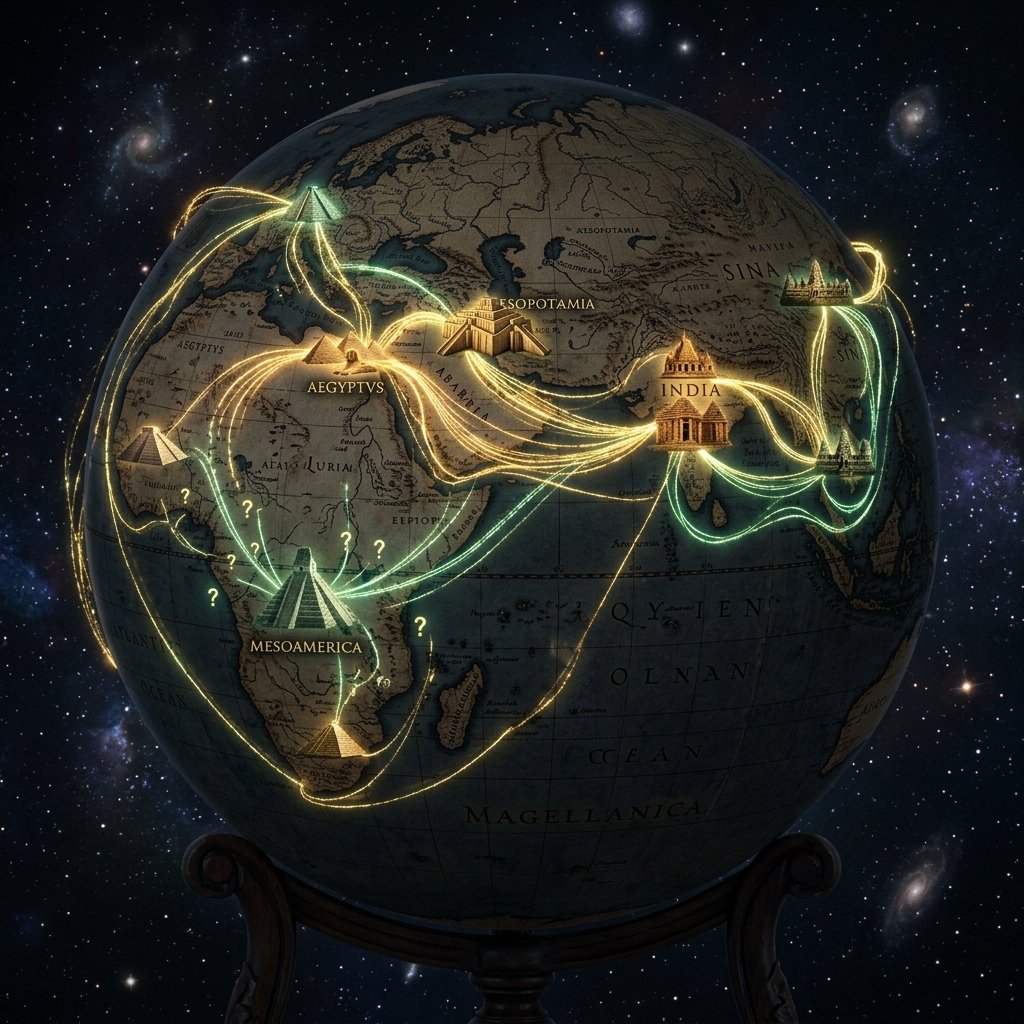
The Evidence Is Biological
Forget the pyramids argument for a moment. The strongest evidence for pre-Columbian transoceanic contact isn't cultural — it's biological. DNA analysis of cultivated plants has demonstrated that at least some species crossed oceans before European contact. If sweet potatoes traveled from South America to Polynesia, someone carried them. If bottle gourds traveled from Africa to the Americas, something brought them. The question is no longer whether ancient oceans were crossed — it's what else crossed with the crossers.
The Hard Evidence: Three Plants That Rewrote History
In the mid-20th century, most archaeologists treated the oceans as impenetrable walls. Pre-Columbian America, they insisted, developed in total isolation from the rest of humanity. Then molecular biology entered the picture — and the walls began to crack.
Evidence 1: Sweet Potato DNA
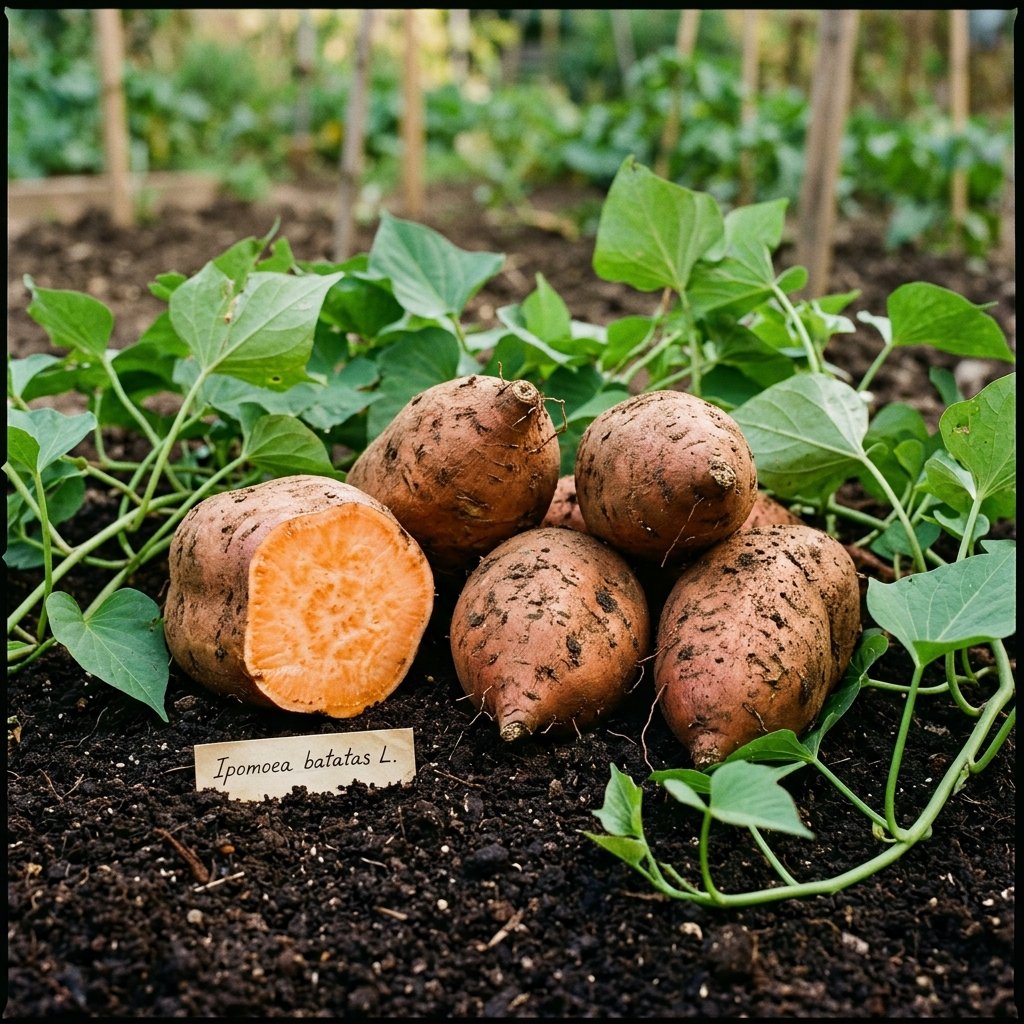
In 2013, Roullier et al. published a landmark study in Proceedings of the National Academy of Sciences that used chloroplast microsatellite analysis to trace the sweet potato's journey across the Pacific. The results were unambiguous: Polynesian sweet potatoes share genetic markers with South American varieties that can only be explained by direct human transfer — before European contact.
The sweet potato doesn't float. It doesn't survive prolonged saltwater exposure. Its seeds don't disperse by wind. The only way Ipomoea batatas reached Polynesia from South America is if a human being carried it there. Captain Cook found it growing in New Zealand in 1769 under the Maori name kumara — a word linguists connect to the Quechua k'umara used in Peru.
Roullier, C., et al. (2013). "Historical collections reveal patterns of diffusion of sweet potato in Oceania." PNAS, 110(6), 2205–2210.
Evidence 2: Cotton Genetics
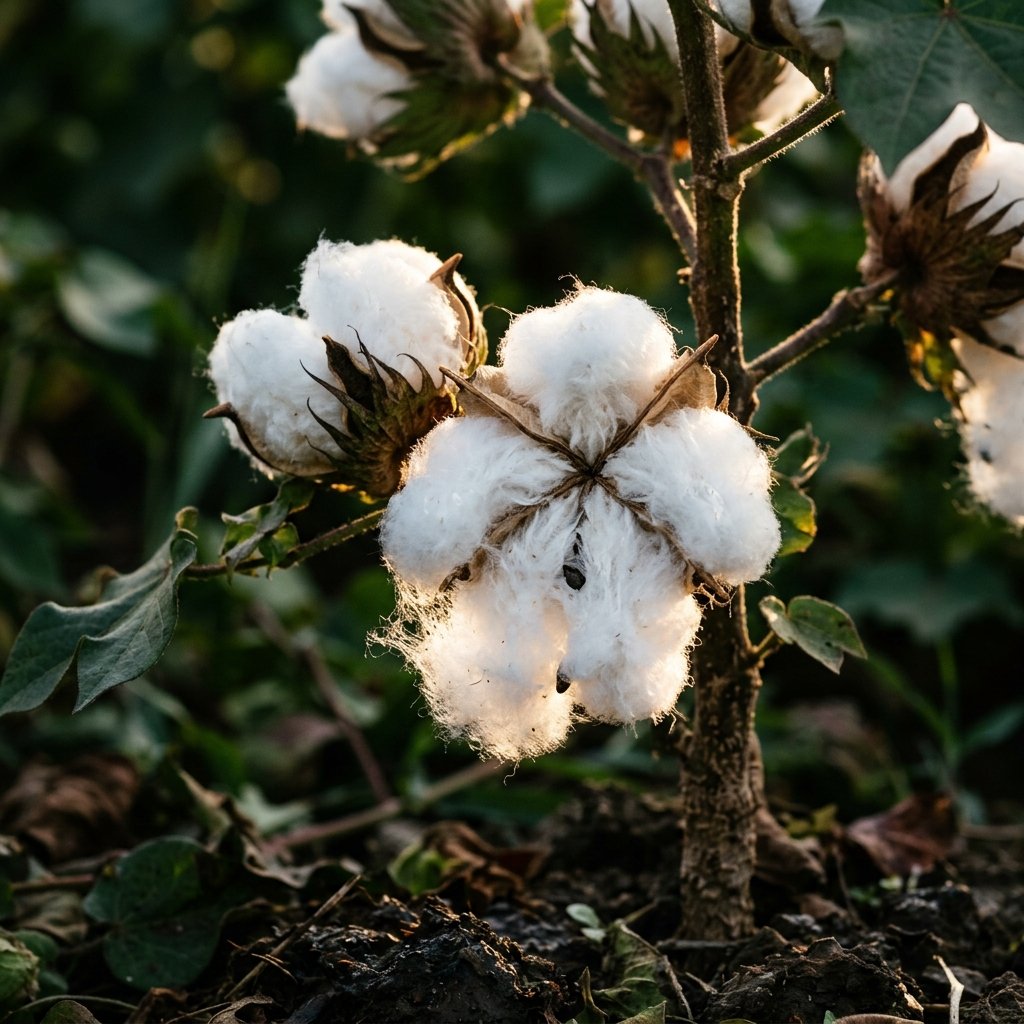
New World cultivated cotton (Gossypium hirsutum) is a tetraploid — it contains two complete sets of chromosomes. One set comes from an Old World African/Asian cotton species. One comes from a New World wild cotton. This hybridization happened in the Americas, meaning an Old World cotton species somehow reached the Western Hemisphere before Columbus.
Whether by natural oceanic dispersal (cotton seeds can tolerate limited saltwater exposure) or by human transport remains debated. But the genetic evidence is unambiguous: Old World DNA is woven — literally — into the fabric of the Americas.
Wendel, J. F. & Grover, C. E. (2015). "Taxonomy and Evolution of the Cotton Genus." Agronomy Monograph, 57.
Evidence 3: The Bottle Gourd
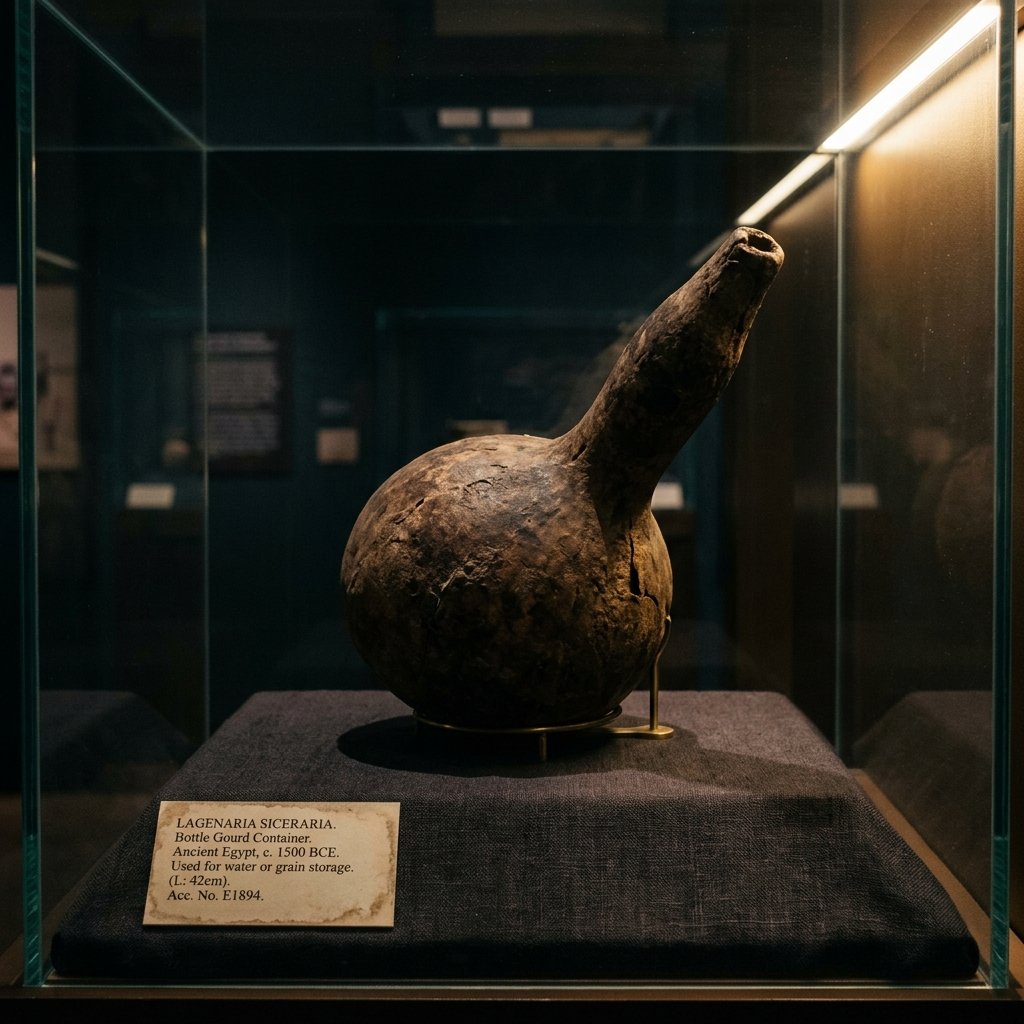
Perhaps the oldest transoceanic mystery of all. The bottle gourd (Lagenaria siceraria) is native to Africa but was present in the Americas by at least 8,000 BC — thousands of years before any proposed human crossing. In 2005, Erickson et al. published DNA evidence in PNAS confirming an Asian origin for American bottle gourds, suggesting either oceanic drift or transport by early maritime peoples.
Unlike the sweet potato, bottle gourd fruits can float. But the journey from Africa to the Americas is 5,000+ km across the open Atlantic. Could a gourd survive months of saltwater exposure and still germinate on arrival? Experimental studies suggest it's possible — but improbable without favorable current patterns.
Erickson, D. L., et al. (2005). "An Asian origin for a 10,000-year-old domesticated plant in the Americas." PNAS, 102(51), 18315–18320.
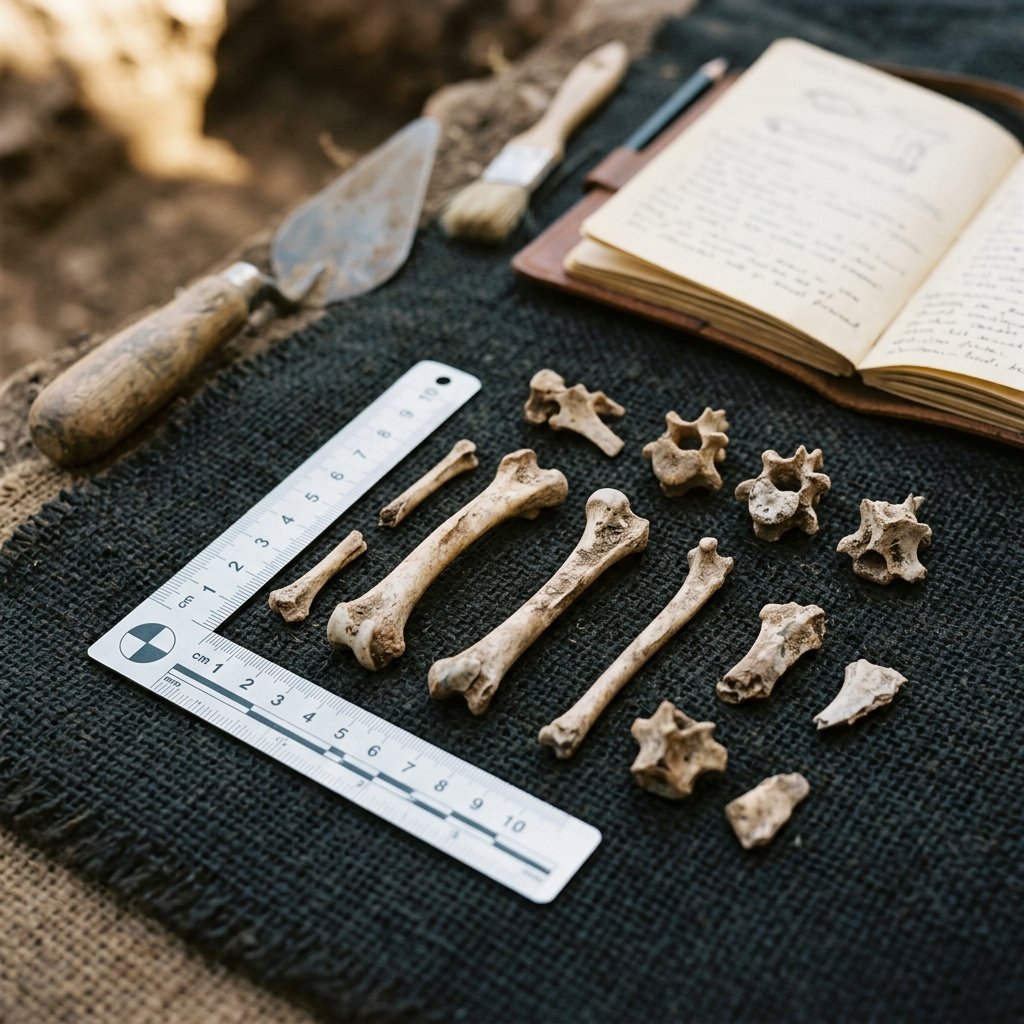
Evidence 4: Polynesian Chicken Bones in Chile
In 2007, Storey et al. reported in PNAS that chicken bones excavated at El Arenal in south-central Chile were radiocarbon-dated to the 14th century and showed DNA sequences matching Polynesian — not European — chicken lineages. If confirmed, this would demonstrate that Polynesian sailors reached South America before Columbus.
The study has been contested. Thomson et al. (2014) raised contamination concerns and proposed that the radiocarbon dates may have been affected by marine carbon. The original researchers maintain their findings. What is not disputed is that someone brought chickens to South America — the question is when, and from where.
Storey, A. A., et al. (2007). "Radiocarbon and DNA evidence for a pre-Columbian introduction of Polynesian chickens to Chile." PNAS, 104(25), 10335–10339.
If Biology Crossed, Did Ideas?
This is the question that keeps scholars up at night. The biological evidence now demonstrates — beyond reasonable doubt — that at least some organisms crossed the Pacific before 1492. Sweet potatoes require intentional human transport. Cotton's hybrid genome requires physical contact between species from two hemispheres. Chickens don't fly across oceans.
If people made these crossings, what else traveled with them?

The list of potentially transferred knowledge includes:
- Navigation techniques — celestial wayfinding, current-reading, bird-flight observation
- Agricultural knowledge — cultivation methods for transplanted crops
- Mathematical concepts — both Mesoamerica and Polynesia developed sophisticated numerical systems independently
- Mythological narratives — the flood story appears in nearly every civilization that has ever existed
- Architectural principles — the pyramid form appears on every inhabited continent
- Calendrical systems — both the Maya and Polynesian cultures tracked Venus cycles with remarkable precision
The mainstream position remains that cultural similarities reflect convergent development — similar problems producing similar solutions. But the biological evidence increasingly demonstrates that the oceans were not the impermeable barriers that mid-20th-century archaeology assumed. The question is shifting: not whether contact happened, but how much it mattered.
The Sailing Question: Could They Actually Cross?
For most of the 20th century, the objection to pre-Columbian transoceanic contact was simple: they couldn't do it. Ancient boats were too fragile. The oceans were too vast. The currents were too dangerous.
This argument is now demolished. Experimental voyaging and archaeological evidence have proved that ancient watercraft were far more capable than modern scholars assumed:
Thor Heyerdahl's Kon-Tiki (1947)
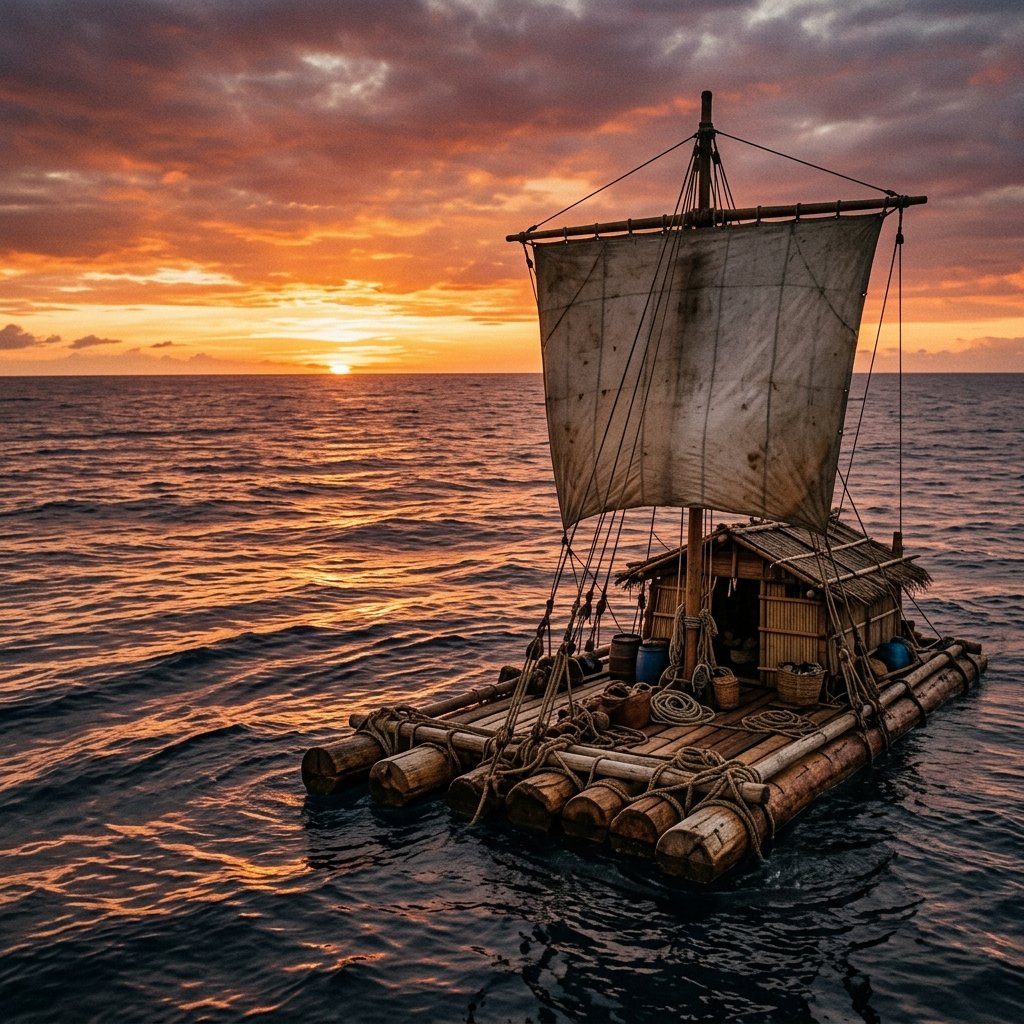
Demonstrated that a balsa-wood raft built with pre-Columbian technology could cross 6,900 km of open Pacific — from Peru to the Tuamotu Islands. The voyage took 101 days. Heyerdahl's thesis — that Polynesia was settled from South America — was eventually disproven by DNA evidence (Polynesian ancestry is Southeast Asian). But his voyage proved the technical feasibility of transpacific crossing.
The Hōkūle'a Voyages (1976–present)
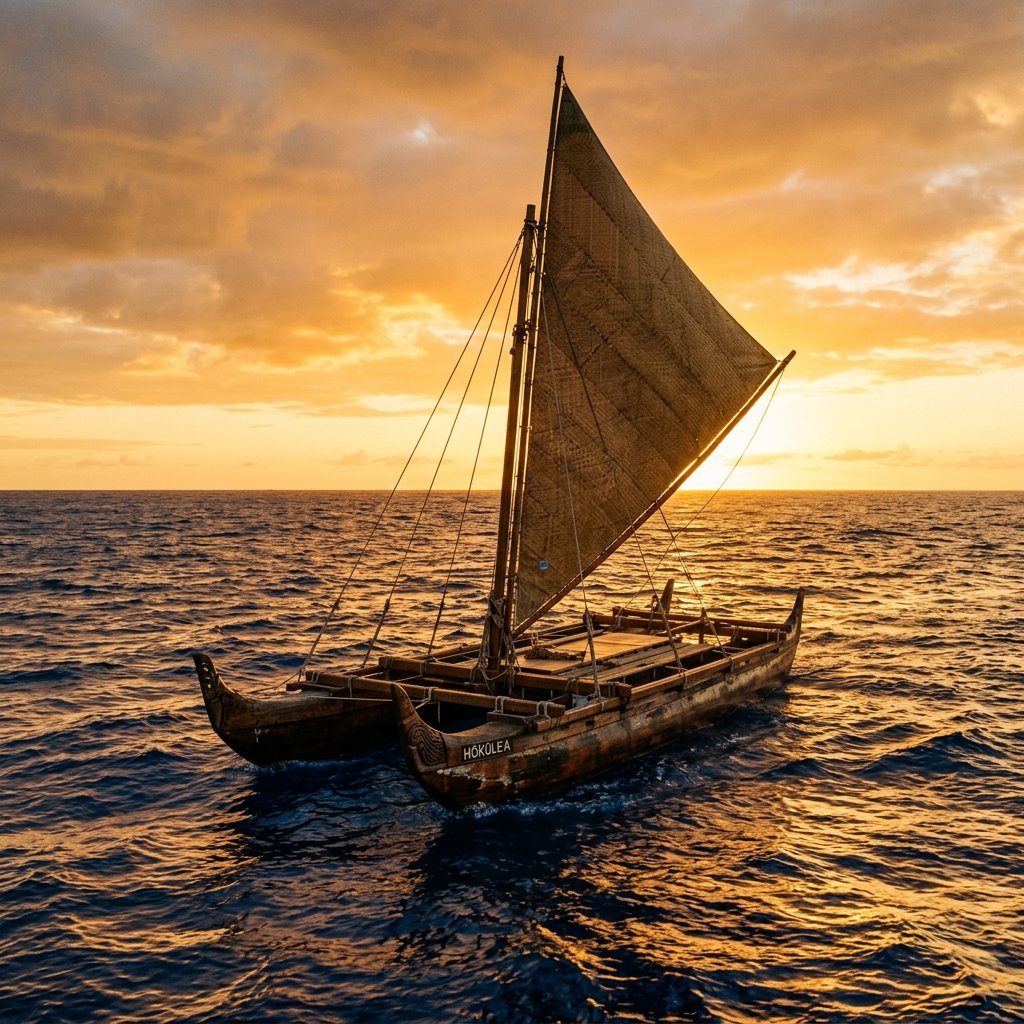
The Polynesian Voyaging Society's double-hulled canoe Hōkūle'a has sailed over 150,000 nautical miles using only traditional non-instrument navigation — star compasses, wave patterns, cloud formations, and bird-flight paths. In 2017, it completed a circumnavigation of the globe. The vessel proved that ancient Polynesian wayfinding was not myth but a precise, teachable science (Finney, Voyage of Rediscovery, 1994).
Additional experimental voyages include:
- Tim Severin's Brendan Voyage (1976–77): Crossed the Atlantic in a leather currach from Ireland to Newfoundland via Iceland, replicating the legendary voyage of St. Brendan.
- Polynesians to South America: Modern simulations using wind and current data demonstrate that accidental drift voyages from the Marquesas to South America would have occurred with statistical regularity over 3,000 years (Montenegro et al., Journal of Archaeological Science, 2016).
- David Lewis's research: In We, the Navigators (1972), Lewis documented that Polynesian navigation was not superstition but a rigorous empirical science — navigators could determine their position to within 40 km after sailing thousands of kilometers using only natural phenomena.
What This Means — And What It Doesn't
The biological evidence for pre-Columbian transoceanic contact is now scientifically established. The sweet potato transfer is accepted by the mainstream. The cotton genome is undisputed. The bottle gourd voyaged. The chicken bone debate continues. Something — and almost certainly someone — crossed those oceans.
What this does not prove is any specific theory about which civilizations were in contact, what knowledge they exchanged, or whether the cultural similarities between Old World and New World civilizations are the result of diffusion rather than convergent evolution. The pyramids of Egypt and the pyramids of Mesoamerica may look alike because a pyramid is the most structurally stable form a culture without steel can build — or because someone sailed from one to the other with a blueprint. The biology tells us the voyage was possible. It doesn't tell us what cargo was aboard.
The Responsible Position
The oceans were not impermeable barriers. At least some biological material — and probably some people — crossed them before 1492. But the scope, frequency, and cultural impact of these crossings remain among the great open questions of human history. The responsible reader holds the evidence seriously while resisting the temptation to make it prove more than it does. The most honest sentence in this field is: we don't know yet.
Frequently Asked Questions
Does mainstream science accept pre-Columbian transoceanic contact?
Partially. The sweet potato transfer between South America and Polynesia is now widely accepted. The bottle gourd's African origin is established. Cotton's hybrid genome is undisputed. Other proposed contacts — including Atlantic crossings and deliberate Near Eastern voyages — remain debated. The field has shifted dramatically since 2000: no serious scholar now argues that the oceans were absolute barriers to all pre-Columbian biological exchange.
Could cultural similarities between civilizations be coincidence?
Yes — and often they are. Convergent evolution is a demonstrated phenomenon in cultural as well as biological systems: similar environments produce similar solutions. Pyramids, flood myths, and solar worship all have plausible independent-origin explanations. The biological evidence doesn't settle the cultural-transfer question — it simply demonstrates that the mechanism (ocean crossing) was available.
Why is this question politically sensitive?
Because historically, theories of external influence on Native American civilizations have been used to diminish indigenous achievements — implying that Native peoples couldn't have developed complex societies independently. This has led to legitimate concern about "diffusionist" theories. The responsible approach acknowledges both the biological evidence for contact and the overwhelming archaeological evidence that Mesoamerican civilizations were fundamentally indigenous achievements, regardless of any peripheral contact events.
References & Further Reading
- Roullier, C., et al. (2013). "Historical collections reveal patterns of diffusion of sweet potato in Oceania." PNAS, 110(6), 2205–2210.
- Wendel, J. F. & Grover, C. E. (2015). "Taxonomy and Evolution of the Cotton Genus." Agronomy Monograph, 57.
- Erickson, D. L., et al. (2005). "An Asian origin for a 10,000-year-old domesticated plant in the Americas." PNAS, 102(51), 18315–18320.
- Storey, A. A., et al. (2007). "Radiocarbon and DNA evidence for a pre-Columbian introduction of Polynesian chickens to Chile." PNAS, 104(25), 10335–10339.
- Lewis, D. (1972). We, the Navigators: The Ancient Art of Landfinding in the Pacific. U of Hawaii Press.
- Finney, B. R. (1994). Voyage of Rediscovery: A Cultural Odyssey through Polynesia. UC Press.
- Montenegro, A., et al. (2016). "Modeling the prehistoric arrival of the sweet potato in Polynesia." Journal of Archaeological Science, 74, 209–219.
- Thomson, V. A., et al. (2014). "Using ancient DNA to study the origins and dispersal of ancestral Polynesian chickens across the Pacific." PNAS, 111(13), 4826–4831.