Why This Museum Matters
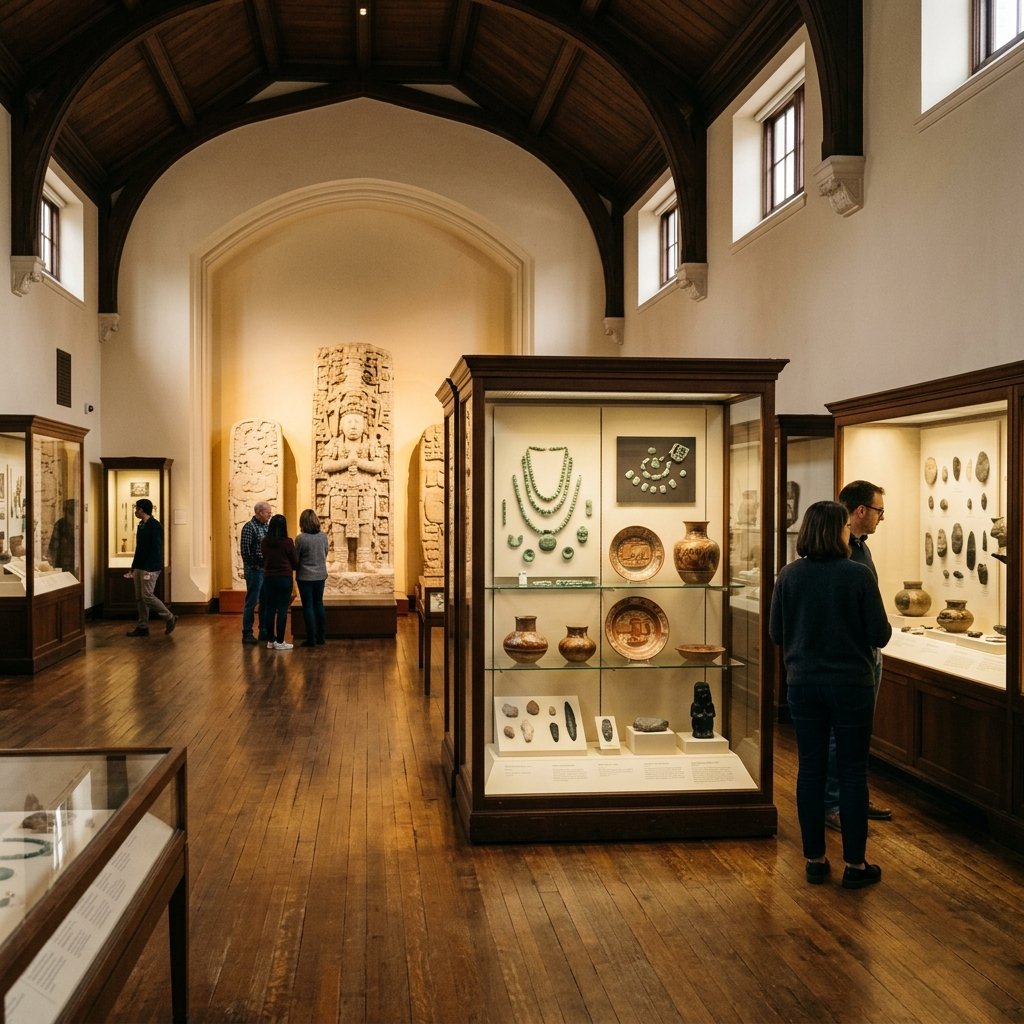
The Peabody Museum of Archaeology and Ethnology at Harvard University is not just a museum — it is a living research institution that has shaped Maya studies for over 150 years. Founded in 1866, it has sponsored archaeological expeditions to virtually every major Maya site, built the world's largest collection of plaster monument casts, recovered extraordinary objects from the Sacred Cenote of Chichén Itzá, and created the Corpus of Maya Hieroglyphic Inscriptions (CMHI) — the definitive photographic record of every known Maya inscription. Scholars like Tatiana Proskouriakoff, Gordon Willey, and Ian Graham spent their careers here. If the MNA in Mexico City is the Louvre of Mesoamerican archaeology, the Peabody is its Library of Congress.
Signature Artifacts
Sacred Cenote Objects
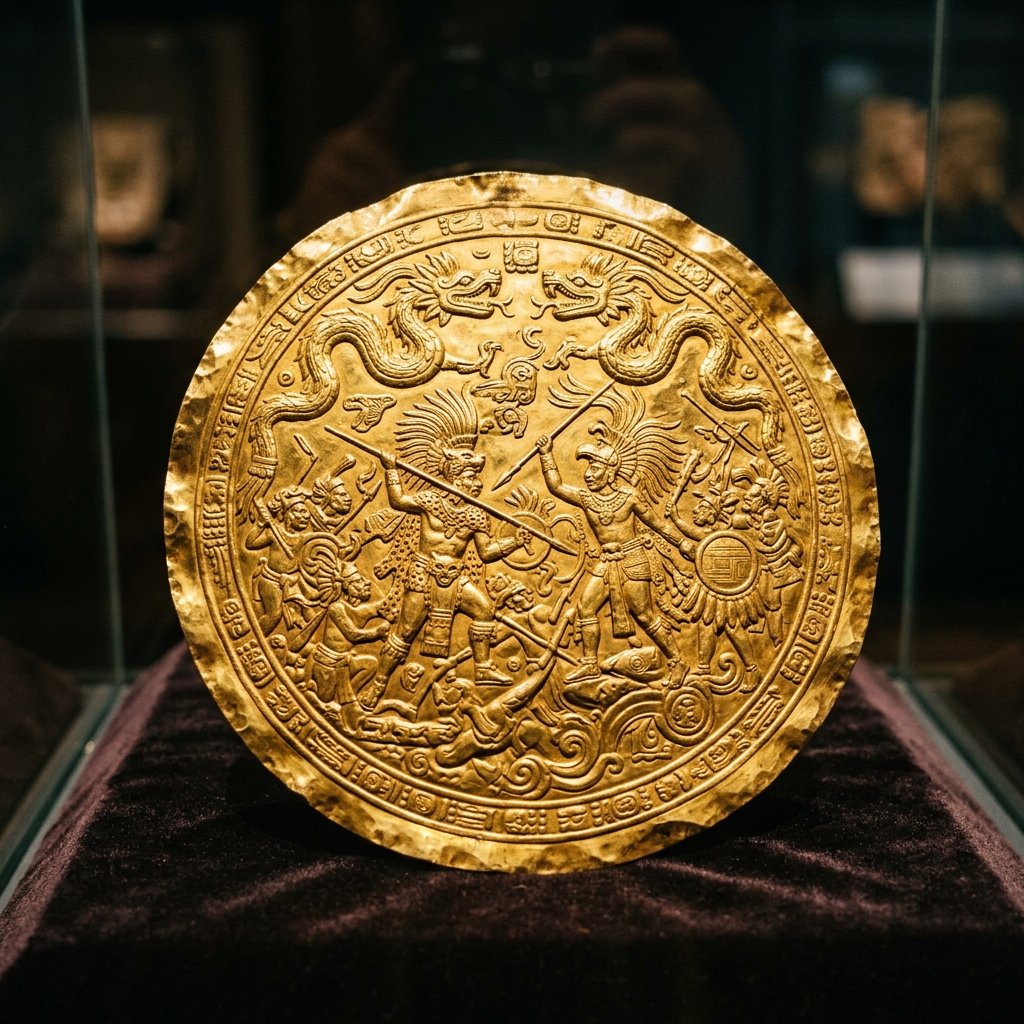
Between 1904 and 1911, Edward Herbert Thompson — the U.S. consul to Yucatán — dredged the Sacred Cenote at Chichén Itzá, recovering an extraordinary hoard of objects thrown as offerings over centuries: gold disks with repoussé battle scenes, jade figurines, carved bone, copal incense, rubber balls, textile fragments, and human remains. The gold objects — some of Central American or Caribbean origin — demonstrate the Maya's far-reaching trade connections. Thompson shipped the objects to the Peabody, sparking a decades-long repatriation dispute with Mexico. Some items were returned in 1959 and 1970; others remain.
Acquired: Dredged 1904–1911 by E. H. Thompson; shipped to Harvard. Partial repatriation to Mexico in 1959 and 1970.
The Plaster Cast Collection
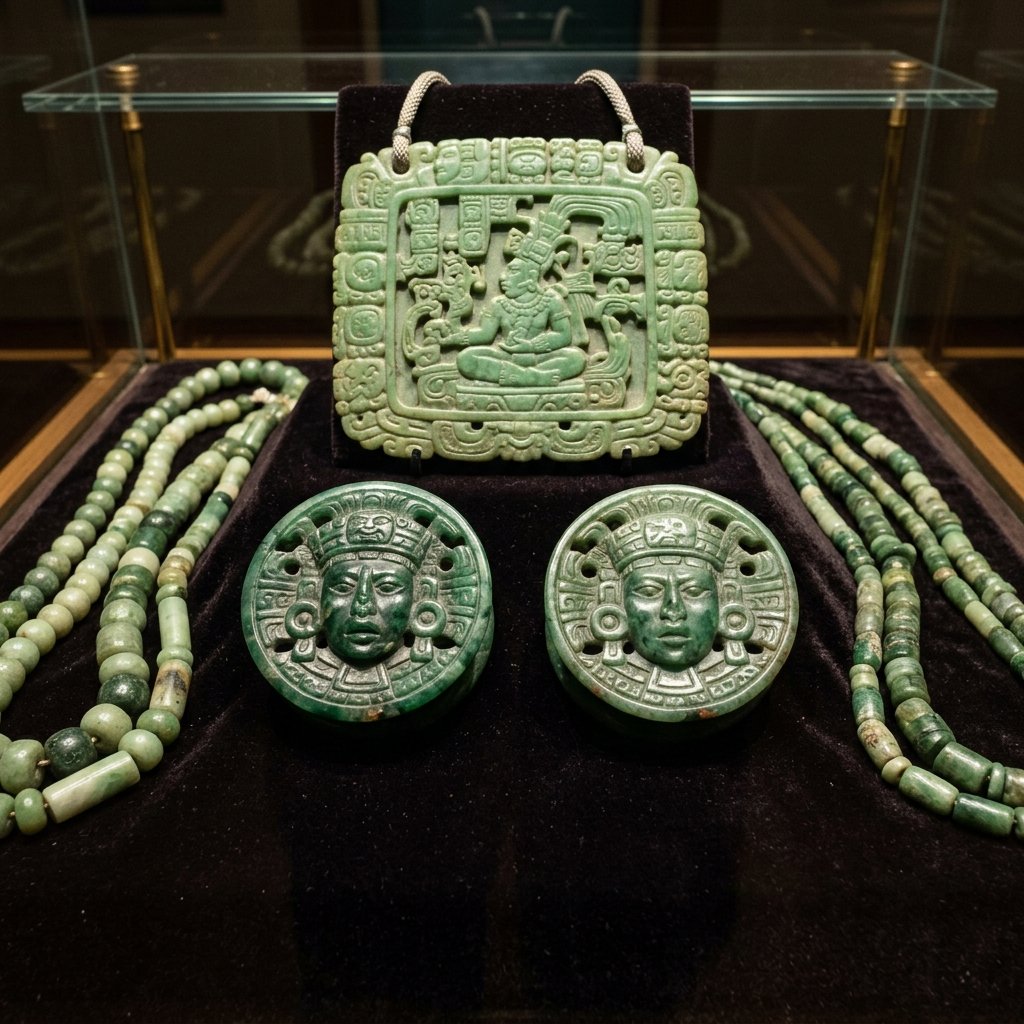
The Peabody holds approximately 600 life-size plaster casts of Maya monuments — stelae, altars, lintels, and architectural elements — produced by Maudslay, Maler, and other early explorers. These casts are not historical curiosities: they are irreplaceable scientific documents. Many original monuments have suffered catastrophic erosion since the casts were made, meaning the Peabody's plasters preserve details — individual glyph readings, portrait features, costume elements — that are now completely lost at the original sites.
Significance: The casts have been instrumental in David Stuart's and other epigraphers' decipherment work, providing clean readings where the originals are now illegible.
The Corpus of Maya Hieroglyphic Inscriptions (CMHI)
Founded in 1968 by Ian Graham, the CMHI is the most ambitious epigraphic project in Maya studies. Over decades, Graham and his team traveled to every accessible Maya site, producing meticulous hand-drawn illustrations and photographs of every known hieroglyphic inscription. The resulting published volumes — each covering a single site in extraordinary detail — are the standard reference for Maya epigraphers worldwide. The project's archive, housed at the Peabody, includes thousands of original field drawings, photographs, and expedition notes.
The CMHI has published volumes covering Naranjo, Yaxchilán, Seibal, Ixkun, Xultun, and dozens of other sites. Many of these drawings are the only reliable record of inscriptions at remote, inaccessible sites.
Additional Maya Highlights
- Copán artifacts: Objects from the Peabody's own excavations at Copán, Honduras, conducted in the late 19th and early 20th centuries — including ceramics, stone tools, and fragmentary sculpture.
- Holmul vases: Polychrome ceramic vessels from the site of Holmul, Guatemala — among the finest examples of Classic Maya painted pottery.
- Piedras Negras materials: Artifacts from the University of Pennsylvania's joint expeditions to Piedras Negras in the 1930s.
- Tatiana Proskouriakoff's papers: The personal archive of the scholar who proved that Maya inscriptions record historical events.
Scholarly References
- Coggins, C. & Shane, O. C. (1984). Cenote of Sacrifice: Maya Treasures from the Sacred Well at Chichén Itzá. University of Texas Press.
- Graham, I. (1975–2012). Corpus of Maya Hieroglyphic Inscriptions. Peabody Museum, Harvard University. Vols. 1–10.
- Proskouriakoff, T. (1963). An Album of Maya Architecture. University of Oklahoma Press (reprint).
- Willard, T. A. (1926). The City of the Sacred Well. Century Company. (Thompson's cenote account)
- Tozzer, A. M. (1957). Chichen Itza and its Cenote of Sacrifice. Peabody Museum Memoirs.
- Stuart, D. (2005). The Inscriptions from Temple XIX at Palenque. Pre-Columbian Art Research Institute (using CMHI methods).
Practical Information
Contact & Location
- 📍 11 Divinity Avenue, Cambridge, MA 02138, USA
- 📞 (617) 496-1027
- 🌐 peabody.harvard.edu
Visitor Information
- 🕐 Daily: 9:00 AM – 5:00 PM
- 💰 Adults: $15 | Seniors: $13 | Students/Youth: $10
- 🆓 Free for Harvard ID holders (+1 guest)
- 🆓 Free for MA residents: Sun mornings & Wed afternoons
- 🎟️ Admission includes Harvard Museum of Natural History
- 🚇 Nearest T: Harvard Square (Red Line)
Frequently Asked Questions
Are the Sacred Cenote objects still on display?
The Peabody's cenote collection has been partially repatriated to Mexico (1959, 1970), but the museum retains a significant portion. Display status varies — check the museum's current gallery guide. The repatriation history itself is documented in the galleries as part of the museum's broader engagement with ethical collecting practices.
Can I access the CMHI archive for research?
Yes — the CMHI archive is available to qualified researchers by appointment. Contact the Peabody's research division. Published CMHI volumes are available in major university libraries and some are being digitized. Ian Graham's field photographs are progressively being made available online.