Water Lily Symbolism at a Glance
The Membrane Between Worlds
In the dense jungles of the Maya lowlands, moving water (rivers) and standing water (lakes, swamps, and cenotes) held vastly different spiritual meanings. While flowing water was associated with the rain god Chaac, dark, standing bodies of water were viewed as direct portals to Xibalba—the watery underworld.
The defining feature of these still, portal-like waters was the white water lily (Nymphaea ampla). Because the lily's roots anchor deep in the dark muck of the bottom, while its pristine white flower blossoms perfectly on the surface under the sun, the Maya viewed the plant as the literal boundary separating the mortal earth from the supernatural depths.
In Maya art, whenever a scene is framed with water lilies, or when a deity wears a water lily on their head, it is a geographic marker indicating to the viewer: This event is taking place in the underworld.
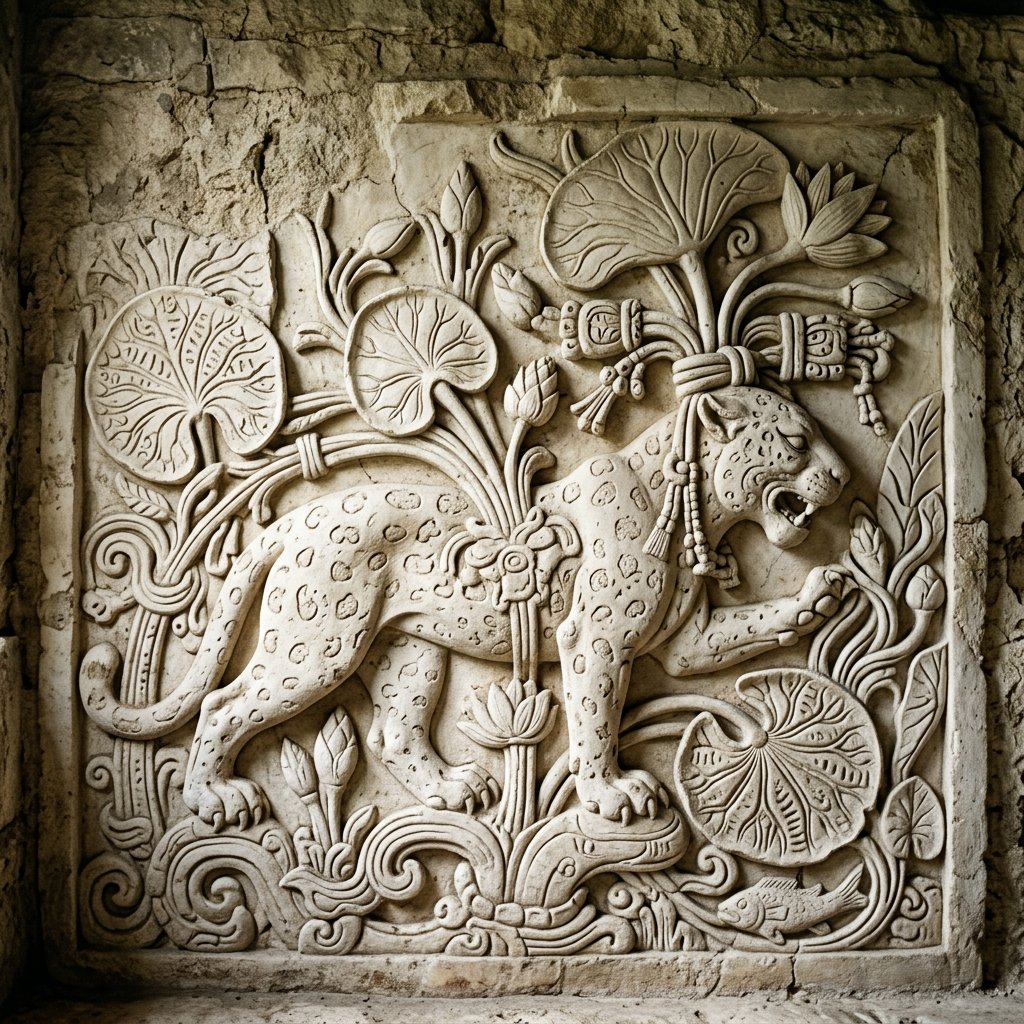
The Water Lily Jaguar
The water lily is frequently paired with one of the most powerful and dangerous predators in the Maya cosmos: the jaguar.
The Water Lily Jaguar is a specific underworld deity. It is depicted as a feline with a large water lily pad and flower tied to its forehead or sprouting from its head. Because jaguars are excellent swimmers and frequently hunt near the water's edge, creating a supernatural hybrid of the apex predator and the aquatic portal flower was a natural theological progression.
The Water Lily Jaguar represents the dark, watery, and dangerous aspects of the cosmos. It was frequently invoked by kings—who often wore jaguar pelts and jade water lilies—as a demonstration of their mastery over the dangerous forces of Xibalba (Miller, M. & Taube, K., The Gods and Symbols of Ancient Mexico and the Maya, 1993).
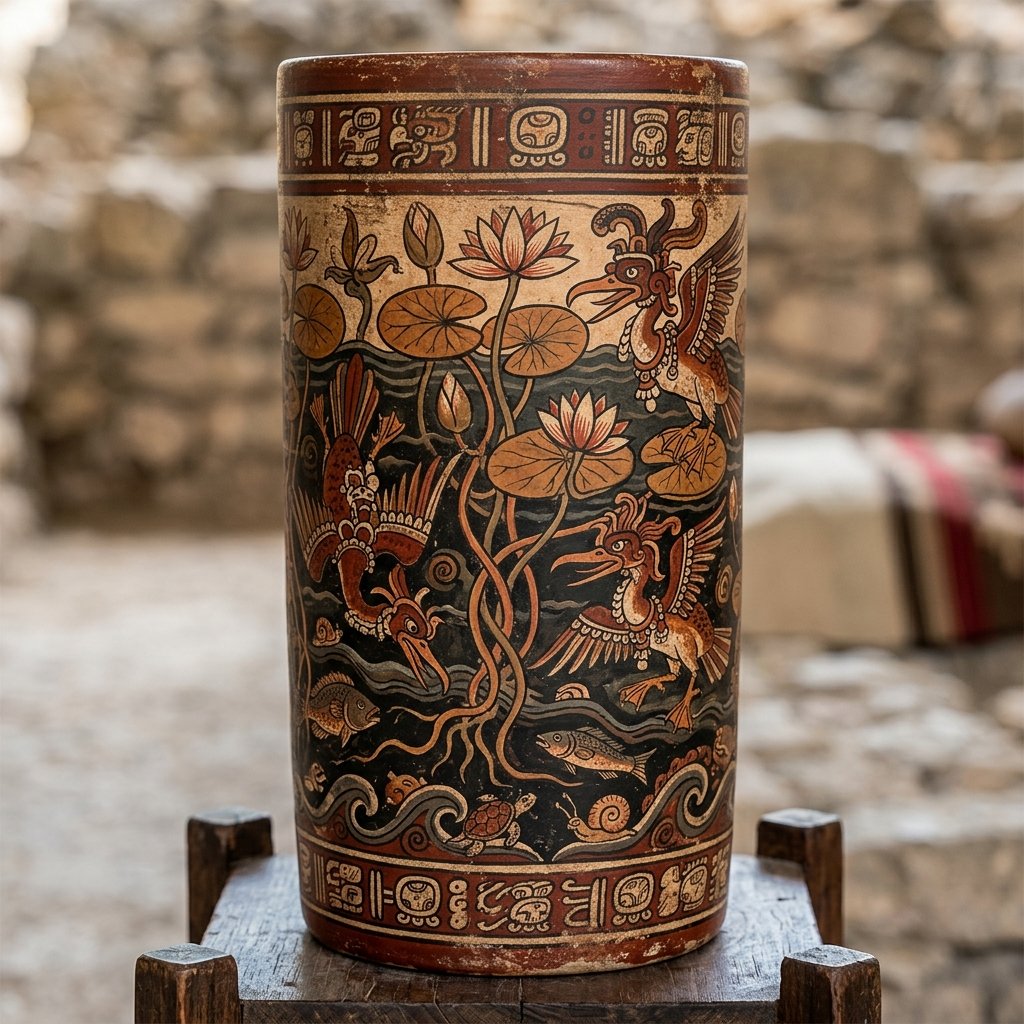
Psychoactive Properties and Ritual Trance
Beyond its iconographic importance, ethnobotanical research suggests the physical water lily plant played a direct intoxicating role in Maya rituals.
The rhizomes and buds of the white water lily (Nymphaea ampla) contain aporphine alkaloids. When processed and consumed (either brewed as a tea, smoked, or administered via ritual enemas), these alkaloids produce mild sedative, euphoric, and hallucinogenic effects.
Like the summoning of the Vision Serpent, altering one's consciousness was a required step for a Maya shaman or king to communicate with the ancestors. The water lily didn't just *represent* the portal to the underworld; its psychoactive chemistry physically opened the doors of perception (Dobkin de Rios, M., Visionary Vine, 1972).
The Ecological King
The proliferation of the water lily in Maya art isn't just about shamanic trances; it's also about urban management.
During the Classic period, cities like Tikal and Calakmul expanded in environments with no permanent rivers. They survived only by engineering massive reservoirs (aguadas) to capture seasonal rainfall. White water lilies thrive only in clean, unpolluted water. By cultivating water lilies in their urban reservoirs, Maya kings naturally shaded the water (preventing evaporation) while the plant's biology purified the water.
When a king wore a water lily headdress, he was making a highly practical political statement: Under my rule, the reservoirs are full, the water is clean, and the city will survive the dry season. (Lucero, L.J., "The Politics of Ritual Water Management in the Maya Lowlands," 1999).
References
- Dobkin de Rios, M. "The Influence of Psychoactive Flora and Fauna on Maya Religion." Current Anthropology, 15(2), 1974.
- Lucero, L.J. "The Politics of Ritual Water Management in the Maya Lowlands." Current Anthropology, 40(2), 1999.
- Miller, M. & Taube, K. The Gods and Symbols of Ancient Mexico and the Maya. Thames & Hudson, 1993.
- Schele, L. & Miller, M.E. The Blood of Kings: Dynasty and Ritual in Maya Art. Kimbell Art Museum, 1986.
Frequently Asked Questions
What does the water lily mean in Maya art?
The water lily is the primary symbol of the standing-water underworld (Xibalba). It acts as a geographic marker; when a scene is framed by water lilies, or a god wears a water lily, the Maya artist is telling the viewer that the scene takes place in the supernatural realm beneath the water's surface.
Why did jaguars have water lilies on their heads?
The "Water Lily Jaguar" is a specific underworld deity. It combines the fierce, nocturnal power of the apex predator with the aquatic portal symbolism of the lily, creating a powerful avatar of the dark, watery, and dangerous forces of the cosmos.
Did the Maya use water lilies as a drug?
Yes. The white water lily (Nymphaea ampla) native to the Maya region contains neuroactive alkaloids. When consumed, it produces a trance-like hallucinogenic state, which Maya priests and kings used to facilitate visionary contact with the spirit world.