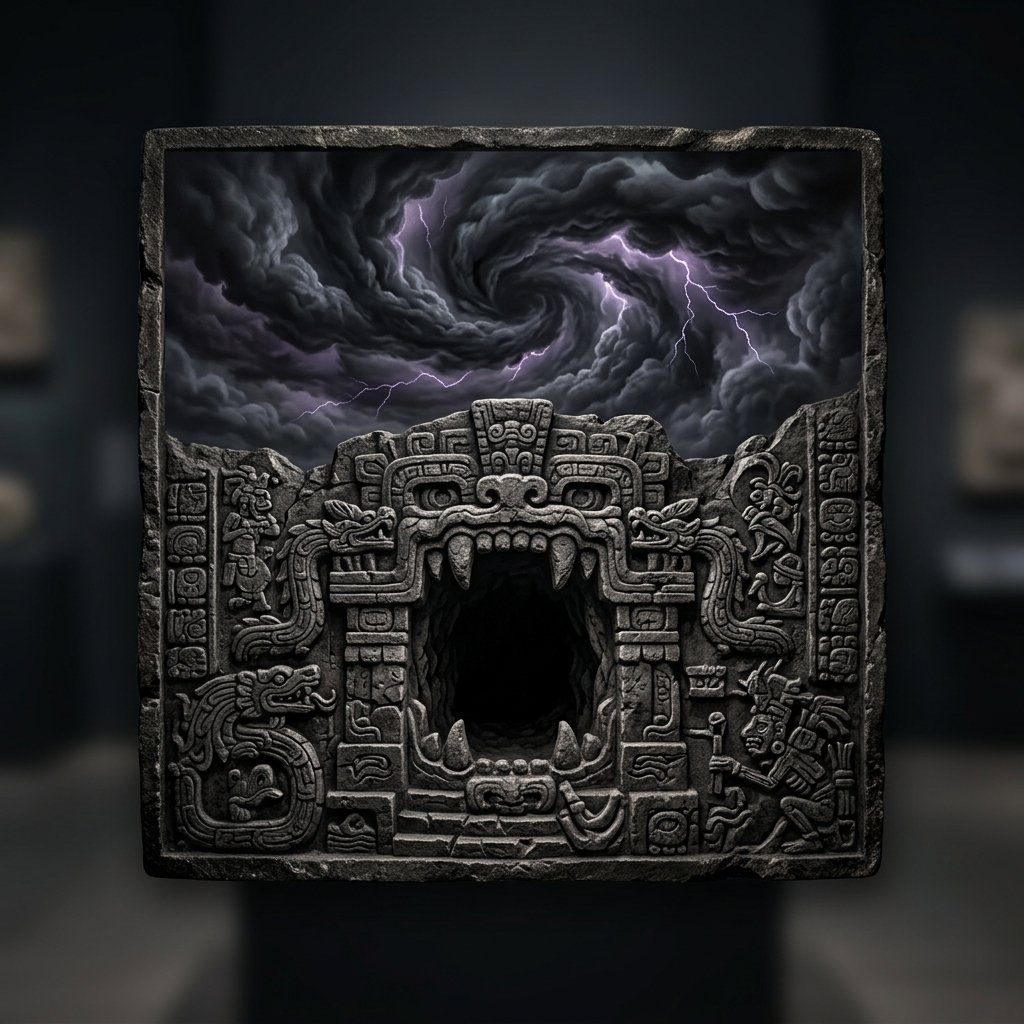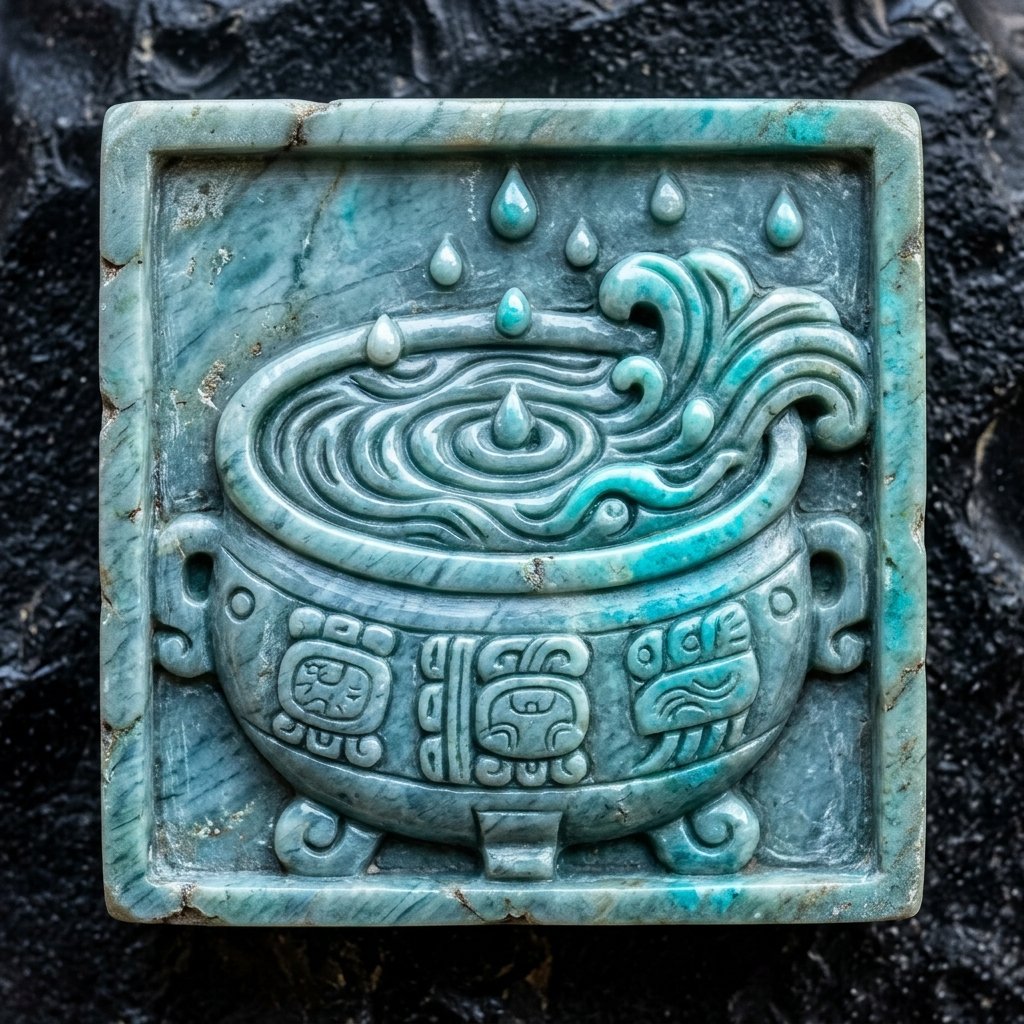
Mol
The Water · Month 8 of 19
Etymology & Name Origin
"Mol" means "to gather," "to collect," or "to unite" in Yucatec Maya. The association with water comes from the gathering of rainwater and the ceremonial collecting of sacred waters from cenotes and forest pools. This dual meaning — gathering both community and water — reflects the fundamental Maya understanding that survival depended on collective action in water management.
Cultural Significance
Mol was a month of communal gathering and resource collection. Water, the most precious substance in the Maya lowlands (where surface rivers are scarce in much of the Yucatán), was at the center of this month's meaning. The great reservoirs of Tikal held nearly a million cubic meters of collected rainwater, and the cenotes of the northern Yucatán were the primary water sources for entire regions. Mol honored both the water and the collective labor required to manage it.
Rituals & Ceremonies
Landa described Mol as the month when bee-keepers prayed for abundant flowers so their bees would produce plentiful honey. Ceremonies also included the fabrication of wooden idols — skilled woodcarvers would create sacred images from cedar and other resistant woods, blessing them with incense and sanctifying them for temple use. The "gathering" theme extended to communal efforts in idol-making, feasting, and collective prayer.
Agricultural Cycle
Mol corresponded with a critical phase of the rainy season when water management determined crop success. The collection and storage of rainwater in chultunes (underground cisterns) and aguadas (artificial reservoirs) was a vital activity. Fields required consistent moisture, and Mol's "gathering" energy was directed toward ensuring that the earth received adequate water for the maize crop.
Cosmological Role
Water in Maya cosmology was not merely physical substance but the primal element from which creation emerged. The Popol Vuh opens with the image of the primordial sea — "only the calm sea lay alone under the sky" — and all life arose from these gathered waters. Mol represents this gathering force: the cosmic principle of collection, accumulation, and the bringing-together of elemental forces that make creation possible.
Patron Deity
Chaac, the Rain God, was honored during Mol. His long-nosed visage — repeated obsessively on the facades of Puuc-style architecture at Uxmal, Kabah, and Sayil — represented the Maya's desperate dependence on rainfall in a landscape without permanent rivers.
Key Takeaway
The Haab' month Mol ("Water") is month 8 of the 19-part Maya solar calendar. Spanning 20 days, it represents month of gathering and water. Together with the other 17 regular months and the 5-day Wayeb' period, Mol forms the 365-day Haab' cycle that tracked the solar year with remarkable precision.
Frequently Asked Questions
What does the Maya month name Mol mean?
The name "Mol" translates to "Water" in the Haab' solar calendar. "Mol" means "to gather," "to collect," or "to unite" in Yucatec Maya.
What ceremonies were performed during Mol?
Landa described Mol as the month when bee-keepers prayed for abundant flowers so their bees would produce plentiful honey. Ceremonies also included the fabrication of wooden idols — skilled woodcarvers would create sacred images from cedar and other resistant woods, blessing them with incense and sanctifying them for temple use.
Which deity is the patron of Mol?
Chaac, the Rain God, was honored during Mol. His long-nosed visage — repeated obsessively on the facades of Puuc-style architecture at Uxmal, Kabah, and Sayil — represented the Maya's desperate dependence on rainfall in a landscape without permanent rivers.
How does Mol fit into the Maya calendar system?
Mol is month 8 of 19 in the Haab' solar calendar. It spans 20 days (numbered 0-19 in the Maya system). The Haab' consists of 18 months of 20 days each (360 days) plus a 5-day Wayeb' period, totaling 365 days — almost exactly one solar year.
Scholarly References
- Landa, D. de. Relación de las Cosas de Yucatán. Translated by A. Tozzer. Peabody Museum, 1941, pp. 165-167.
- Scarborough, V.L. The Flow of Power: Ancient Water Systems and Landscapes. School of American Research Press, 2003, pp. 69-93.
- Lucero, L.J. Water and Ritual: The Rise and Fall of Classic Maya Rulers. University of Texas Press, 2006, pp. 25-50.
- Redfield, R. & Villa Rojas, A. Chan Kom: A Maya Village. University of Chicago Press, 1934, pp. 138-152.
 Yaxkin