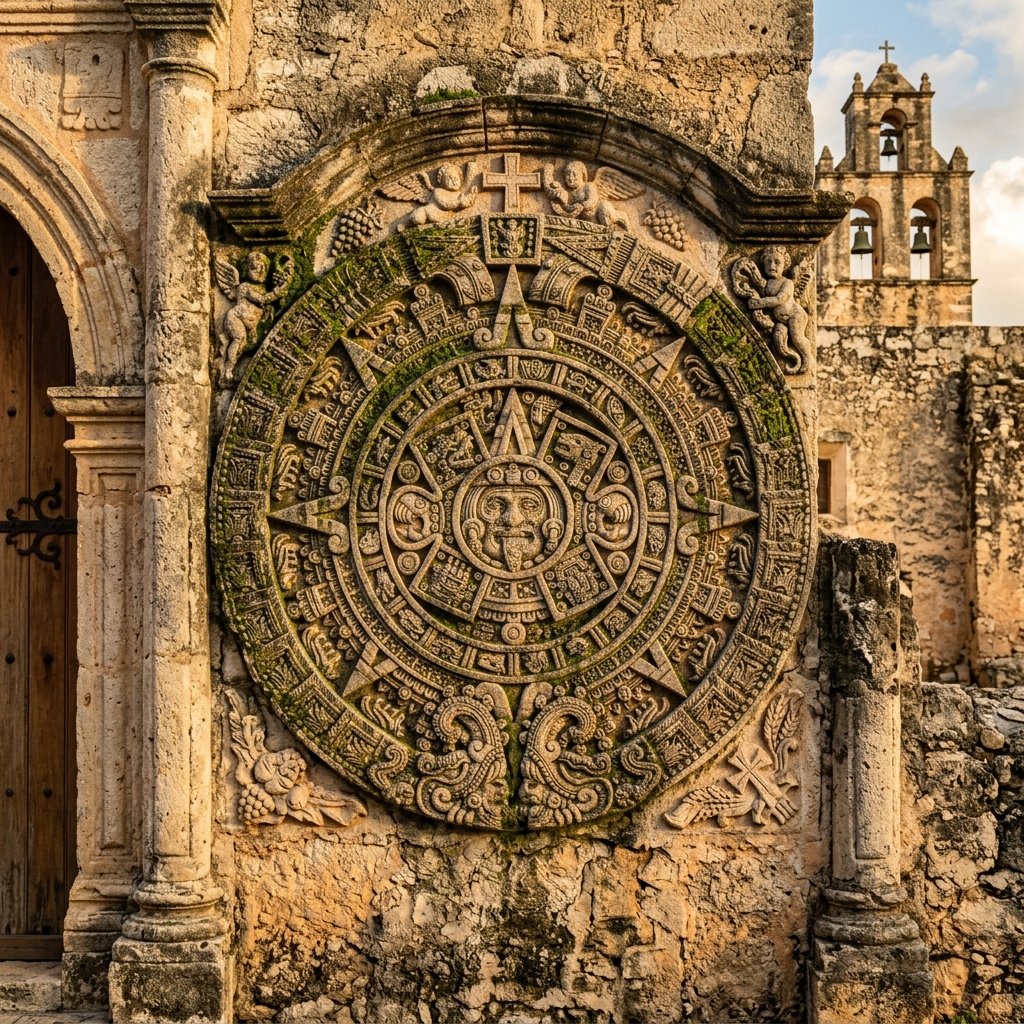
The Controversy at a Glance
What Is Hunab Ku?
Hunab Ku (sometimes spelled Hunab K'u) is described in popular sources as the "supreme creator god" of the ancient Maya — an invisible, omnipotent, single deity who created the universe and exists above all other gods. The name translates as "One God" or "Sole God" from Yucatec Maya (hun = one, ab = to exist, ku = god/sacred).
In modern spiritual, New Age, and tattoo culture, Hunab Ku is enormously popular. A distinctive black-and-white spiral symbol — resembling a yin-yang or Milky Way galaxy — is widely attributed to Hunab Ku and appears on jewelry, clothing, yoga studio walls, and countless tattoos worldwide.
There is one significant problem: scholars are nearly unanimous that Hunab Ku, as popularly understood, did not exist in pre-Columbian Maya religion.
The Evidence (or Lack Thereof)
The case against Hunab Ku as a genuine ancient Maya deity rests on a simple, devastating fact:
There is not a single mention of "Hunab Ku" in any pre-Columbian Maya inscription, codex, ceramic, mural, or monument.
Zero. Out of thousands of deciphered texts spanning 2,000 years.
The name Hunab Ku appears exclusively in colonial-era sources — documents written after the Spanish conquest (post-1542 in Yucatán):
- The Motul Dictionary (c. 1577): A Yucatec Maya-Spanish dictionary compiled by Franciscan friars defines Hunab Ku as "the sole, living, and true god" — language that unmistakably mirrors Christian monotheistic theology (Chuchiak, 2000).
- Franciscan catechisms: Spanish missionaries explicitly used the term Hunab Ku in catechisms designed to explain the Christian God to Maya converts. The term was a translation tool — a way to render "the one true God" in Yucatec Maya.
- Diego de Landa's Relación (c. 1566): Landa mentions a supreme deity concept but in the context of explaining Maya religion to a Christian audience — a context rife with interpretive bias.
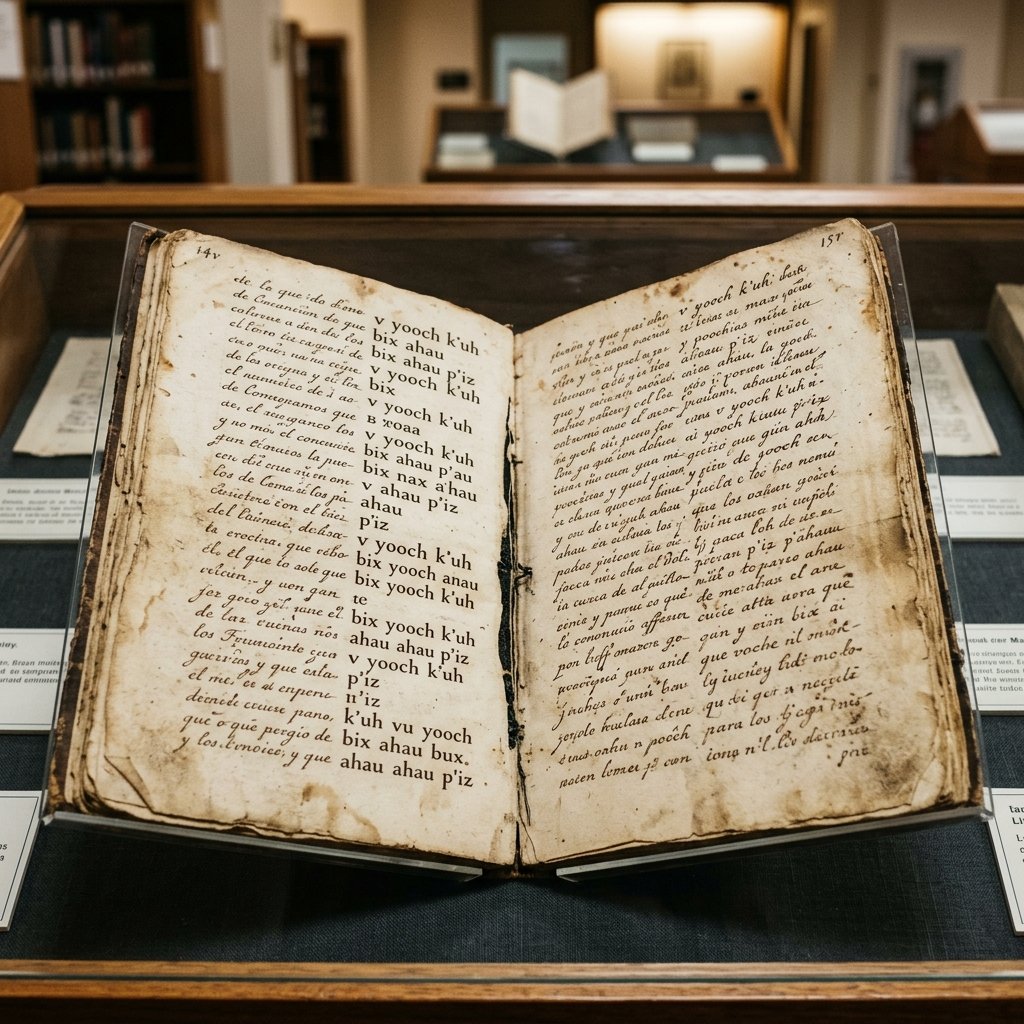
The Scholarly Debunking
The most thorough academic examination of Hunab Ku was conducted by historian John F. Chuchiak IV, who demonstrated that the term was a product of the colonial evangelization process — not a survival of ancient Maya monotheism (Chuchiak, "The Concept of Hunab Ku in the Colonial Sources," paper presented at the European Maya Conference, 2000).
Chuchiak's key arguments:
- The term appears only in sources written by or under the influence of Franciscan friars, who had an explicit theological agenda to find (or create) monotheistic concepts in Maya religion that could serve as bridges to Christianity.
- The Maya religious system, as documented in pre-Columbian art and inscriptions, was thoroughly polytheistic. There was no "supreme god" above the pantheon. Itzamná was the most important creator deity, but he was not a monotheistic "one god."
- The Franciscan order had a specific doctrinal motivation: they believed that indigenous peoples possessed a "natural knowledge" of the one true God that Christianity could complete — a theological position called praeparatio evangelica. Finding (or creating) a "one god" concept in Maya religion served this agenda perfectly.
The Symbol: A Modern Creation
The iconic black-and-white spiral symbol universally associated with Hunab Ku — the one that appears on countless tattoos, t-shirts, and spiritual websites — is not ancient Maya.
The symbol was popularized in the 1980s and 1990s by José Argüelles (1939–2011), a New Age author who wrote extensively about Maya calendrics and prophecy. In his book The Mayan Factor (1987), Argüelles presented the black-and-white design as an ancient Maya symbol representing "the galactic core" and "galactic consciousness."
In reality, the motif Argüelles adapted was likely derived from an Aztec (not Maya) textile design — specifically an Aztec representation of Ollin (movement/earthquake), which was repurposed and rebranded as "Hunab Ku" for a modern audience. No pre-Columbian Maya artifact bears this symbol.
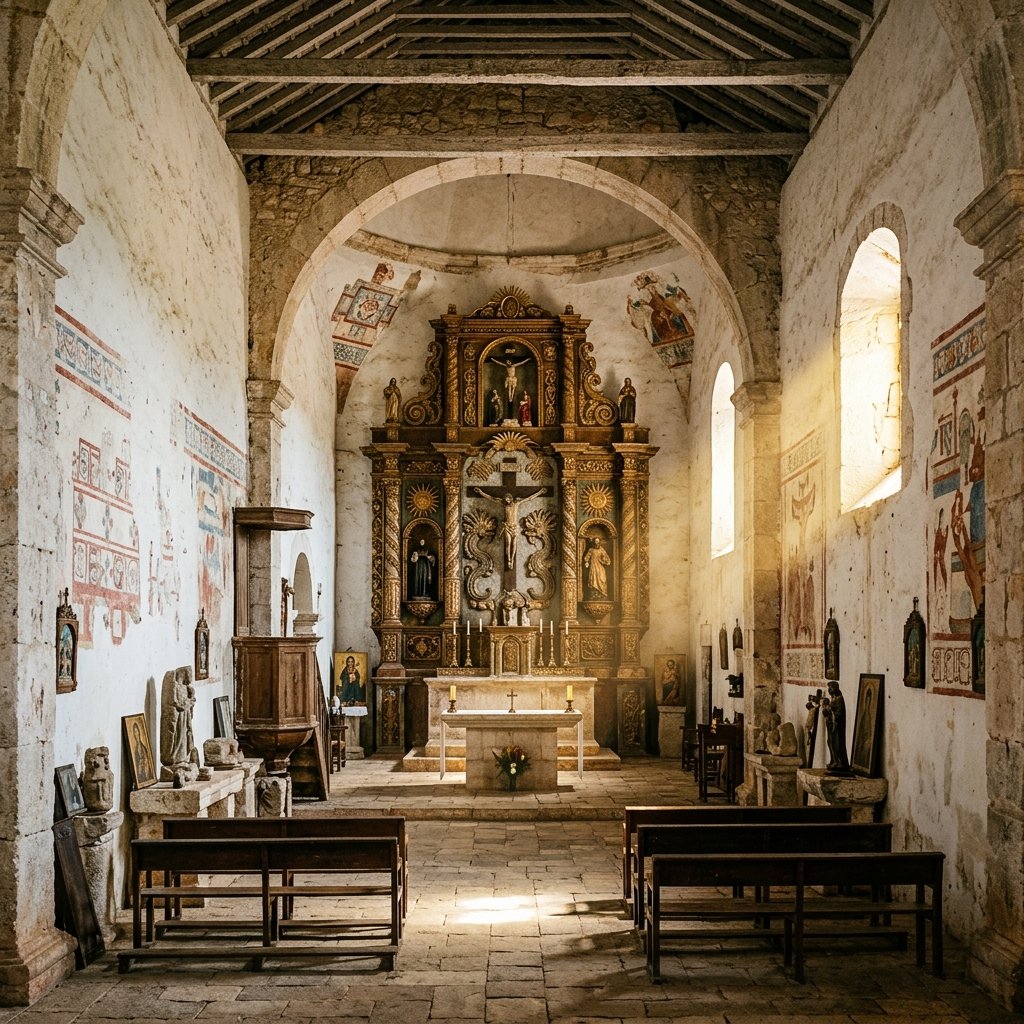
What the Maya Actually Believed
If Hunab Ku as a monotheistic supreme being is a colonial construct, what did the Maya actually believe about the highest levels of their divine hierarchy?
- Itzamná was the highest-ranking creator deity in the pre-Columbian pantheon — lord of the heavens, inventor of writing, and patron of knowledge. But he was one god among many, not a singular omnipotent being.
- The Popol Vuh presents creation as a collaborative process involving multiple deities — Huracan (Heart of Sky), Tepeu, and Q'ukumatz working together through conversation.
- Maya religion was deeply polytheistic, with different gods governing different domains, directions, and time periods. The idea of a single deity above all others is structurally incompatible with the documented Maya worldview.
Why This Matters
The Hunab Ku case illustrates several important principles:
- Colonial sources require critical reading. Documents written by Spanish missionaries are invaluable primary sources, but they carry systematic biases — particularly the tendency to project Christian theological categories onto indigenous belief systems.
- Modern popular culture creates its own "traditions." The Hunab Ku symbol is genuinely meaningful to millions of people today — but its meaning is modern, not ancient. Acknowledging this does not diminish anyone's personal experience; it simply requires honesty about origins.
- The Maya deserve accurate representation. Projecting monotheism onto Maya religion flattens and distorts a complex, sophisticated theological system. The real Maya pantheon — with its shape-shifting deities, cosmic dualities, and intimate connections between gods and natural phenomena — is far more interesting than the New Age version.
References
- Chuchiak IV, J.F. "The Concept of Hunab Ku in the Colonial Yucatecan Sources and Its Implications for Pre-Columbian Maya Religion." Paper presented at the European Maya Conference, Leiden University, 2000.
- Taube, K. The Major Gods of Ancient Yucatan. Dumbarton Oaks, 1992.
- Restall, M. & Chuchiak, J.F. "A Reevaluation of the Authenticity of Fray Diego de Landa's Relación de las cosas de Yucatán." Ethnohistory, Vol. 49, No. 3, 2002, pp. 651–669.
- Argüelles, J. The Mayan Factor: Path Beyond Technology. Bear & Company, 1987.
- Coe, M.D. The Maya. Thames & Hudson, 9th edition, 2015.
- Thompson, J.E.S. Maya History and Religion. University of Oklahoma Press, 1970.
Frequently Asked Questions
Was Hunab Ku a real Maya god?
The term "Hunab Ku" appears only in colonial-era sources — documents written after the Spanish conquest by Franciscan missionaries who were translating Christian monotheistic concepts into Yucatec Maya. There is zero evidence of "Hunab Ku" in any pre-Columbian inscription, codex, or monument. Most scholars conclude that the concept was a colonial creation, not a survival of ancient Maya theology. The Maya were polytheistic, with Itzamná as their highest-ranking creator deity — but not a monotheistic "one god."
Is the Hunab Ku symbol ancient Maya?
No. The black-and-white spiral symbol popularly associated with Hunab Ku was popularized in the 1980s by New Age author José Argüelles in his book The Mayan Factor. The motif was likely adapted from an Aztec textile design representing Ollin (movement/earthquake), not from any Maya source. No pre-Columbian Maya artifact bears this symbol. It is a modern creation, regardless of the personal meaning it holds for people today.
If Hunab Ku isn't real, then what was the Maya supreme god?
The Maya did not have a single "supreme god" in the monotheistic sense. Their highest-ranking creator deity was Itzamná — lord of the heavens and inventor of writing. But Itzamná was one god among many in a complex polytheistic system. The Popol Vuh describes creation as a collaborative process involving multiple deities working together. The structure of Maya religion is fundamentally polytheistic, with different gods governing different domains, directions, and time periods.