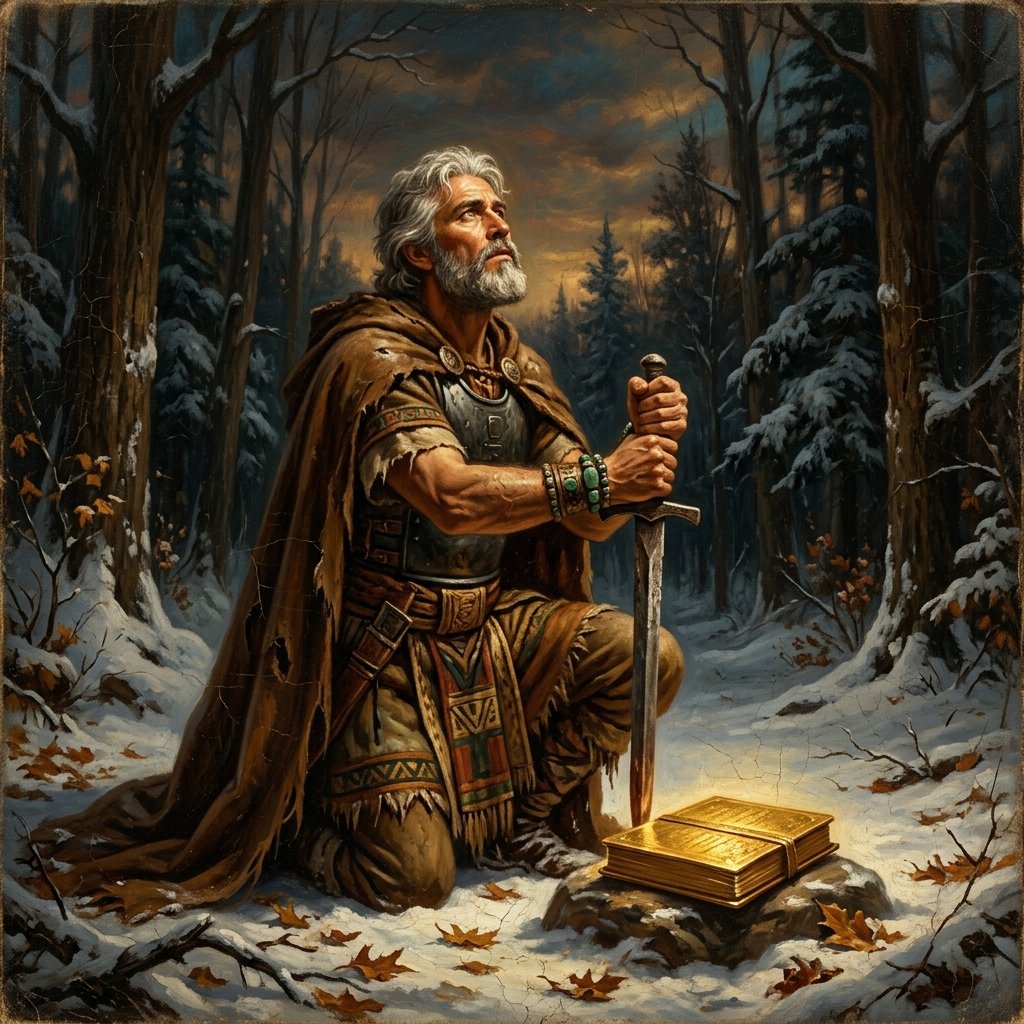
What This Article Covers
This article examines the Mesoamerican geography theory for the Book of Mormon — the most developed and most debated model connecting the text to a real-world setting. We present the strongest arguments from LDS scholars, the strongest objections from mainstream archaeologists, and the areas where the two sides may have more common ground than either expects. This is not advocacy — it's analysis. The reader is invited to weigh the evidence and think independently.
The Man Behind the Book: Joseph Smith
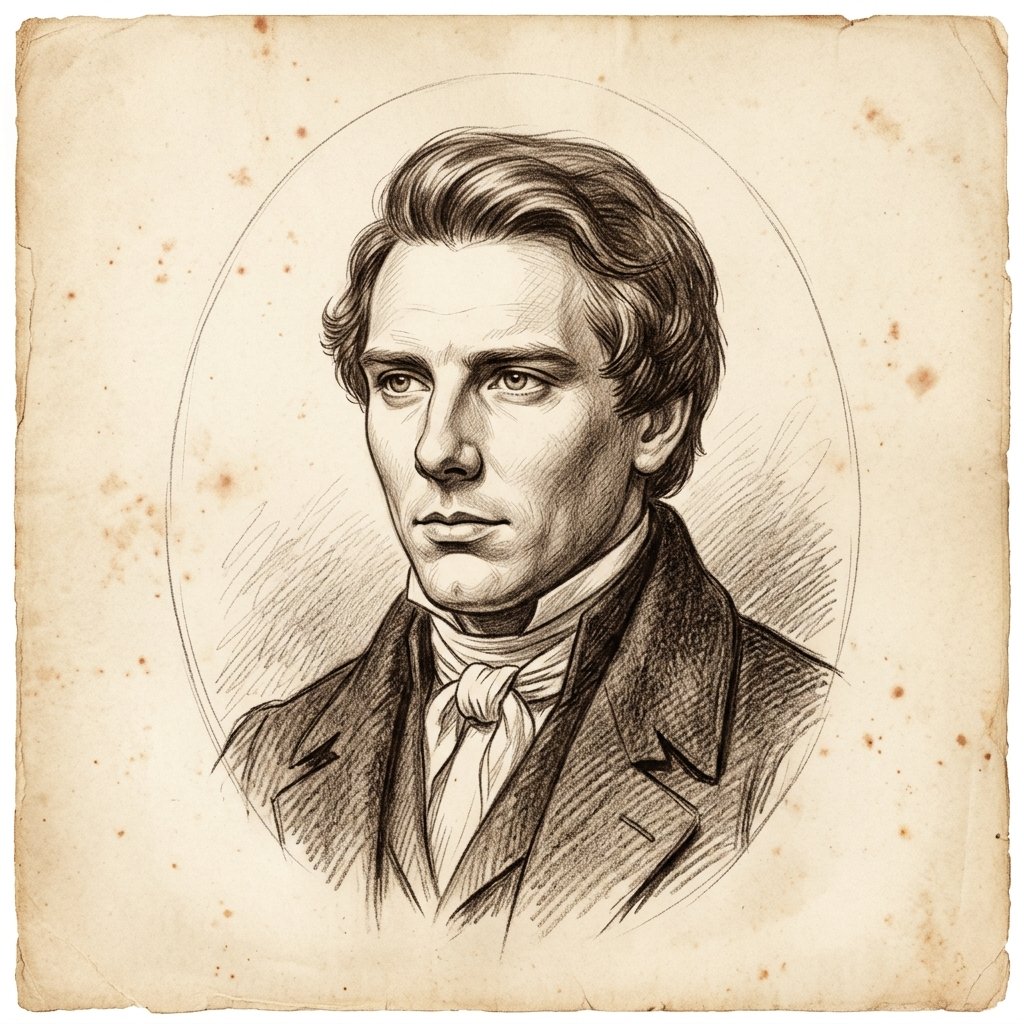
To understand the debate over the Book of Mormon's historicity, you first have to understand the extraordinary — and deeply contested — story of the person who produced it.
Joseph Smith Jr. was born on December 23, 1805, in Sharon, Vermont, the fifth of eleven children in a farming family of modest means. His family moved frequently through rural New England and upstate New York. By every account — both sympathetic and hostile — Smith received only a rudimentary frontier education. His wife Emma later recalled that at the time of the translation, "he could neither write nor dictate a coherent and well-worded letter, let alone dictate a book like the Book of Mormon" (Emma Smith Bidamon, "Last Testimony," 1879).
Smith claimed that in 1820, at the age of fourteen, he experienced a vision in a grove of trees near his family's farm in Palmyra, New York, in which God the Father and Jesus Christ appeared to him. He further claimed that in 1823, an angel named Moroni — the same figure depicted in the hero image of this article — visited him and revealed the existence of an ancient record written on golden plates, buried in a hill called Cumorah near his home. Moroni, Smith said, was the last surviving prophet of an ancient American civilization called the Nephites, and had buried the plates himself around 421 AD before the final destruction of his people.
In 1827, at the age of twenty-one, Smith said he received the plates. Over the following months, he dictated the entire 531-page English text to a series of scribes — primarily Oliver Cowdery, a schoolteacher — claiming to translate the "reformed Egyptian" characters on the plates through divine instruments. The translation was completed in approximately 65 working days between April and June of 1829 (Welch, J.W., "The Miraculous Timing of the Translation of the Book of Mormon," BYU Studies, vol. 57, no. 4, 2018).
The resulting text — the Book of Mormon — was published in March 1830. It describes roughly a thousand years of history, involving multiple civilizations, complex political systems, detailed geography, extensive warfare, religious institutions, and theological discourse. Whether one accepts Smith's account of its origin or not, the sheer scope and internal consistency of the text produced by a barely educated 23-year-old farm laborer in rural 1829 America remains a subject of genuine scholarly fascination.
The Legacy in Numbers
Smith founded the Church of Jesus Christ of Latter-day Saints on April 6, 1830, with six original members. He led the growing movement through intense persecution, multiple forced relocations, and internal crises for fourteen years. On June 27, 1844, at the age of thirty-eight, Smith was murdered by a mob while being held in Carthage Jail, Illinois — shot multiple times while awaiting trial on charges his followers considered politically motivated. He never recanted his claims about the Book of Mormon, even when doing so might have saved his life.
Today, the church Smith founded has grown to over 17 million members worldwide, with congregations in 176 countries and territories. It is consistently ranked among the fastest-growing Christian denominations in the world. The Book of Mormon has been translated into 115 languages, with over 192 million copies distributed. Whatever one's personal conclusion about its origins, the text's cultural and religious impact is empirically undeniable.
The Core Question
The Book of Mormon, published by Joseph Smith in 1830, describes a civilization of Near Eastern origin that migrated to the Americas, built cities, practiced metallurgy, kept written records, and waged wars spanning centuries. For believers in the text's historicity, the question is not whether this happened but where.
Among the various geographical models proposed — from New York to Peru to Malaysia — the Mesoamerican Limited Geography Model has attracted the most sustained scholarly attention, most thoroughly articulated by anthropologist John L. Sorenson of Brigham Young University in his 1985 work An Ancient American Setting for the Book of Mormon (Deseret Book/FARMS).
The Case For: Correspondences
Advocates of the Mesoamerican setting point to a number of intriguing correspondences between the Book of Mormon text and what archaeology has revealed about ancient Mesoamerican civilizations:
Textual Parallels
- Complex civilization with kings, priests, and written records
- Large-scale warfare between rival city-states
- Monumental stone construction and temple-building
- Calendrical systems and astronomical knowledge
- A tradition of migration from a distant land
- Record-keeping on metal and other durable materials
Geographic Fit
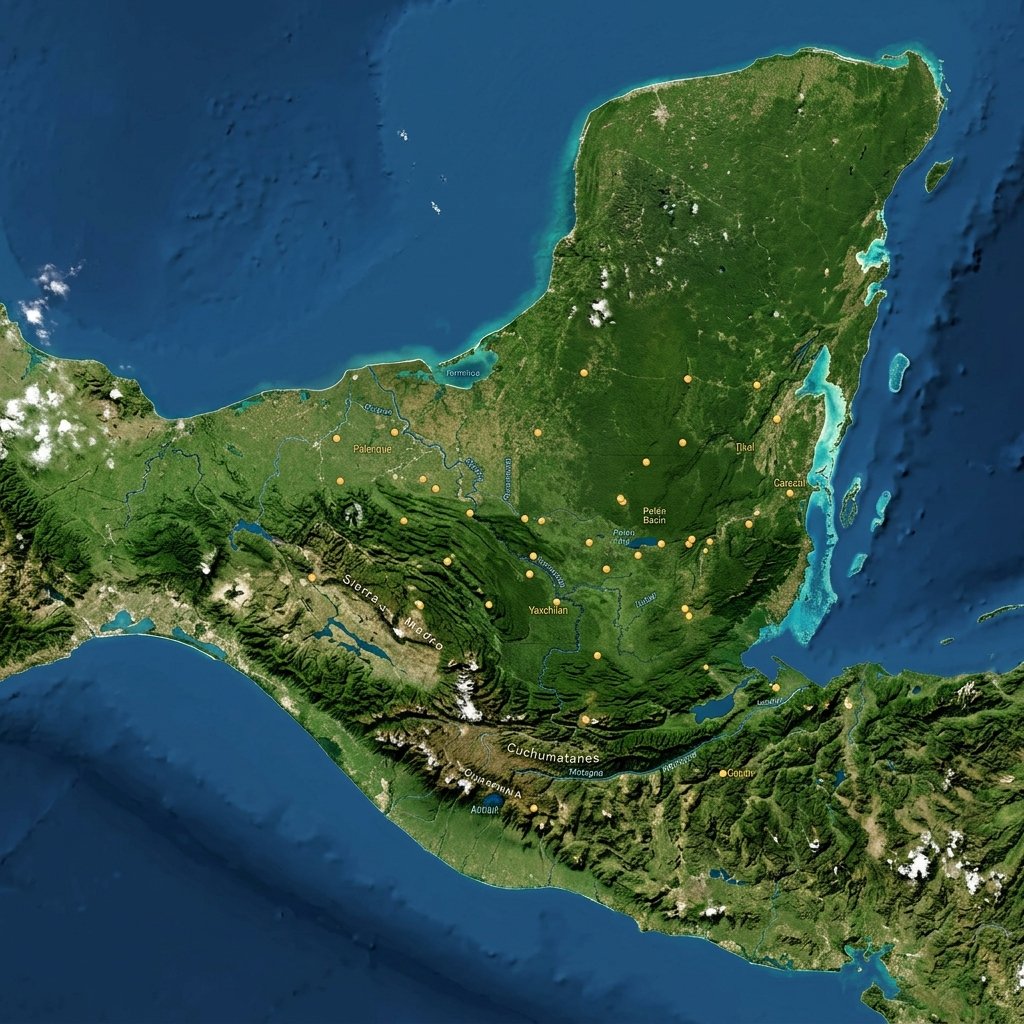
- Narrow "neck of land" (Isthmus of Tehuantepec)
- River systems matching Book of Mormon descriptions
- Volcanic activity mentioned in the text
- Correct relative positions of "land northward" and "land southward"
- Timeline overlap with Preclassic Maya/Olmec cultures
- Population scales consistent with archaeological estimates
Sorenson's geographic model places the Book of Mormon narrative primarily in southern Mexico and Guatemala — a region that, notably, contains the highest density of complex pre-Columbian civilizations in the Western Hemisphere. The timeline of Book of Mormon events (roughly 600 BC to 400 AD) overlaps precisely with the most dynamic period of Mesoamerican cultural development — the Late Preclassic through Early Classic transition.
Notable Parallels That Invite Further Study
Several specific findings in Mesoamerican archaeology have generated particular interest among researchers sympathetic to the Mesoamerican model:

- Stela 5, Izapa: A carved stone from the Preclassic site of Izapa in southern Mexico depicting a complex tree-of-life scene with multiple human figures. Some LDS researchers have identified parallels to Lehi's dream vision (1 Nephi 8), though mainstream archaeologists interpret the scene within a purely Mesoamerican mythological framework (Christenson, Art and Society in a Highland Maya Community, 2001).
- The "bearded figures" tradition: Mesoamerican art includes depictions of bearded individuals — unusual for indigenous American populations. Whether these represent stylistic conventions, imported cultural traditions, or real phenotypic variation remains debated.
- Volcanic destruction events: The Book of Mormon describes catastrophic destruction involving "darkness for three days" (3 Nephi 8) at the time of Christ's crucifixion. Geological evidence confirms significant volcanic eruptions in Mesoamerica during this period, though precise dating remains uncertain.
- Written records: The Maya developed the only fully developed writing system in the pre-Columbian Americas — a fact consistent with the Book of Mormon's description of civilizations that kept detailed records, though the scripts themselves do not show Hebrew or Egyptian linguistic markers.
Sorenson's Cross-Cultural Evidence: Beyond Coincidence?
In his later work Mormon's Codex: An Ancient American Book (2013), Sorenson expanded his earlier research into what may be the most comprehensive scholarly compilation of cross-cultural parallels between the ancient Near East and pre-Columbian Mesoamerica ever assembled. He identified over 400 specific correspondences — not vague thematic similarities, but precise cultural, technological, and religious parallels that span categories most scholars would consider too specific and too arbitrary to arise independently. Among them:
Religious & Ritual Parallels
- Tree of Life iconography: Both Near Eastern and Mesoamerican traditions feature elaborate "tree of life" motifs as central cosmological symbols — including fruit-bearing trees flanked by human figures, a pattern found at Izapa and in Mesopotamian cylinder seals alike
- Temple construction: Mesoamerican temples feature structurally unnecessary pillars at their entrances — a design element paralleling the pillars of Solomon's Temple (Jachin and Boaz) with no clear functional explanation in either tradition
- Incense rituals: Both cultures employed elaborate incense-burning ceremonies as central acts of worship, using specialized ceramic incense burners with strikingly similar forms
- Priestly classes: Hierarchical priesthoods with hereditary succession, temple-centered worship, and ritual calendar systems governing religious observance
Material & Technological Parallels
- Cement and lime construction: The Book of Mormon specifically mentions cement construction in the 1st century BC (Helaman 3:7) — a detail once dismissed as anachronistic until archaeological surveys confirmed extensive lime-cement usage in Mesoamerica during precisely this period
- Bark-cloth papermaking: Both Near Eastern and Mesoamerican cultures independently developed techniques for creating writing surfaces from processed bark — with notable similarities in production methods
- Metallurgical traditions: Mesoamerican metalworking traditions, though developing later than Near Eastern ones, share specific techniques and alloy compositions that some researchers find suggestive of cultural transmission
- Board games: The Aztec game patolli shares precise structural parallels with the Indian game pachisi — including board layout, movement sequences, and cosmic associations — parallels difficult to attribute to independent invention
Sorenson's argument is not that any single parallel proves transoceanic contact. Rather, his methodology is cumulative: when hundreds of specific, arbitrary cultural features — features that have no inherent reason to develop in the same way — appear on both sides of an ocean, the burden of explanation shifts. As Sorenson wrote: "The question is no longer whether contact occurred, but how extensive it was and what it transmitted" (Sorenson, Mormon's Codex, 2013, p. 28).
The Case Against: Mainstream Archaeological Objections
Mainstream archaeologists and anthropologists raise significant objections to the Mesoamerican model. These deserve honest acknowledgment:
- DNA evidence: Large-scale genetic studies of Native American populations consistently show Siberian/East Asian ancestry, with no detectable Near Eastern genetic signature at the population level (Bolnick et al., American Journal of Physical Anthropology, 2006). LDS scholars counter that a small migrant group would leave an undetectable genetic footprint after thousands of years of admixture — a position that some population geneticists acknowledge as theoretically plausible for very small founding groups (Perego et al., American Journal of Human Genetics, 2009).
- Absence of specific items: The Book of Mormon mentions wheat, barley, horses, chariots, steel, and other items not confirmed in pre-Columbian Mesoamerican archaeology. LDS apologists propose that some terms may be loan-shifts — a known linguistic phenomenon where familiar words are applied to unfamiliar things (e.g., "horse" for deer or tapir). Critics find these explanations strained.
- No direct epigraphic evidence: Despite the decipherment of ~80% of Maya glyphs, no inscription has been found containing Hebrew, Egyptian, or Reformed Egyptian text — the language in which the Book of Mormon plates were reportedly written.
- Professional consensus: The Smithsonian Institution, the National Geographic Society, and the overwhelming majority of professional Mesoamerican archaeologists do not consider the Book of Mormon a historically reliable document for archaeological purposes (Smithsonian Statement on the Book of Mormon, 1996).
Where the Conversation Gets Interesting
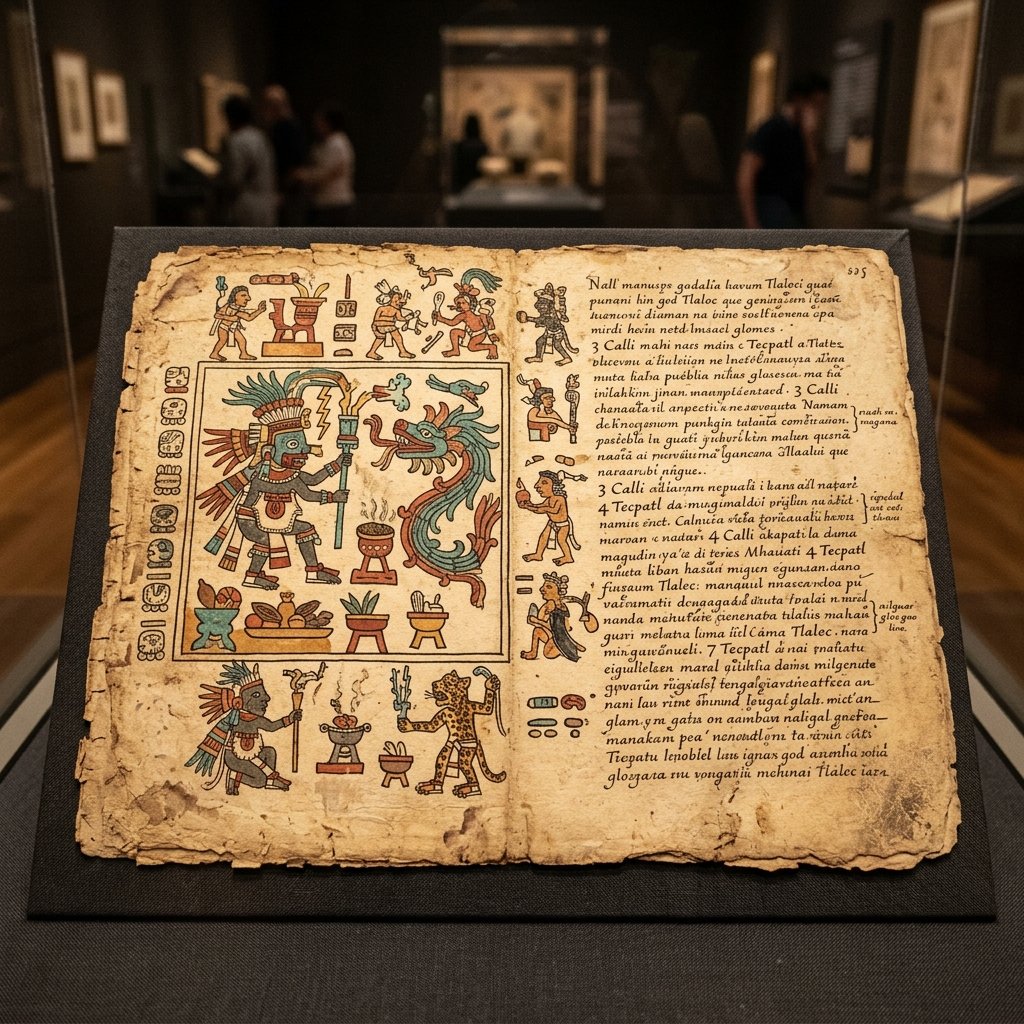
What makes this debate more nuanced than its popular presentation suggests is that several of the strongest parallels are genuinely interesting, even to researchers with no religious stake in the outcome:
- The sheer complexity and sophistication of Preclassic Mesoamerican civilization — which was underestimated by scholarship until LiDAR surveys revealed millions of structures — means the "civilizational context" the Book of Mormon describes is far more plausible against a Mesoamerican backdrop than was believed even 20 years ago.
- The tradition of ancient transoceanic contact — once dismissed as fantasy — has gained modest scientific support from unexpected quarters, including sweet potato DNA studies suggesting pre-Columbian contact between Polynesia and South America (Roullier et al., PNAS, 2013), and analysis of cultivated cotton in the Americas showing Old World genetic components.
- The Book of Mormon's description of a civilization that experienced dramatic population collapse, internal warfare, and abandonment of cities maps suggestively onto the Classic Maya Collapse — one of the great unsolved events in world history.
Durant's Broader Context: How Civilizations Spread
To understand why the Mesoamerican parallels matter, it helps to step back and consider how civilizations actually move. Will Durant, in Our Oriental Heritage (1935) — the first volume of his eleven-volume The Story of Civilization — documented a pattern that modern researchers often underestimate: ancient peoples were far more mobile, far more interconnected, and far more capable of long-distance cultural transmission than conventional models assume.
Durant characterized civilization itself as "a stream with banks" — the banks representing the quiet continuity of ordinary people who carry culture, religion, and tradition forward even when empires collapse. He emphasized that no civilization develops in isolation: ideas, religious concepts, technologies, and artistic forms are constantly borrowed, adapted, and carried across vast distances by traders, refugees, and migrants. The Phoenicians, whom Durant called the "preeminent ancient maritime navigators," established trading colonies from North Africa to Spain and served as the primary agents of cultural diffusion across the Mediterranean — carrying not just goods but the alphabet itself from the Near East to Greece (Durant, Our Oriental Heritage, pp. 292-295).
What Durant documented in particular detail was the resilience of the Hebrew cultural identity through diaspora. Unlike the Phoenicians, whose influence was primarily commercial, the Hebrews preserved their distinct cultural and religious identity through their literature — the books of the Old Testament — even after centuries of conquest, exile, and scattering. Durant observed that this made Hebrew culture uniquely portable: it could survive transplantation to foreign lands because its foundations were textual and theological rather than territorial. "The Jews," Durant wrote, "have had this peculiar quality among the peoples of the earth — that they have kept their identity through all the vicissitudes of their history" (Durant, Our Oriental Heritage, p. 340).
This observation is directly relevant to the Mesoamerican question. If a small group of Near Eastern origin — carrying religious texts, temple-building traditions, calendrical knowledge, and a memory of Jerusalem — arrived in the Americas around 600 BC, Durant's framework suggests they would have done precisely what the Book of Mormon describes: preserved their identity through written records while gradually merging with larger indigenous populations. The cultural fingerprint would be visible not in wholesale transformation of indigenous civilization but in specific, identifiable traditions embedded within a predominantly local cultural matrix — which is exactly the pattern Sorenson documents.
The Cumulative Weight of Evidence
The question of whether some ancient Maya ancestors originated in the Near East — and possibly from Jerusalem itself — cannot be answered definitively with current evidence. But what can be said is that the volume and specificity of cross-cultural parallels is extraordinary, and that the standard explanations for these parallels are less satisfying than their proponents often acknowledge.
Consider the cumulative picture:
- Flood narratives with rebirth themes — found in both the Genesis account and the Maya Popol Vuh, each describing divine cleansing followed by the recreation of humanity, with the flood serving as a mechanism of renewal rather than mere punishment.
- Migration traditions — the Popol Vuh describes the Maya ancestors as coming from "the East," crossing a sea, and arriving in a new homeland. Multiple Mesoamerican traditions reference overseas origins for their founding peoples.
- Temple architecture — Mesoamerican temples share structural features with Near Eastern sacred architecture, including elevated platforms, interior chambers, non-functional entrance pillars, and orientation toward cardinal directions.
- Calendrical sophistication — both civilizations developed complex, interlocking calendar systems tied to astronomical observation and religious ritual, with a precision that suggests deep mathematical and cosmological traditions.
- The Tree of Life motif — not merely as a generic nature symbol but as a specific cosmological concept: a sacred tree bearing fruit, flanked by human figures, connected to concepts of paradise, divine knowledge, and the afterlife.
- Hieroglyphic writing traditions — the Maya developed the most complex writing system in the pre-Columbian Americas, used for records, genealogies, and religious texts — precisely the uses described in the Book of Mormon for those traditions brought from Jerusalem.
- Cement construction — confirmed by archaeology in exactly the time period the Book of Mormon specifies, and dismissed as anachronistic by critics until the archaeological record proved otherwise.
- Biological evidence — the presence of certain Old World intestinal parasites in pre-Columbian American remains that could not have survived transit through the cold Bering Strait migration route, suggesting an alternative path of human contact (Sorenson and Johannessen, World Trade and Biological Exchanges Before 1492, 2009).
No single item on this list constitutes proof. But as Sorenson argued throughout his career, the appropriate methodology for evaluating cross-cultural contact is not to isolate each parallel and dismiss it individually — it is to assess the pattern as a whole. When hundreds of specific, arbitrary cultural features appear in both the ancient Near East and pre-Columbian Mesoamerica — features with no inherent reason to develop the same way in isolation — the most parsimonious explanation may not be coincidence. It may be contact.
Durant's civilizational framework reinforces this reading. He showed that cultural traditions survive diaspora, that ancient peoples were capable of extraordinary maritime journeys, and that the "stream" of civilization carries forward religious ideas, architectural patterns, and mythological structures across vast distances and centuries. The Hebrews, in particular, demonstrated an unparalleled capacity to preserve their identity through text and tradition regardless of geography.
Whether or not one accepts the Book of Mormon as a historical document, the cross-cultural evidence compiled by Sorenson and contextualized by Durant's broader civilizational analysis suggests that the peoples who built the great cities of Mesoamerica were not developing their traditions entirely in a vacuum. The parallels are too numerous, too specific, and too structurally complex to be fully explained by independent invention or cognitive universals. Something — whether direct migration, sustained contact, or a shared ancestral tradition older than either civilization — connected these two worlds. The evidence invites not dismissal but investigation.
The Scholarly Landscape Today
Research on the Book of Mormon's potential Mesoamerican connections is primarily conducted through LDS-affiliated institutions, including the Neal A. Maxwell Institute for Religious Scholarship at BYU, Book of Mormon Central, and the Interpreter Foundation. These organizations publish peer-reviewed journals and employ credentialed scholars, though their work is generally viewed as faith-based rather than secular archaeology.
However, the broader question of pre-Columbian transoceanic contact is gaining incremental mainstream attention. The discovery of pre-Columbian sweet potato DNA in Polynesia, the identification of Old World cotton genetics in American cultivars, and the ongoing analysis of parasitological evidence have opened cracks in the strict isolationist model that dominated 20th-century American archaeology. Sorenson's work, whatever its religious motivations, aggregated evidence from dozens of secular disciplines — and the raw data he compiled has yet to be systematically addressed by mainstream scholarship.
The most productive framing may not be "proven or disproven" but rather: what questions does this intersection generate that are worth investigating? As Durant demonstrated across eleven volumes and four decades of scholarship, the great movements of human civilization are rarely as simple or as isolated as we assume. The relationship between Near Eastern and Mesoamerican traditions — whether through direct migration from Jerusalem, sustained maritime contact, or processes we have not yet identified — remains one of the most fascinating and consequential open questions in comparative civilization studies.
Frequently Asked Questions
Does mainstream archaeology support the Book of Mormon?
The mainstream archaeological consensus does not treat the Book of Mormon as a historical document. However, some of the environmental and civilizational details in the text are consistent with what archaeology has revealed about Preclassic and Classic Mesoamerica — a consistency that LDS scholars find significant and secular scholars attribute to coincidence or post-hoc fitting. The debate remains active in faith-based academic circles.
What is the "Limited Geography Model"?
The Limited Geography Model, developed primarily by John Sorenson, proposes that Book of Mormon events took place in a relatively small area of southern Mexico and Guatemala — not across all of North and South America. This model resolves many earlier objections by proposing that the Nephite/Lamanite civilizations coexisted with larger indigenous populations and represented a localized cultural group within the broader Mesoamerican world.
Could ancient Maya ancestors have come from Jerusalem?
The evidence is circumstantial but substantial. John L. Sorenson documented over 400 specific cross-cultural parallels between Mesoamerican and Near Eastern civilizations — including temple architecture, religious rituals, writing traditions, calendrical systems, and specific artistic motifs like the Tree of Life. Will Durant's Story of Civilization established that ancient Near Eastern peoples (particularly the Phoenicians and Hebrews) were capable of extraordinary cultural transmission across vast distances, and that Hebrew religious identity was uniquely portable through text and tradition. While mainstream archaeology has not confirmed a Jerusalem-to-Mesoamerica migration, the cumulative weight of cross-cultural evidence — combined with emerging biological and botanical data suggesting pre-Columbian transoceanic contact — makes the question far more legitimate than many modern researchers have been willing to acknowledge.
What did Sorenson's research actually prove?
Sorenson's work does not "prove" the Book of Mormon in a scientific sense. What it does is compile the most extensive cross-referencing of ancient Near Eastern and Mesoamerican cultural data ever assembled — drawn from decades of fieldwork, peer-reviewed archaeology, and comparative analysis across multiple disciplines. His argument is cumulative: no single parallel proves contact, but when hundreds of specific, arbitrary cultural features appear on both sides of the Pacific, the standard explanation of coincidence or independent development becomes increasingly difficult to sustain. His 2013 work Mormon's Codex remains the most comprehensive scholarly compilation of this evidence.
References & Further Reading
- Smith, J. (1830). The Book of Mormon: Another Testament of Jesus Christ. The Church of Jesus Christ of Latter-day Saints. (The primary text under examination in this article — 531 pages covering roughly 1,000 years of ancient American history, as claimed by the translator.)
- Sorenson, J. L. (1985). An Ancient American Setting for the Book of Mormon. Deseret Book/FARMS.
- Sorenson, J. L. (2013). Mormon's Codex: An Ancient American Book. Deseret Book / Neal A. Maxwell Institute.
- Sorenson, J. L. and Johannessen, C. L. (2009). World Trade and Biological Exchanges Before 1492. iUniverse.
- Durant, W. (1935). Our Oriental Heritage (The Story of Civilization, Vol. I). Simon and Schuster.
- Durant, W. (1939). The Life of Greece (The Story of Civilization, Vol. II). Simon and Schuster.
- Bolnick, D. A., et al. (2006). "Asymmetric male and female genetic histories among Native Americans." American Journal of Physical Anthropology, 129(3), 420-432.
- Perego, U. A., et al. (2009). "Distinctive Paleo-Indian Migration Routes from Beringia Marked by Two Rare mtDNA Haplogroups." Current Biology, 19(1), 1-8.
- Roullier, C., et al. (2013). "Historical collections reveal patterns of diffusion of sweet potato in Oceania obscured by modern plant movements and recombination." PNAS, 110(6), 2205-2210.
- Christenson, A. J. (2001). Art and Society in a Highland Maya Community. UT Austin Press.
- Coe, M. D. (1973). The Maya. Praeger. (For the mainstream archaeological perspective on the region.)