Why This Museum Matters
The Penn Museum's Maya collection exists because of one of the most ambitious archaeological projects ever undertaken: the Tikal Project (1956–1970). For 14 years, under the direction of Edwin Shook and later William Coe, Penn archaeologists excavated the monumental core of Tikal — the greatest Maya city — mapping over 3,000 structures, excavating royal tombs, recovering thousands of artifacts, and producing the definitive site map still used today. The museum's Maya galleries display original stelae, carved altars, painted ceramics, jade ornaments, and obsidian eccentrics from these excavations. There is no comparable collection of material from a single Maya site anywhere outside Guatemala.
Signature Artifacts
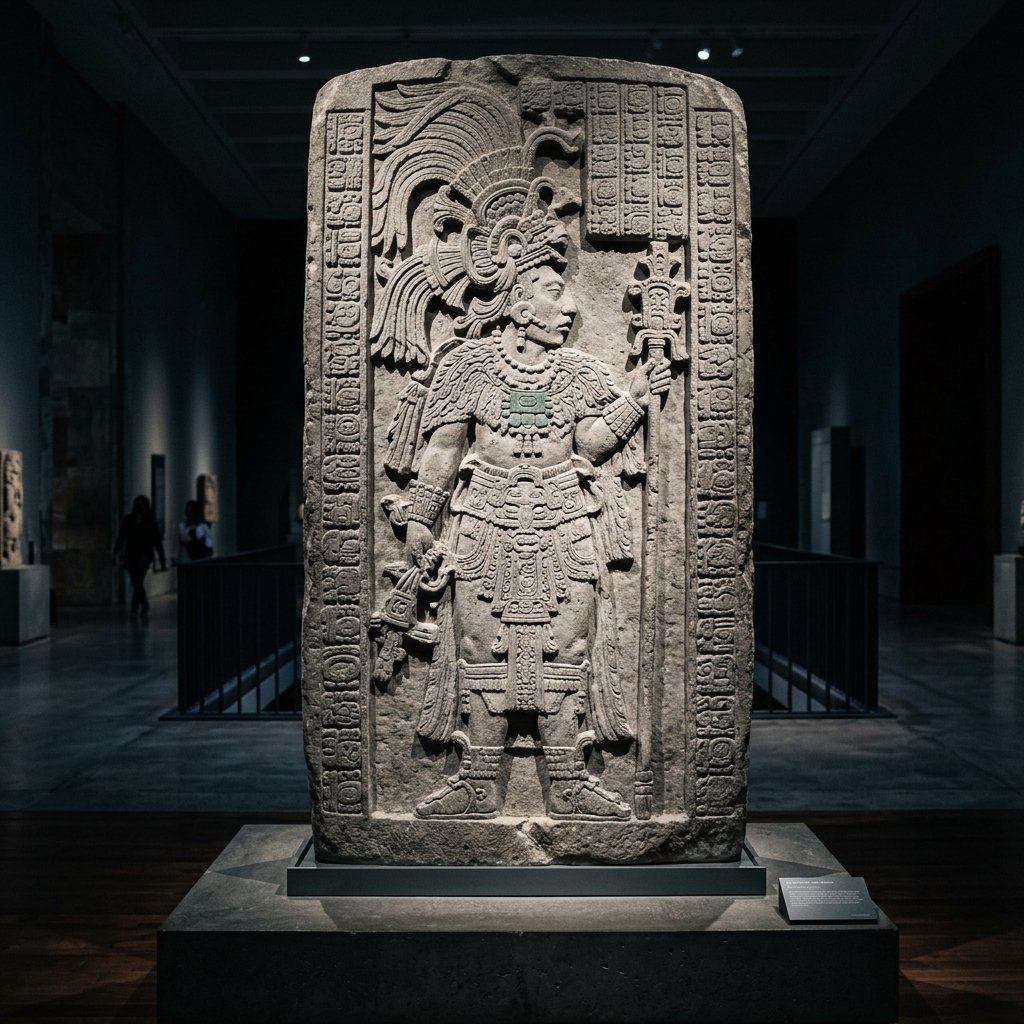
Tikal Stelae
The Penn Museum houses the largest collection of original Maya stelae outside the Maya homeland. These massive carved limestone monuments — some over 3 meters tall — depict Tikal's great kings in full ceremonial regalia: elaborate headdresses trailing quetzal plumes, jade chest ornaments, and serpent bars of office. The hieroglyphic texts record accession dates, military victories, period-ending ceremonies, and astronomical events. Key pieces include stelae depicting Jasaw Chan K'awiil I (r. AD 682–734), who defeated Calakmul and restored Tikal to supremacy.
Acquired: Excavated by Penn's Tikal Project (1956–1970) under agreement with the Government of Guatemala. Division of finds was standard practice at the time.
Royal Tomb Offerings
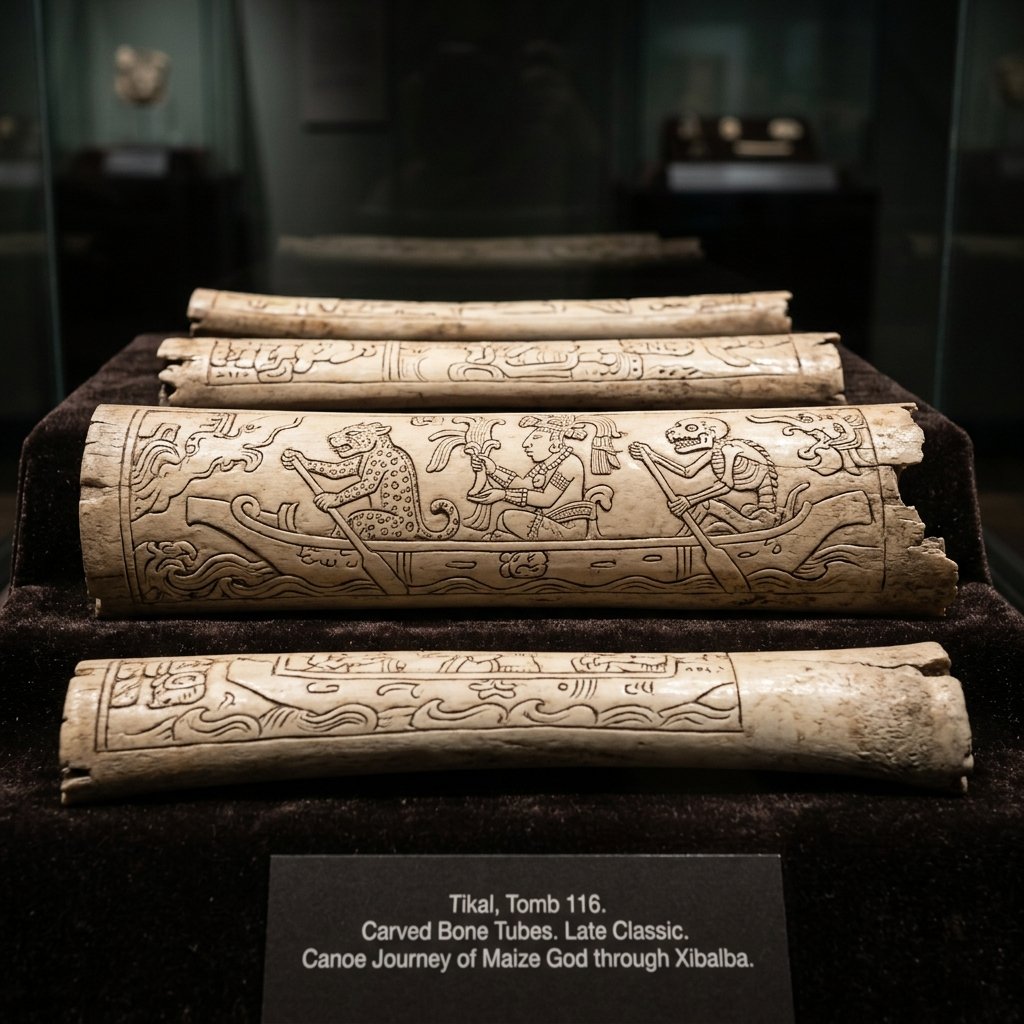
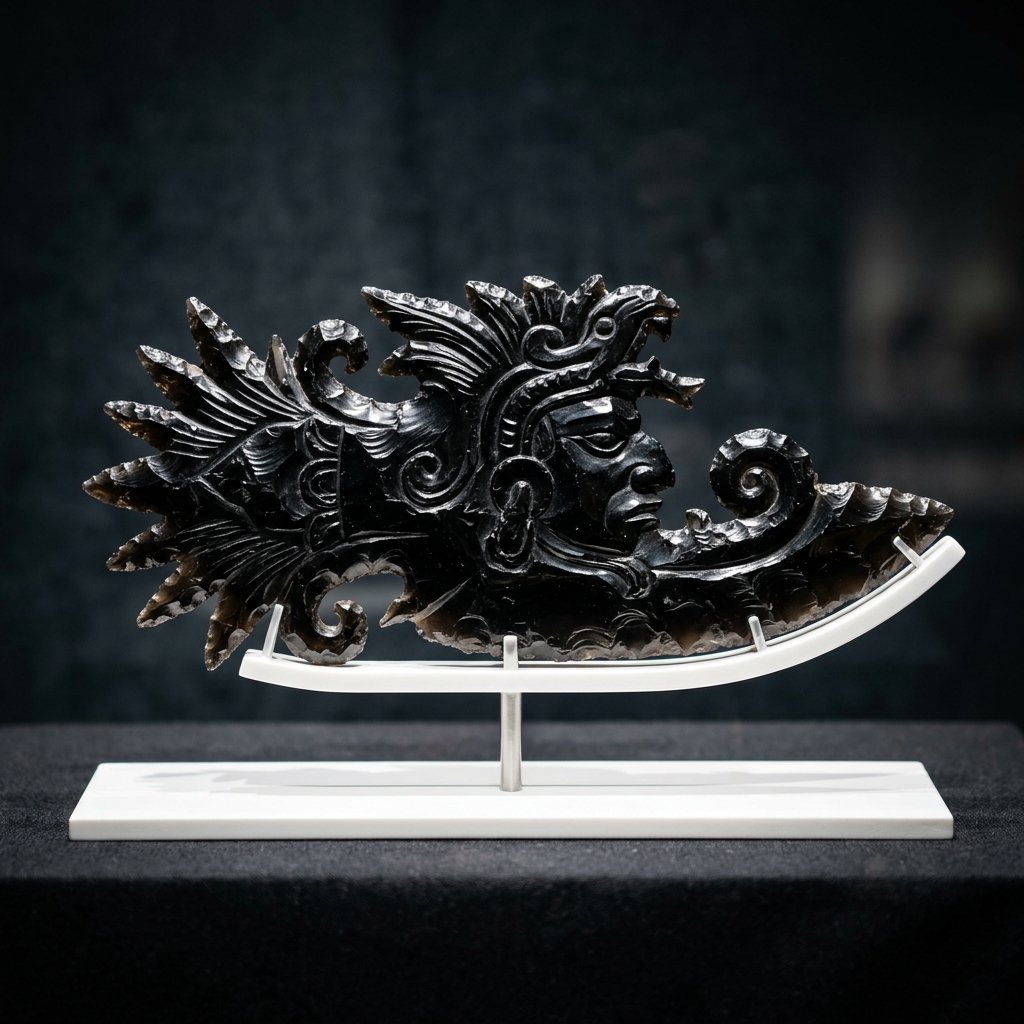
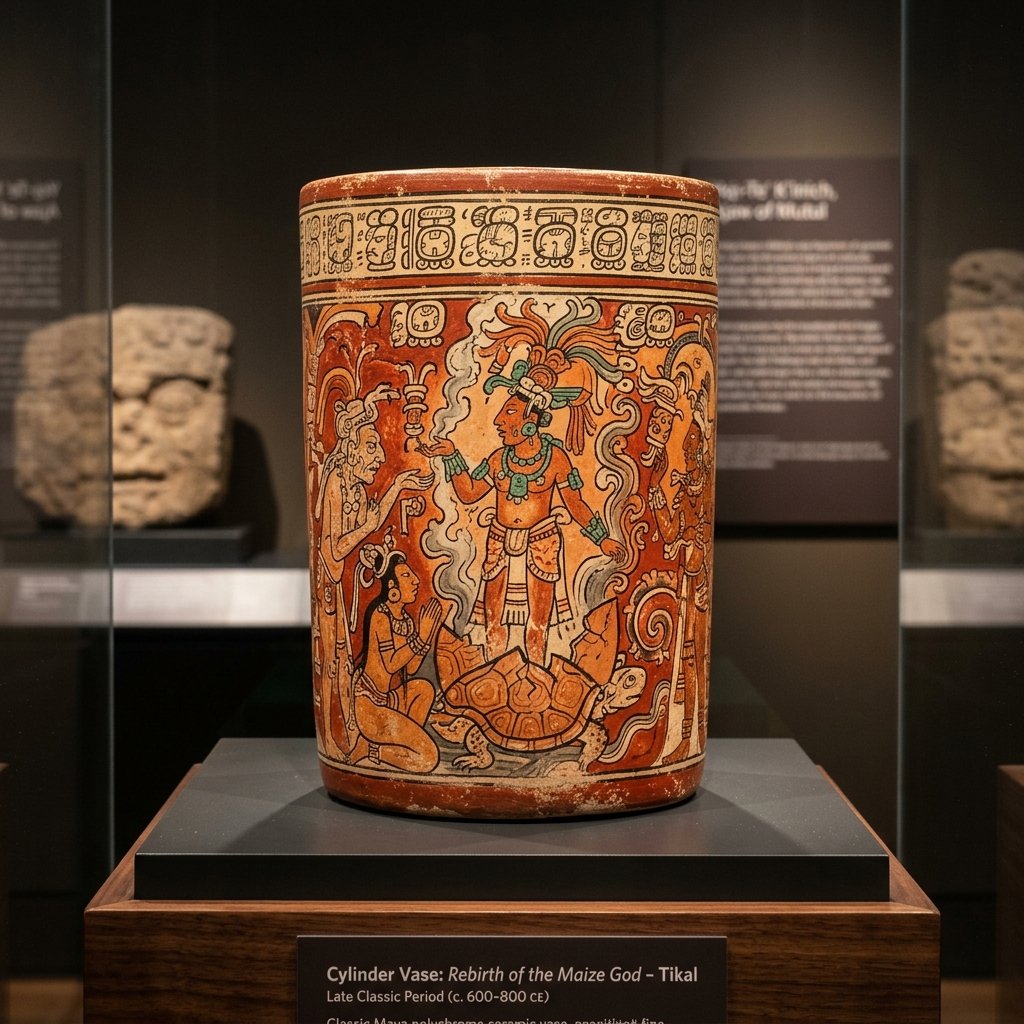
The Tikal Project excavated multiple royal tombs, recovering extraordinary mortuary offerings: jade masks placed over the faces of dead kings, carved bone tubes inscribed with mythological scenes and hieroglyphic texts, obsidian eccentrics (ceremonial blades chipped into the shapes of gods and serpents), Spondylus shell ornaments from the Pacific coast, and polychrome ceramic vessels with detailed mythological scenes — some depicting the Maize God's resurrection journey through the underworld.
Significance: The carved bones from Burial 116 — the tomb of Jasaw Chan K'awiil I — contain some of the finest miniature drawing in all of Maya art. They are key sources for understanding Maya afterlife beliefs.
The Tikal Project Archive
Beyond display artifacts, the Penn Museum holds the complete Tikal Project Archive — thousands of field photographs, excavation drawings, maps, pottery illustrations, and expedition journals documenting 14 years of work at the largest Maya city. This archive remains one of the most actively consulted research resources in Maya archaeology. William Coe's multi-volume Tikal Reports, based on this archive, set the standard for archaeological site publication.
Additional Maya Highlights
- Copán materials: Artifacts from Penn's early excavations at Copán, Honduras, complementing the museum's Tikal holdings.
- Shook collection: Edwin Shook's personal research materials and field notes, spanning decades of work across Guatemala.
- Piedras Negras stelae: Monuments from the site that Tatiana Proskouriakoff used to prove that Maya inscriptions record real history.
- Maya ceramic collection: Hundreds of vessels from Tikal and surrounding sites, many with elaborate painted scenes and rim texts.
Scholarly References
- Coe, W. R. (1967). Tikal: A Handbook of the Ancient Maya Ruins. University of Pennsylvania Museum.
- Coe, W. R. (1990). Excavations in the Great Plaza, North Terrace, and North Acropolis of Tikal: Tikal Report No. 14. University of Pennsylvania Museum.
- Martin, S. & Grube, N. (2000). Chronicle of the Maya Kings and Queens. Thames & Hudson. pp. 24–53 (Tikal).
- Schele, L. & Freidel, D. (1990). A Forest of Kings: The Untold Story of the Ancient Maya. William Morrow. Ch. 5 (Tikal).
- Trik, A. (1963). "The Splendid Tomb of Temple I at Tikal, Guatemala." Expedition, 6(1), 2–18.
- Harrison, P. D. (1999). The Lords of Tikal: Rulers of an Ancient Maya City. Thames & Hudson.
Practical Information
Contact & Location
- 📍 3260 South Street, Philadelphia, PA 19104, USA
- 📞 (215) 898-4000
- ✉️ visitorservices@pennmuseum.org
- 🌐 penn.museum
Visitor Information
- 🕐 Tuesday – Sunday: 10:00 AM – 5:00 PM
- 🌙 First Wednesdays: Open until 8:00 PM
- 🚫 Closed Mondays & major holidays
- 💰 Adults: $18 | Seniors: $15 | Students/Youth: $12
- 🆓 Free for PennCard holders, museum members, veterans
- 🚇 Near 30th Street Station (Amtrak/SEPTA)
Tips for Your Visit
- Find the Mexico & Central America Gallery. The Maya stelae and Tikal materials are in the main galleries on the ground floor. The stelae are enormous — you won't miss them.
- Look for the carved bones. The miniature bone carvings from Burial 116 at Tikal are small but extraordinary — some of the finest drawing in all of Maya art. They're easy to walk past if you're focused on the large monuments.
- Take advantage of First Wednesdays. Extended hours and often special programming make this the best regular time to visit.
- Combine with the broader Penn campus. The museum is part of the University of Pennsylvania campus and easily accessible on foot from Center City.
Frequently Asked Questions
How did Penn get stelae from Tikal?
Under the terms of the Tikal Project agreement with the Government of Guatemala (1956–1970), excavated artifacts were divided between Guatemala's national collection and the Penn Museum. This "partage" system was standard archaeological practice at the time. Guatemala retained the most significant pieces; Penn received a negotiated share. Modern archaeological practice no longer permits this kind of division — all excavated materials now remain in the country of origin.
Is the Penn Museum worth visiting just for the Maya collection?
Absolutely — though you'll also encounter outstanding Egyptian, Mesopotamian, and African collections. Plan at least 2 hours for the Maya galleries alone. The stelae are stunning in person, and the carved bone and jade objects reward slow, careful looking.