The Creator Grandparents at a Glance
The Most Important Characters You've Probably Skipped
Most retellings of the Popol Vuh focus on the dramatic exploits of the Hero Twins or the cosmic authority of Huracan. But the quiet pair at the center of the creation story — the divine grandparents — are arguably more essential to the narrative than any of the more famous figures.
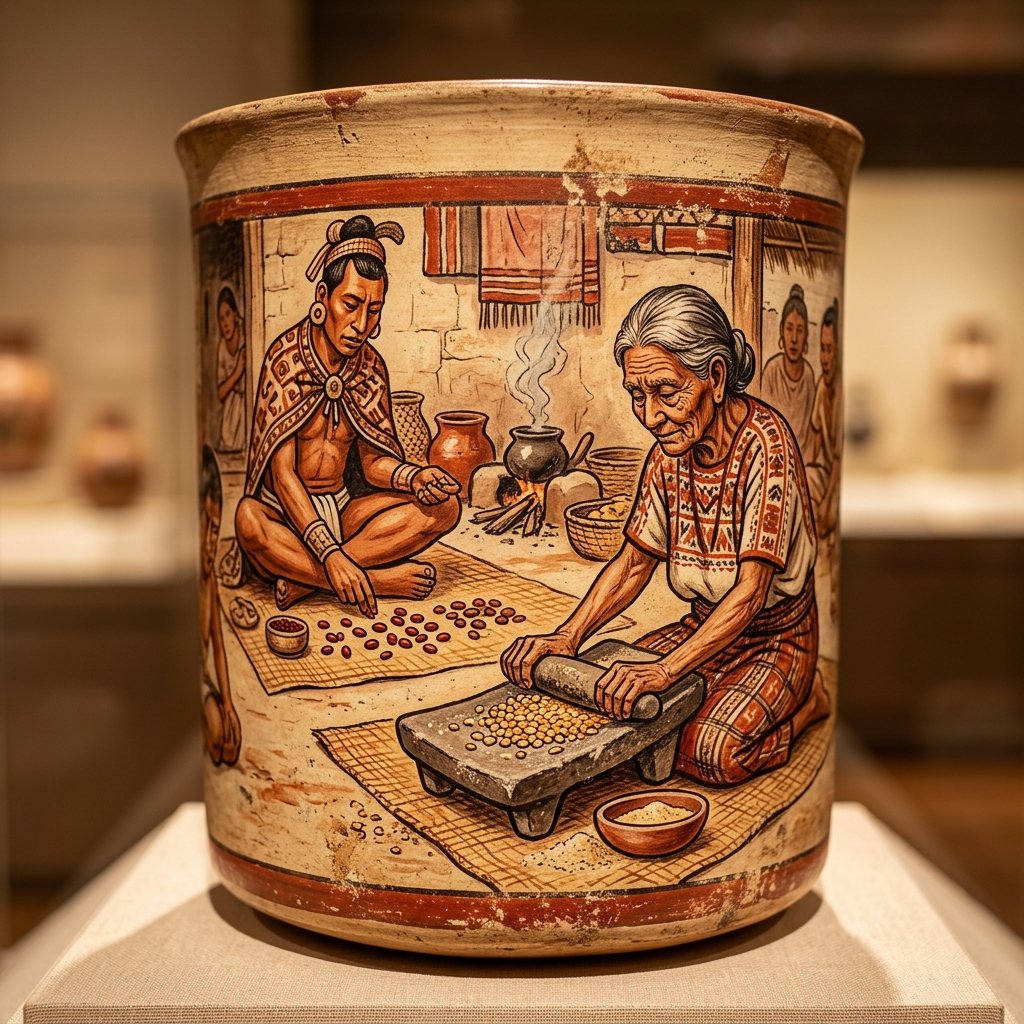
Xmucane (pronounced roughly "shmu-kah-NEH") and Xpiacoc (pronounced roughly "shpee-ah-KOHK") are the K'iche' Maya terms for the divine grandmother and grandfather — the primordial ancestral pair who exist before the current creation and participate in every major event of the Popol Vuh. Without Xmucane, there would be no humanity at all: it is she who grinds the corn from which human flesh is made.
Xmucane: The Corn Grinder
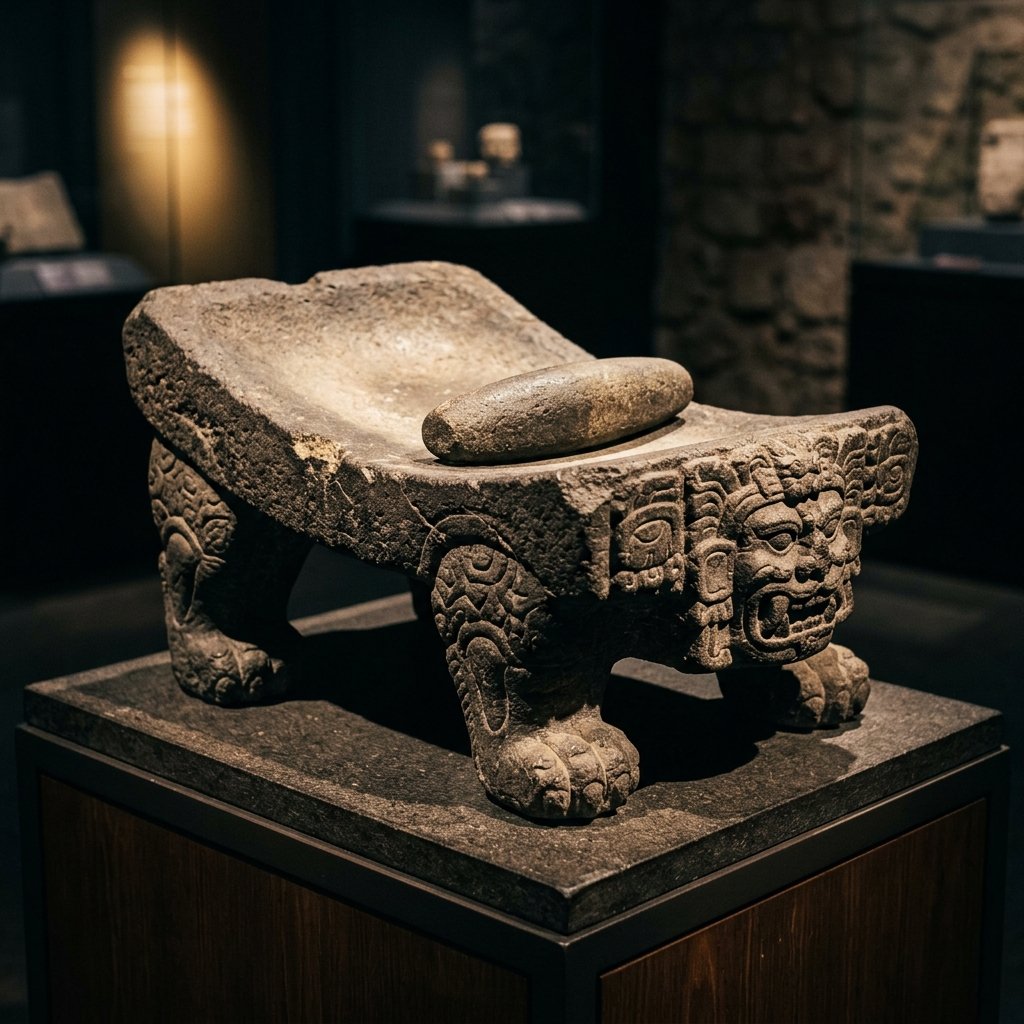
The creation of the final, successful version of humanity — the maize people — depends entirely on Xmucane's labor. After the gods Huracan and Q'ukumatz determine that corn will be the substance of the new humans, it is Xmucane who performs the physical act of grinding:
"And then the yellow corn and white corn were ground, and Xmucane did the grinding nine times... the ground corn was the food that provided the flesh and blood of the human body — the substance from which people were made."
The detail that Xmucane ground the corn nine times is significant. Nine is the number of levels in the Maya underworld (Xibalba), and the repetition of the grinding suggests a ritual process — not mere food preparation. Each grinding refines the substance further, transforming raw grain into the sacred dough from which human consciousness emerges.
Xpiacoc: The Diviner
Where Xmucane's role is transformative and physical, Xpiacoc's role is divinatory and intellectual. He is the first daykeeper (ajq'ij) — the first practitioner of the corn-kernel divination system that remains in use among K'iche' Maya communities to this day.
When the creator gods debate what substance to use for making humans, they consult Xpiacoc and Xmucane. The grandfather casts tz'ite seeds (coral tree seeds) and maize kernels on a mat, reading the patterns they form to determine the cosmic will. This scene establishes divination as one of the original acts of creation — not a secondary human invention but a divine practice that preceded humanity itself.
The Popol Vuh identifies Xpiacoc with the titles "Master of the day" and "Master of the dawn" — suggesting that he was associated with the timing of cosmic cycles, the establishment of the calendar, and the determination of favorable and unfavorable days (Tedlock, D., Popol Vuh, 1996, pp. 63–64).
The Grandmother and the Hero Twins
Xmucane plays an essential role in the Hero Twins narrative. After her sons Hun Hunahpu and Vucub Hunahpu are killed by the Lords of Xibalba, Xmucane becomes the guardian of her grandsons — the Hero Twins Hunahpu and Xbalanque.
She raises them in her household, though the relationship is often tense. When the Hero Twins discover their father's ballgame equipment hidden in the rafters, it is Xmucane who has kept it — preserving the legacy of the dead across generations. She is both nurturer and gatekeeper: loving but strict, worried but ultimately enabling the twins' dangerous journey into the underworld.
This characterization — the wise, powerful grandmother who guards ancestral knowledge — reflects the actual social role of elder women in K'iche' Maya society, where grandmothers serve as repositories of history, tradition, and practical knowledge (Christenson, A.J., Popol Vuh: The Sacred Book of the Maya, 2007, pp. 21–23).
The Gender Balance of Creation
One of the most striking aspects of the Xmucane-Xpiacoc partnership is its gender complementarity. Creation in the Popol Vuh requires both male and female participation:
- The grandfather provides intellectual/divinatory labor — reading the seeds, determining fate.
- The grandmother provides transformative/physical labor — grinding the corn, creating the substance of flesh.
- Neither can succeed without the other. Creation is essentially collaborative.
This model of gender complementarity — rather than gender hierarchy — appears repeatedly in Maya theological and social structures. The paired male-female creator concept also appears in the sky gods (Huracan and Q'ukumatz), the Hero Twins (who work as a pair), and the divine couple Itzamná and Ix Chel.
References
- Christenson, A.J. Popol Vuh: The Sacred Book of the Maya. University of Oklahoma Press, 2007.
- Tedlock, D. Popol Vuh: The Definitive Edition of the Mayan Book of the Dawn of Life. Simon & Schuster, 1996.
- Tedlock, B. Time and the Highland Maya. University of New Mexico Press, revised edition, 1992.
- Taube, K. "The Classic Maya Maize God: A Reappraisal." In Kerr, J. (ed.), The Maya Vase Book, Vol. 5, 1997.
- Coe, M.D. The Maya. Thames & Hudson, 9th edition, 2015.
Frequently Asked Questions
Who is Xmucane?
Xmucane is the divine grandmother of the Popol Vuh — one of the two primordial creator figures in K'iche' Maya mythology. Her most critical act is grinding the corn from which human flesh is made: she ground yellow and white corn nine times, producing the dough that became the substance of humanity. She also serves as the guardian and grandmother of the Hero Twins, raising them after their father's death.
What is corn divination?
Corn-kernel divination (ajq'ij practice) is a method of reading the future by casting corn kernels and tz'ite (coral tree) seeds on a woven mat and interpreting the patterns they form. In the Popol Vuh, Xpiacoc is the first to perform this practice — establishing divination as a divine activity older than humanity itself. This tradition is still practiced by Maya daykeepers in highland Guatemala today.
Are Xmucane and Xpiacoc the same as Itzamná and Ix Chel?
They are different deity pairs from different Maya language traditions. Xmucane and Xpiacoc appear in the K'iche' Maya Popol Vuh, while Itzamná and Ix Chel are Yucatec Maya deities. Both pairs represent divine male-female creator partnerships, suggesting a shared underlying theological concept across Maya cultures. But they have distinct names, narrative roles, and iconographic traditions.