Lamat
The Star · Day Sign 8 of 20
Who Is Lamat?
You shine. Star sign bearers are naturally abundant, playful, and magnetic. The Maya associated this sign with Venus — you have both beauty and intensity in equal measure. Lamat people are the life of the gathering, blessed with artistic sensibility and generous spirits.
In the Tzolk'in — the sacred 260-day calendar of the Maya — Lamat is the 8th of twenty day signs, each representing a fundamental archetype of human experience. Your day sign is determined by the day you were born, and it shapes your personality, your purpose, and the cosmic energy you carry through life.
Lamat is associated with the South direction, the element of Fire, and the color Yellow. In the Maya cosmological system, these associations connect you to specific natural forces, seasonal energies, and spiritual qualities.
Strengths of Lamat
Those born under the sign of Lamat carry remarkable natural gifts:
- Natural magnetism and charm
- Artistic and aesthetically gifted
- Generous and warm
- Strong sense of play and joy
- Attracts abundance naturally
Challenges of Lamat
Every sign carries its shadow. The challenges of Lamat are not weaknesses — they are growth edges that, when worked with consciously, become your greatest sources of power:
- Vanity and self-indulgence
- Can be superficial
- May avoid hard truths
- Tendency toward excess
- Can be jealous of others' shine
Lamat in Love & Relationships
Lamat loves with sparkle and passion. You're romantic, playful, and generous. You need a partner who appreciates beauty and isn't threatened by your natural magnetism.
Most Compatible Signs
Lamat shares the element of Fire with these signs, creating natural resonance:
→ Check your compatibility with any birthday
Lamat Career & Life Path
Arts, fashion, entertainment, hospitality, luxury goods, Venus-related professions, fertility work, celebration planning.
Famous Lamat People
Notable individuals believed to carry the Lamat energy: Marilyn Monroe, David Bowie
Note: Mayan astrology as presented on this site is a modern interpretation of the Tzolk'in calendar system. It draws on both academic research and contemporary practices, and should be enjoyed as a framework for self-reflection rather than a literal prediction system.
Lamat in History & Archaeology
The Classic Glyph
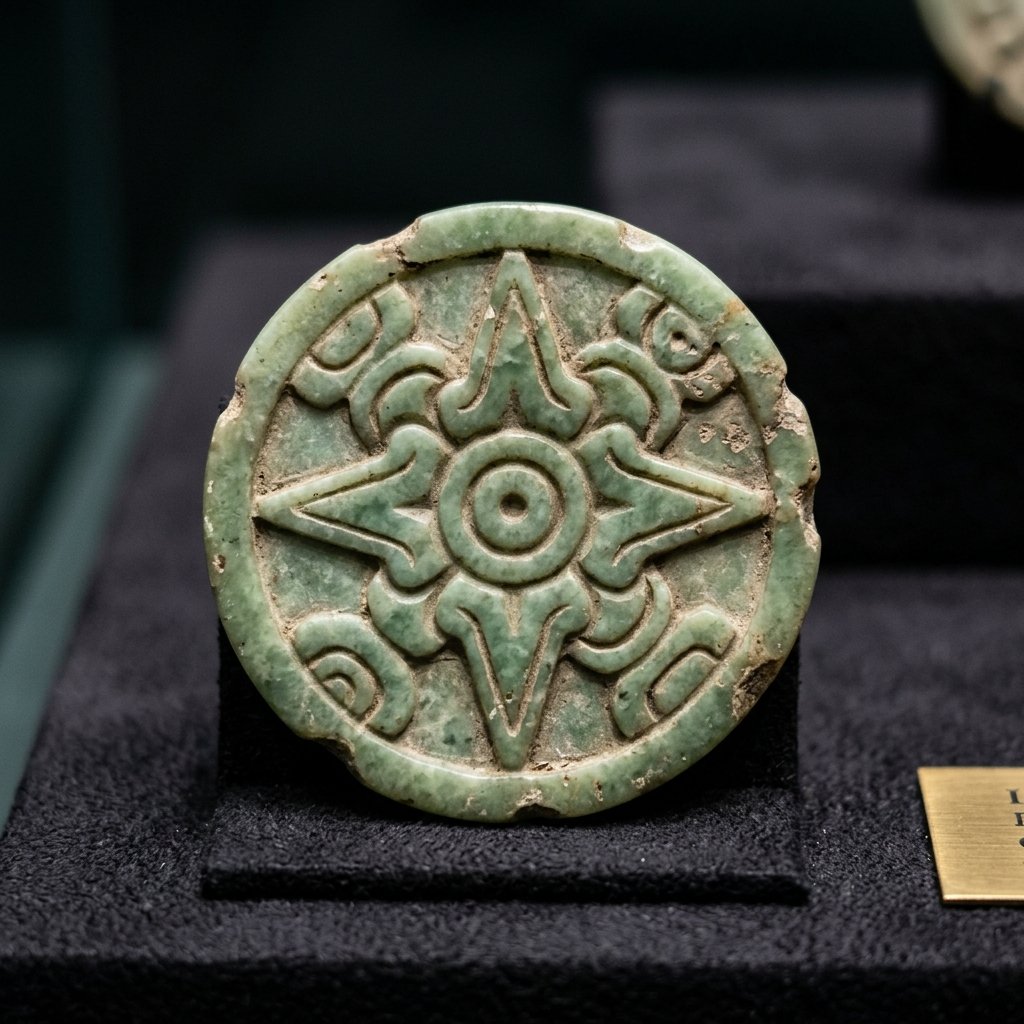
The Lamat glyph is a four-pointed star or Venus symbol — one of the most astronomically significant signs in the Tzolk'in, directly linked to the planet Venus and its synodic cycle.
Archaeological Record
Venus was the most intensely observed celestial body in Maya astronomy after the sun and moon. The Dresden Codex contains the famous Venus Table — a six-page astronomical almanac that tracked Venus's 584-day synodic cycle with an accuracy of one day in 500 years, a precision not matched by European astronomers until the modern era. At Uxmal, the Governor's Palace is oriented precisely toward the southernmost rising of Venus, and its elaborate facade incorporates Venus glyphs throughout its 320-foot length.
Cosmological Significance
The Maya identified Venus with the deity Kukulkán/Quetzalcoatl and associated its first appearance as the Morning Star (after inferior conjunction) with warfare and danger. The heliacal rising of Venus was considered a time of heightened supernatural power — Classic-period Maya rulers timed military campaigns to coincide with Venus events, as documented by the "Star War" glyphs identified by Floyd Lounsbury and David Kelley. Anthony Aveni's research demonstrated that the 260-day Tzolk'in, the 365-day Haab, and the 584-day Venus cycle all interlock in a "Grand Cycle" of 37,960 days — revealing the extraordinary mathematical sophistication underlying the calendar system.
Scholarly References
- Aveni, A. Skywatchers of Ancient Mexico. University of Texas Press, 2001, pp. 184–206.
- Lounsbury, F. "Maya Numeration, Computation, and Calendrical Astronomy." Dictionary of Scientific Biography, vol. 15, 1978, pp. 759–818.
- Milbrath, S. Star Gods of the Maya: Astronomy in Art, Folklore, and Calendars. University of Texas Press, 1999, pp. 157–193.
The 13 Tones of Lamat
Your day sign is only half of your Tzolk'in identity. The other half is your tone number — a number from 1 to 13 that modifies and refines the energy of your sign. If your sign is what you are, your tone is how you express it.
→ Find your exact tone number with our calculator
Frequently Asked Questions
What does it mean to be born on Lamat?
Being born on Lamat means the day you entered the world was governed by the energy of the Star. In Maya cosmology, this shapes your personality, strengths, challenges, and life purpose.
Is Lamat the same as a Western zodiac sign?
No. The Maya Tzolk'in system is completely independent of Western astrology. While Western signs are based on the sun's position among constellations, Maya day signs are based on a 260-day sacred calendar cycle.
How do I know if I'm a Lamat?
Use our Mayan Sign Calculator — enter your birth date and it will calculate your exact day sign and tone number using the same mathematical system the ancient Maya used.
What element is Lamat?
Lamat is associated with the element of Fire and the South direction. This connects you to other Fire signs and the energies of that element.
 Manik
Manik