Vucub Caquix at a Glance
The False Sun
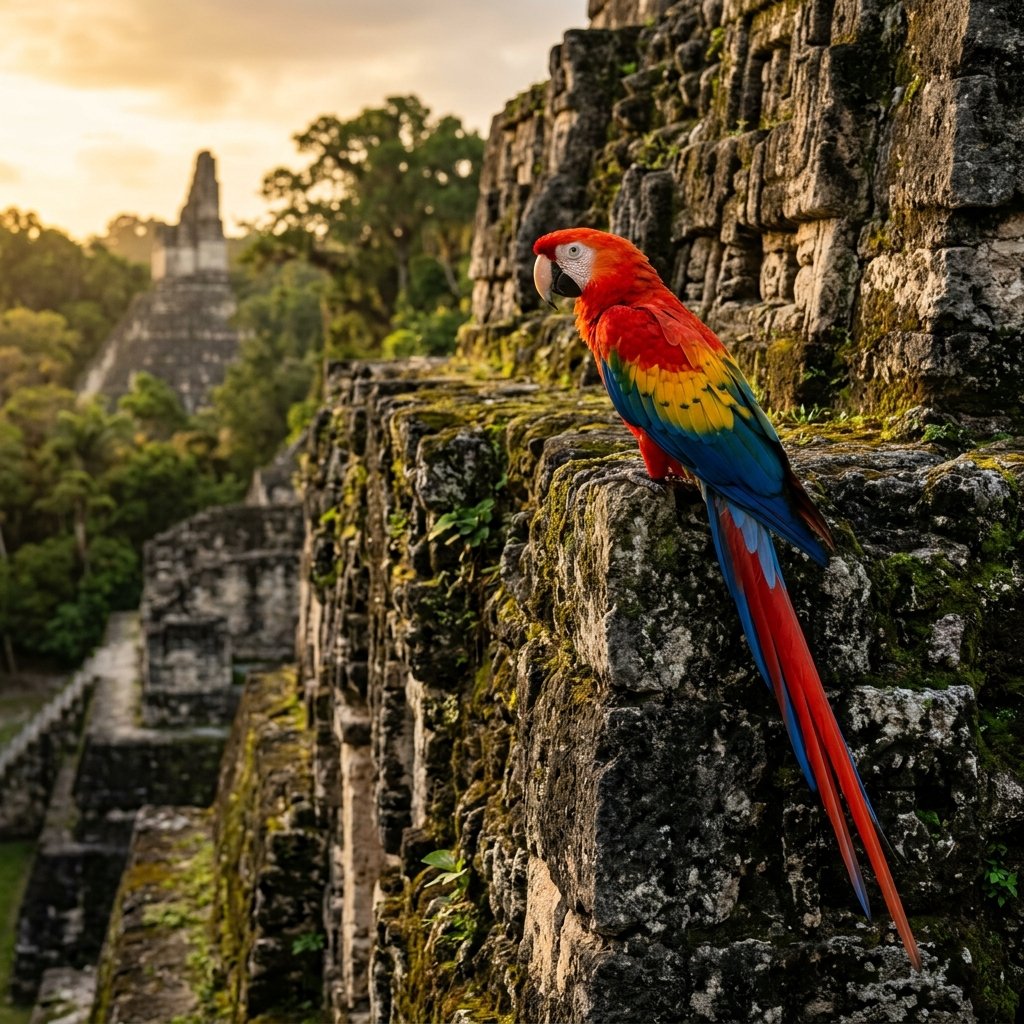
After the destruction of the wooden people — the gods' failed second attempt at creating humanity — the world entered a dark interregnum. The true sun and moon had not yet been created. Into this twilight stepped Vucub Caquix — a monstrous, jewel-encrusted macaw who proclaimed himself the light of the world.
"I am great," declares Vucub Caquix in the Popol Vuh. "My eyes are silver, bright, resplendent as gems. My teeth shine like jewels, like the face of the sky. I am the sun. I am the moon. I illuminate the path and the road for humans" (Christenson, 2007, p. 99).
This is a lie. Vucub Caquix is not the sun — he merely shines. His brilliance is superficial, borrowed from the jewels and metals that adorn him. He represents false authority — power based on appearance and self-proclamation rather than genuine creative capability. He is, in modern terms, a narcissist.
The Blowgun Attack
The Hero Twins, Hunahpu and Xbalanque, recognize that the world cannot be properly remade while Vucub Caquix sits atop his great nance tree, radiating false light and demanding worship. They devise a plan.
The twins hide beneath the nance tree and wait for Vucub Caquix to climb up to eat its fruit. When the great bird settles on a branch, Hunahpu fires his blowgun, hitting Vucub Caquix in the jaw and sending him crashing to the ground.
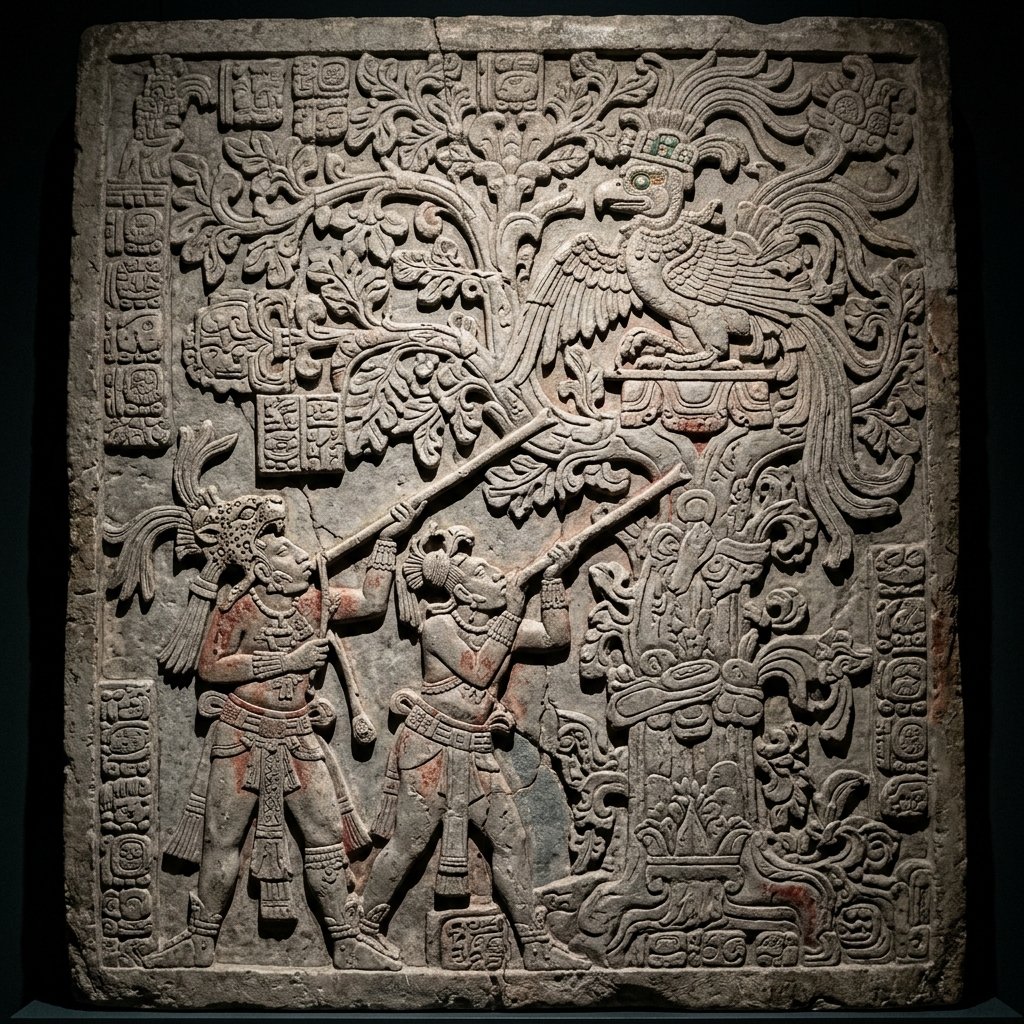
But Vucub Caquix is not easily defeated. In the struggle, he rips off Hunahpu's arm and carries it away — setting up a sequence in which the twins must retrieve the arm through trickery rather than force.
The Defeat: Dentistry as Warfare
To finish Vucub Caquix, the Hero Twins recruit an elderly couple — Xmucane and Xpiacoc, or figures similar to them — who disguise themselves as traveling healers. They approach the wounded Vucub Caquix and offer to treat his broken jaw.
Their "treatment" is the killing stroke: they extract Vucub Caquix's jeweled teeth and replace them with white corn kernels. They remove his shining metal eyes and replace them with dull substitutes. Without his jewels, Vucub Caquix's radiance disappears. He is no longer the false sun — he is just an old bird. He dies, stripped of his power.
The theological message is precise: false power depends on ornament. When the ornament is removed, the power collapses. Real power — the power of the true sun, which the Hero Twins will eventually become — comes from sacrifice and transformation, not decoration.
The Sons: Zipacna and Cabrakan
Vucub Caquix has two sons who share his arrogance:
- Zipacna — "He of the Mountain." A crocodilian earth monster who boasts of creating mountains overnight. He murders the 400 Boys (who become the Pleiades star cluster), and the Hero Twins must defeat him by trapping him under a mountain with a fake crab.
- Cabrakan — "Earthquake." A giant who shakes mountains for sport. The Hero Twins poison him with a bird coated in plaster, which weakens him enough to be buried alive.
All three — father and two sons — must be destroyed before the current creation can proceed. They represent cosmic disorder: false light (Vucub Caquix), false geography (Zipacna), and false geology (Cabrakan). The Hero Twins' mission is to clear this disorder from the world.
The Macaw in Maya Art
The scarlet macaw (Ara macao) was a powerful symbol throughout Mesoamerica. Its brilliant red, blue, and yellow plumage associated it with the sun, fire, and royal power. Macaw feathers were among the most valuable trade goods in the Maya world, and macaw imagery appears on ceramics, murals, and architectural facades across the lowlands.
At Copán in Honduras, a massive stucco macaw sculpture adorns the facade of Structure 16, and macaw motifs are woven throughout the site's iconographic program. The archaeological evidence confirms the macaw's importance as a symbol of solar power — which makes the Popol Vuh's portrayal of Vucub Caquix as a false solar symbol all the more theologically pointed (Taube, K., The Major Gods of Ancient Yucatan, 1992).
References
- Christenson, A.J. Popol Vuh: The Sacred Book of the Maya. University of Oklahoma Press, 2007.
- Tedlock, D. Popol Vuh: The Definitive Edition of the Mayan Book of the Dawn of Life. Simon & Schuster, 1996.
- Taube, K. The Major Gods of Ancient Yucatan. Dumbarton Oaks, 1992.
- Fash, W.L. Scribes, Warriors and Kings: The City of Copán and the Ancient Maya. Thames & Hudson, 2001.
- Coe, M.D. The Maya. Thames & Hudson, 9th edition, 2015.
Frequently Asked Questions
Who is Vucub Caquix (Seven Macaw)?
Vucub Caquix is the "false sun" of the Popol Vuh — a monstrous, jewel-encrusted macaw who proclaimed himself the sun and moon during the dark period between the destruction of the wooden people and the creation of the current world. His name means "Seven Macaw" in K'iche' Maya. He represents cosmic arrogance and false authority, and the Hero Twins must defeat him before true creation can proceed.
How did the Hero Twins defeat Vucub Caquix?
In a two-stage attack: first, Hunahpu shot Vucub Caquix in the jaw with a blowgun, breaking his bejeweled teeth. Then, disguised healers extracted his jeweled teeth and shining eyes, replacing them with plain corn kernels. Without his ornaments, Vucub Caquix's false radiance disappeared and he died — demonstrating that false power depends on appearance, not substance.
What do Zipacna and Cabrakan represent?
Vucub Caquix's sons represent cosmic disorder that must be cleared before the current world can be created. Zipacna creates false geography (boasting of making mountains), while Cabrakan creates false geology (shaking mountains for sport). Together with their father's false light, they represent a world of arrogant, unearned power that the Hero Twins must systematically dismantle.